


Apple's AI Endgame: Is the Cupertino Giant Quietly Building a Revolution for WWDC 2026?
While rivals chase the generative AI zeitgeist with public fervor, Apple has maintained a characteristic silence. We dissect the company's long-term AI strategy, examining how their unique blend of on-device processing, privacy, and deep hardware-software integration could position them for a profound impact by 2026, potentially reshaping the AI landscape from within. Is the 'sleeping giant' about to awaken?

TL;DR While the tech world obsesses over public generative AI models, Apple is meticulously laying the groundwork for a deeply integrated, privacy-centric, and on-device AI strategy that could redefine user experience by WWDC 2026. Their quiet revolution prioritizes seamless functionality and personal relevance over headline-grabbing chatbots, powered by their unparalleled hardware-software synergy.
The AI landscape of 2024 is a cacophony of chatbots, image generators, and large language models (LLMs) battling for public attention. Companies like OpenAI, Google, and Microsoft shout their advancements from the rooftops, each new iteration a testament to monumental computational power and vast datasets. Amidst this frenzied arms race, one of the world’s most influential technology companies has remained conspicuously… quiet. Apple.
While their competitors are busy crafting the next viral AI demo, Apple has been doing what Apple does best: building. Not just software, not just hardware, but an intricate, tightly woven ecosystem where the two are indistinguishable. The question isn’t whether Apple is “doing AI” — they have been for years, under the hood of everything from Siri to Photos to accessibility features. The real question is: what is their endgame? And as we look towards a hypothetical WWDC 2026, could Apple be poised to reveal an AI strategy so deeply integrated, so fundamentally different, that it changes the game entirely, without ever needing to chase the generative AI zeitgeist?
The AI Arms Race and Apple’s Apparent Absence
The past few years have seen an explosion in generative AI. From ChatGPT’s ability to converse fluently on almost any topic to Midjourney crafting photorealistic images from simple text prompts, the public’s perception of “AI” has largely shifted towards these powerful, often cloud-based, generative tools. Rivals are locked in a relentless cycle of model releases, benchmark bragging rights, and partnership announcements. The narrative is clear: scale, speed, and access to the largest datasets win.
In this environment, Apple’s approach appears almost anachronistic. While they’ve invested heavily in machine learning research for years, their public-facing AI has often been characterized as incremental, focused on refining existing features rather than unveiling revolutionary new capabilities. Siri, their flagship AI assistant, has drawn criticism for sometimes falling short of conversational expectations set by newer competitors. This has led many to speculate that Apple is “behind” in the AI race, a sleeping giant perhaps too slow to awaken.
But to view Apple’s strategy through the lens of a public LLM race is to fundamentally misunderstand the company’s DNA. Apple rarely innovates by being first; they innovate by being best at integration, user experience, and privacy. Their “absence” from the public AI spectacle is not a sign of weakness, but rather a deliberate and strategic positioning, laying the groundwork for an AI experience far more personal and ubiquitous than a mere chatbot could ever provide.
The Cupertino Calculus: Privacy, On-Device, and Integration
Apple’s distinct approach to AI is rooted in three foundational pillars: privacy, on-device processing, and unparalleled hardware-software integration. These aren’t buzzwords; they are the architectural principles guiding their entire ecosystem, and particularly their AI development.
Privacy as a Pillar
For Apple, privacy is not just a feature; it’s a fundamental human right and a core differentiator. In an era where user data is the lifeblood of cloud-based AI models, Apple consistently champions data minimization and on-device processing wherever possible. This commitment means that much of the AI work done on your iPhone or Mac — from face recognition in Photos to predictive text suggestions — happens locally, without your personal data ever leaving your device or being sent to Apple’s servers.
This approach sidesteps many of the ethical and security quagmires faced by competitors who rely on vast, centralized data pools. It builds trust, a commodity far more valuable than any fleeting algorithmic advantage. As AI becomes more deeply embedded in our lives, operating on our most intimate data, the importance of this -first stance will only grow. A truly personal AI cannot compromise personal data.
The Power of the Chip
Apple’s vertical integration, particularly its control over silicon design, gives it an insurmountable advantage in building efficient, powerful . The Neural Engine, a dedicated component on their A-series (iPhone, iPad) and M-series (Mac) chips, is specifically designed to accelerate machine learning tasks. This isn’t just a general-purpose processor; it’s a finely tuned AI powerhouse optimized for tasks like image processing, speech recognition, and complex neural network computations, all performed with astonishing efficiency.
 Apple Silicon chip architecture diagram — Photo by Nic Wood on Pexels
This means Apple can run sophisticated AI models directly on your device, enabling features that are faster, more responsive, and more private. It’s the difference between sending a question to a remote supercomputer and having a miniature supercomputer in your pocket that already knows your context. By WWDC 2026, we can expect these Neural Engines to have evolved further, capable of handling even larger, more complex local AI models, empowering a new generation of on-device intelligence that doesn’t rely on constant cloud connectivity.
Seamless Experience, Not Just Features
Apple’s AI strategy is less about standalone, headline-grabbing apps and more about weaving intelligence seamlessly into the fabric of the operating system and user experience. Think about it: when you search your photos for “dogs,” the AI isn’t a separate app; it’s an invisible layer of intelligence within the Photos app. When your keyboard suggests the next word, it’s not a chatbot; it’s an AI-powered enhancement to typing.
This philosophy extends to accessibility features that use AI to describe images for the visually impaired or to live transcribe audio. It’s about making technology disappear, allowing users to achieve their goals more intuitively and efficiently. This quiet, ubiquitous AI is arguably more impactful than any single generative model, because it enhances everything you do, making your devices more personal and proactive.
Beyond Siri: What We’ve Seen (and What We Haven’t)
While Siri is Apple’s most visible AI persona, a vast array of other AI features operate silently across the Apple ecosystem. Image segmentation in Photos, “Cinematic Mode” on iPhones, advanced noise cancellation, personalized health insights from Apple Watch, and even the sophisticated audio processing in AirPods that powers Spatial Audio — all are testament to Apple’s deep investment in machine learning.
What we haven’t seen, however, is Apple’s answer to ChatGPT or Google’s Gemini. They haven’t launched a public LLM or a general-purpose generative AI platform for the masses. This strategic omission is telling. It suggests they are not interested in merely replicating what others have done, but rather in fundamentally re-imagining how AI can serve the user within their tightly controlled ecosystem. While the public clamors for a general-purpose AI that can write essays, Apple appears to be focusing on an AI that knows you deeply and quietly helps you live your life better.
The 2026 Vision: Predictive, Proactive, Personal AI
Looking ahead to WWDC 2026, Apple’s AI reveal is unlikely to be a single product or service. Instead, it will likely be a profound shift in how their entire ecosystem interacts with its users, powered by an evolved, on-device AI. Imagine an AI that is:
- Contextually Aware: Far beyond simple commands, this AI understands your current environment, your routine, your calendar, your communications, and even your emotional state (through biometric data from Apple Watch). It knows you’re at the airport, your flight is delayed, and your family is expecting an update – and proactively drafts a message for you.
- Proactive & Predictive: Instead of waiting for a prompt, the AI anticipates your needs. It might pre-load relevant documents for your next meeting, suggest a different route based on real-time traffic and your calendar, or offer a personalized workout plan based on your recent activity and sleep.
- Multi-Modal & Ambient: Integrating seamlessly across visionOS, iOS, iPadOS, and macOS, this AI won’t just respond to voice or text. It will understand gestures, eye movements, physiological cues, and environmental context. It could use your Apple Vision Pro to identify objects in your field of view and provide real-time information or assistance, creating an “ambient intelligence” that surrounds and supports you without being intrusive.
- Hyper-Personalized: With vast amounts of personal, on-device data (securely processed, of course), the AI becomes an extension of your memory and intention. It remembers tiny details, understands your preferences, and learns your unique way of communicating, making every interaction feel deeply personal and efficient.
This vision aligns with Apple’s historical approach of “making powerful technology invisible.” It’s not about an AI you talk to, but an AI that works for you, enhancing your capabilities and streamlining your interactions with the digital and physical world.
The Developer Dilemma and the Open AI Question
For this future to fully materialize, Apple will need to address the developer ecosystem. Currently, many developers build on top of cloud-based AI APIs. How will Apple encourage them to leverage its unique on-device AI capabilities? We might see a new suite of Core ML APIs that provide access to powerful, yet private, on-device generative models for tasks like text summarization, content creation, or intelligent automation, all running locally on Apple Silicon.
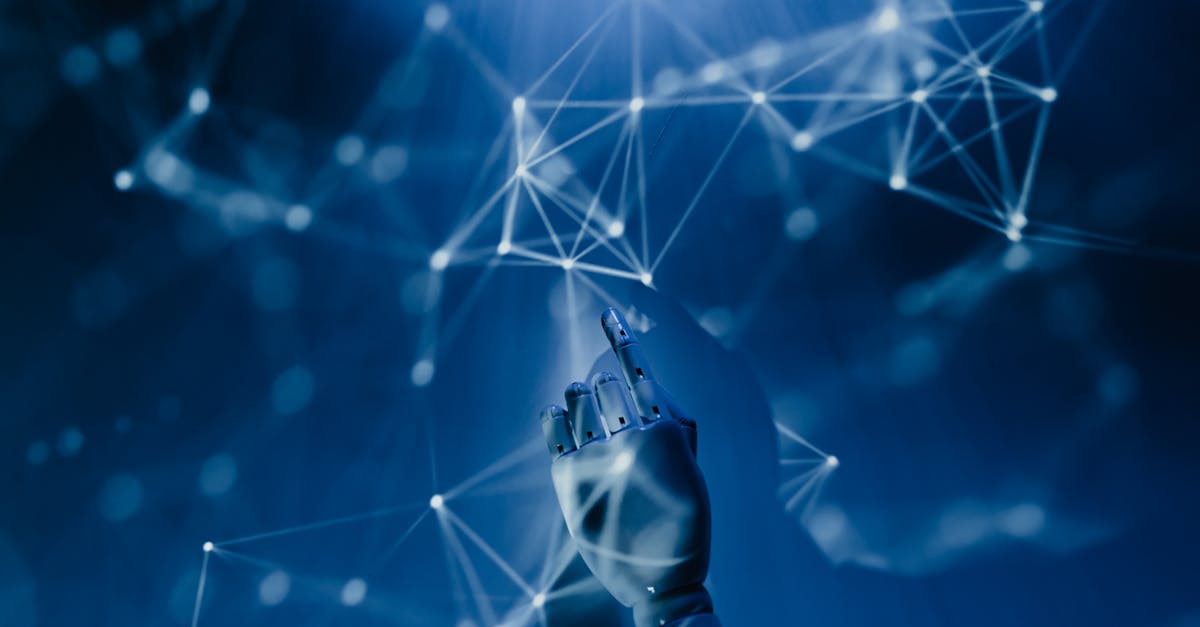 Abstract representation of on-device AI interacting with user data securely — Photo by Tara Winstead on Pexels
This would allow developers to build truly intelligent applications that benefit from the speed, privacy, and contextual awareness of Apple’s ecosystem, without sending sensitive user data to external servers. The challenge will be balancing Apple’s tight control with the need for developer flexibility and innovation. Perhaps a federated learning approach, where user data is used to improve models without ever leaving the device, could be key to expanding capabilities while maintaining privacy. For more on federated learning, refer to resources like Wikipedia’s entry on the topic: https://en.wikipedia.org/wiki/Federated_learning.
The AI Revolution You Won’t See Coming
Apple’s greatest strength has always been its ability to take complex technology and distill it into experiences that feel intuitive, magical, and indispensable. They don’t typically announce grand visions years in advance; they deliver them, fully formed, often with a “one more thing” flourish. WWDC 2026, therefore, is less about a speculative roadmap and more about the culmination of years of quiet, strategic development.
The true “AI endgame” for Apple is not about winning a public competition for the most advanced chatbot or image generator. It’s about fundamentally transforming the user experience by making AI an integral, invisible, and utterly reliable partner in our daily lives. Their commitment to , their unparalleled hardware-software integration, and their focus on on-device intelligence are not limitations; they are the bedrock of a distinct AI strategy that prioritizes the user above all else.
While the world fixates on the wildfires of generative AI, Apple is cultivating a slow-burning revolution, one that promises to be more enduring, more trustworthy, and ultimately, far more impactful on how we interact with technology. By WWDC 2026, the quiet giant might just reveal that it was playing a different game all along – and winning it on its own terms.
Last updated Jun 8, 2026
Ava Sinclair
Senior AI Correspondent
Ava Sinclair has covered frontier AI research and the companies racing to deploy it for over ten years, with prior bylines on machine learning and applied research. She has interviewed lead researchers at every major frontier lab and benchmarks new models hands-on before writing about them.
Related stories

Stanford's 37,000 AI Agents Built a Biotech—and Merck Proved It Works
Stanford deployed 37,000 autonomous AI agents to simulate an entire biotech firm. Pharma giant Merck just confirmed one of their drug designs in a lab.

Anthropic Builds In-House Chip Team to Escape Nvidia's Grip
Anthropic is quietly recruiting top custom silicon talent to design its own AI hardware. The move marks a dramatic shift toward vertical integration.

Meta's New Mac Coding Agent Offers 20x Discount for Developer Data
Meta is offering software developers a massive discount on its new Mac coding assistant—provided they hand over their source code to train Llama models.