







Pakistan successfully concluded its historic 5G spectrum auction, raising $507 million across 480 MHz of spectrum. Jazz, Zong, and Ufone all secured holdings. Commercial 5G is now expected in Islamabad and provincial capitals within five to six months.
If you’ve been following Pakistan’s tech scene, you already know this moment has been years in the making. On March 10, 2026, the Pakistan Telecommunication Authority (PTA) conducted the country’s long-awaited Next Generation Mobile Services (NGMS) / 5G spectrum auction — and it surpassed all expectations, raising a record $507 million for the Pakistani government.
But beyond the headline number, what does 5G actually mean for Pakistan? Which cities get it first? What spectrum bands were sold, and to whom? And — most importantly — what does it mean for you as an everyday Pakistani?
This is your complete guide. Let’s break it all down.
Pakistan’s 5G at a Glance
| Metric | Detail |
|---|---|
| Auction Date | March 10, 2026 |
| Total Revenue Raised | $507 Million USD |
| Spectrum Sold | 480 MHz across 4 bands |
| Participating Operators | Jazz, Zong, Ufone |
| Current Mobile Subscribers | 205 Million |
| Minimum 5G Download Speed | 50 Mbps (vs 4 Mbps today on 4G) |
| Expected Commercial Launch | Mid-2026 (major cities first) |
| Full National Coverage Target | 2035 |
Table of Contents
- What Is 5G? A Quick Overview
- Pakistan’s Historic $507M 5G Spectrum Auction
- The 5G Spectrum Bands — Explained Simply
- Which Operator Got What? Jazz, Zong & Ufone
- Which Cities Get 5G First?
- Benefits of 5G for Everyday Pakistanis
- How 5G Will Transform Pakistan’s Key Industries
- Challenges Pakistan Must Overcome
- Pakistan’s 5G Rollout Timeline
- Frequently Asked Questions
1. What Is 5G? A Quick Overview

5G is the fifth generation of wireless mobile network technology, succeeding 4G LTE. It is not an incremental upgrade — it is a generational leap. Think of it this way: if 4G gave us the ability to stream YouTube on our phones, 5G gives us the ability to run entire factories, hospitals, and cities through wireless connections.
The three defining features of 5G are:
- Ultra-High Speed — Theoretically up to 10 Gbps, nearly 100x faster than 4G
- Ultra-Low Latency — Response times as low as 1 millisecond, enabling real-time applications
- Massive Device Capacity — Supports millions of connected devices per square kilometre simultaneously
These three pillars make 5G the foundational infrastructure for the Internet of Things (IoT), artificial intelligence, smart cities, autonomous vehicles, remote surgery, and far more.
“5G is not just faster internet. It is the infrastructure upon which the next decade of human innovation will be built — from self-driving cars to remote surgeries.”— World Economic Forum, Digital Economy Report
For Pakistan — a country with 205 million mobile subscribers, a median age of 22, and a rapidly expanding digital economy — 5G is not just a technology upgrade. It is a genuine economic opportunity that could unlock billions in GDP growth and position Pakistan as a competitive digital force in South Asia.
2. Pakistan’s Historic $507 Million 5G Spectrum Auction
On March 10, 2026, Pakistan made history. The PTA conducted the country’s long-awaited NGMS / 5G spectrum auction — live, across three rounds, broadcast in real-time for full public transparency. The result: $507 million raised, 480 MHz of spectrum sold, and all three major operators emerging with significant holdings.

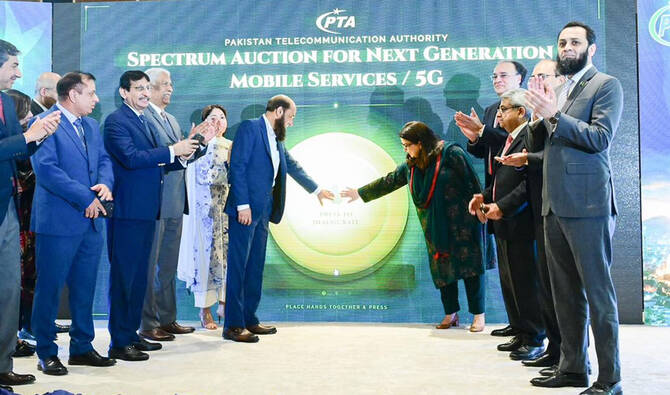
IT Minister Shaza Fatima Khawaja described the auction as a historic milestone, noting that Pakistan had reached a “choking point” in spectrum availability that had visibly degraded internet quality for millions. Finance Minister Muhammad Aurangzeb, who chaired the Spectrum Advisory Committee that designed the auction framework, highlighted that the expanded connectivity will directly support AI, blockchain, and digital payments across the country.
The auction was designed and implemented with support from NERA Economic Consulting, an independent international firm — lending global credibility to the process and signalling to foreign investors that Pakistan is serious about its digital future.
“Consumers can expect noticeable improvements in 4G service within four to five months, with 5G expected to launch in Islamabad and provincial capitals within five to six months.”— IT Minister Shaza Fatima Khawaja, March 2026
3. The 5G Spectrum Bands — Explained Simply
One of the most important — yet most misunderstood — aspects of 5G is the spectrum. Different frequency bands carry very different characteristics: some travel farther but carry less data; others deliver massive speeds over shorter distances. Pakistan’s auction offered spectrum across six bands, giving operators a toolkit to build well-rounded networks. Here is what each band means in plain language:
| Band | Type | Spectrum Available | Reserve Price | Best For |
|---|---|---|---|---|
| 700 MHz | Low-band | 2 × 15 MHz | $6.5M / MHz | Wide rural coverage, building penetration, long distances |
| 1800 MHz | Mid-low | 2 × 3.6 MHz | $14M / MHz | Enhanced 4G/LTE and transitional 5G in urban areas |
| 2100 MHz | Mid-band | 2 × 20 MHz | $14M / MHz | Balanced speed and coverage in populated cities |
| 2300 MHz | Mid-band | 50 MHz | $1M / MHz | High-capacity urban zones, heavy data traffic |
| 2600 MHz | Mid-band | — | — | Indoor coverage, stadiums, shopping malls |
| 3500 MHz | High-band (C-band) | — | — | True 5G speeds, ultra-low latency, gaming, AR/VR |
700 MHz — The Nation Builder
The 700 MHz band is often called the “coverage king.” It travels hundreds of kilometres, penetrates buildings easily, and reaches rural and mountainous terrain where higher frequencies cannot. For a geographically diverse country like Pakistan — with its plains, mountains, and vast agricultural land — this band will be critical for bridging the digital divide between urban centres and rural communities.
Mid-Band (2300 & 2600 MHz) — The Sweet Spot
Mid-band spectrum strikes the best balance between speed and coverage. These frequencies will power most of the practical 5G experience in Pakistan’s major cities — handling 4K video streaming, smart office connectivity, and connected public transport. The 2300 MHz band was the most aggressively acquired in terms of volume due to its accessible $1M per MHz reserve price.
3500 MHz — The Speed Demon
The 3500 MHz band — known globally as the C-band — is the primary 5G frequency used by most leading countries for true next-generation speeds. Ufone’s aggressive acquisition of 120 MHz in this band signals its intent to push Fixed Wireless Access (FWA), potentially replacing home broadband connections with wireless 5G entirely.
4. Which Operator Got What? Jazz, Zong & Ufone
Three operators competed in the auction — each with a distinct strategy and a different vision for Pakistan’s 5G future. Here is how the spectrum was divided:
| Operator | Spectrum Acquired | Amount Paid | Key Strategy |
|---|---|---|---|
| Jazz | 190 MHz (all 4 bands) | $239 Million | Nationwide coverage across all bands, including 20 MHz at 700 MHz for rural reach |
| Ufone / PTML | 180 MHz | — | 120 MHz in 3500 MHz band — aggressive push for Fixed Wireless Access (FWA), replacing home broadband |
| Zong | 110 MHz | — | Concentrated in 2600 & 3500 MHz — focused urban deployments, CPEC industrial connectivity |
Jazz — The Biggest Spender
Jazz emerged as the largest buyer, securing spectrum across all four bands and spending $239 million. Their comprehensive multi-band approach signals a nationwide rollout strategy from day one. Jazz also recently sold its 10,500-tower subsidiary to Engro Connect for $560 million — converting fixed infrastructure costs into manageable rental payments and freeing up capital for 5G network investment.
Ufone (PTML) — The Fixed Wireless Challenger
Now a merged entity with Telenor Pakistan, Ufone’s massive 120 MHz grab in the 3500 MHz C-band is a clear declaration of intent. Fixed Wireless Access (FWA) — where 5G replaces home Wi-Fi and cable internet — is the game they are playing. Once the Ufone-Telenor merger is finalised, the combined entity could serve over 70 million customers nationwide, making them a formidable force.
Zong — The Enterprise & CPEC Play
Backed by China Mobile, Zong brings global 5G expertise, a 26,000 km fiber-optic network, and 53 million subscribers. As the primary connectivity partner for the China-Pakistan Economic Corridor (CPEC), Zong’s 5G deployment is also strategic infrastructure for industrial modernisation and enterprise cloud services. Their ISO-certified, Tier III-certified cloud ecosystem makes them the leading enterprise 5G contender.
5. Which Pakistani Cities Will Get 5G First?
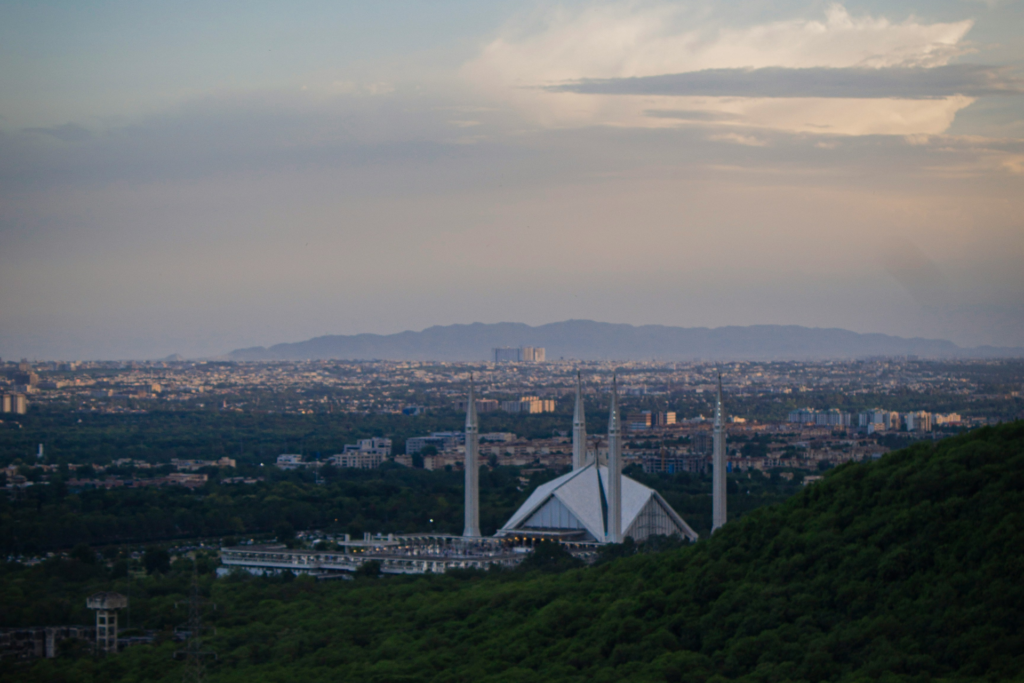
The 5G rollout will follow a clear phased approach — starting with major urban centres and expanding gradually to smaller cities and rural areas over the next decade.
Phase 1 — Mid-2026: Federal & Provincial Capitals
The first cities to experience commercial 5G will be Pakistan’s capital cities:
- Islamabad — Federal Capital
- Karachi — Capital of Sindh
- Lahore — Capital of Punjab
- Peshawar — Capital of Khyber Pakhtunkhwa
- Quetta — Capital of Balochistan
- Rawalpindi — Twin City of Islamabad
Phase 2 — Late 2026 / 2027: Major Urban Centres
Coverage will then expand to high-population cities including Faisalabad, Multan, Hyderabad, Sialkot, and Gujranwala, among others with high commercial and industrial activity.
Phase 3 — 2028–2035: National Rural Coverage
The long-term rollout targets smaller towns and rural districts across Pakistan, with full nationwide coverage by 2035. The low-band 700 MHz spectrum — acquired primarily by Jazz — will be the critical tool for reaching remote and mountainous communities.
6. Benefits of 5G for Everyday Pakistanis

5G is not just about a faster speed test result. Its real-world impact touches every corner of daily life — from how students learn, to how doctors treat patients, how farmers grow crops, and how businesses compete globally.
Blazing Fast Internet Speeds
Pakistan’s average 4G download speed today is roughly 4 Mbps. With 5G, users can expect a minimum of 50 Mbps — and peak speeds far beyond that. Downloads that currently take minutes will take seconds. Even existing 4G service is expected to improve to 20–25 Mbps once 5G networks absorb traffic congestion.
Fixed Wireless Access — Goodbye Cable Internet
5G can replace your home fiber or DSL connection entirely through Fixed Wireless Access (FWA). No installation fees, no digging up roads for cables — just a small device that brings fast internet wirelessly into your home. For cities lacking fiber infrastructure, this is transformative.
Telemedicine & Remote Healthcare
Doctors in Karachi will be able to consult patients in Gilgit-Baltistan in real-time with zero lag. Remote-guided surgeries, real-time diagnostics, and wearable health monitors that transmit live data will all become practically feasible for Pakistan’s healthcare system.
Next-Generation Education
Virtual classrooms, augmented reality (AR) and virtual reality (VR) powered learning experiences, and seamless access to global educational platforms will become available for students — even in parts of the country previously underserved by slow internet.
Smart Industry & Manufacturing
Pakistani manufacturers will be able to deploy IoT sensors, automated quality control, and AI-driven production lines — giving local industry the digital backbone to compete with global factories. This is a direct opportunity for Pakistan’s textile, pharmaceutical, and automotive sectors.
Precision Agriculture
Smart farming tools powered by drones, soil sensors, and AI can monitor crop health, water needs, and field conditions in real-time. In a country where agriculture contributes significantly to GDP and supports millions of families, this is potentially one of the most impactful 5G applications.
Smart Cities & Traffic Management
Intelligent traffic systems, connected infrastructure, smart parking, AI-powered surveillance, and real-time urban planning for cities like Islamabad and Lahore will dramatically improve urban living quality and reduce congestion.
Gaming & Entertainment
Cloud gaming, 4K and 8K video streaming, augmented reality experiences — all without buffering or lag. Pakistan’s rapidly growing gaming community will experience a quality leap that puts them on par with users in South Korea or the UAE.
Digital Finance & Fintech
E-SIMs, NFC-based mobile banking, nano-banking services, and near-instant payment processing will become the norm — accelerating Pakistan’s journey toward a truly cashless digital economy and bringing millions of unbanked citizens into the financial system.
7. How 5G Will Transform Pakistan’s Key Industries
Fintech & Digital Banking
Platforms like JazzCash and EasyPaisa already move billions of rupees daily. 5G will enable seamless NFC-based banking in even the most remote marketplaces, power the next generation of biometric authentication, and support real-time fraud detection using AI — bringing millions of unbanked Pakistanis into the formal financial system faster than any previous technology.
CPEC & Industrial Connectivity
Zong, as the primary connectivity partner for the China-Pakistan Economic Corridor, is positioned to integrate 5G directly into CPEC’s industrial infrastructure. Smart factories, automated logistics hubs, connected ports at Gwadar, and AI-driven supply chain management along CPEC corridors will be among the first industrial 5G deployments in Pakistan.
Electric Vehicles & Transportation
As Pakistan takes its first steps toward electric vehicles, 5G will provide the backbone for vehicle-to-everything (V2X) communication — where cars communicate with each other, with traffic signals, and with the power grid. This makes EV adoption safer, smarter, and far more energy-efficient.
Cybersecurity & Artificial Intelligence
With 5G comes a dramatically expanded attack surface for cybersecurity threats. The government has committed to reinforcing cybersecurity systems as part of the 5G rollout alongside a national AI policy. IT Minister Khawaja confirmed that training 500,000 to 1 million young Pakistanis in AI, cybersecurity, and digital skills is already actively underway.
8. Challenges Pakistan Must Overcome
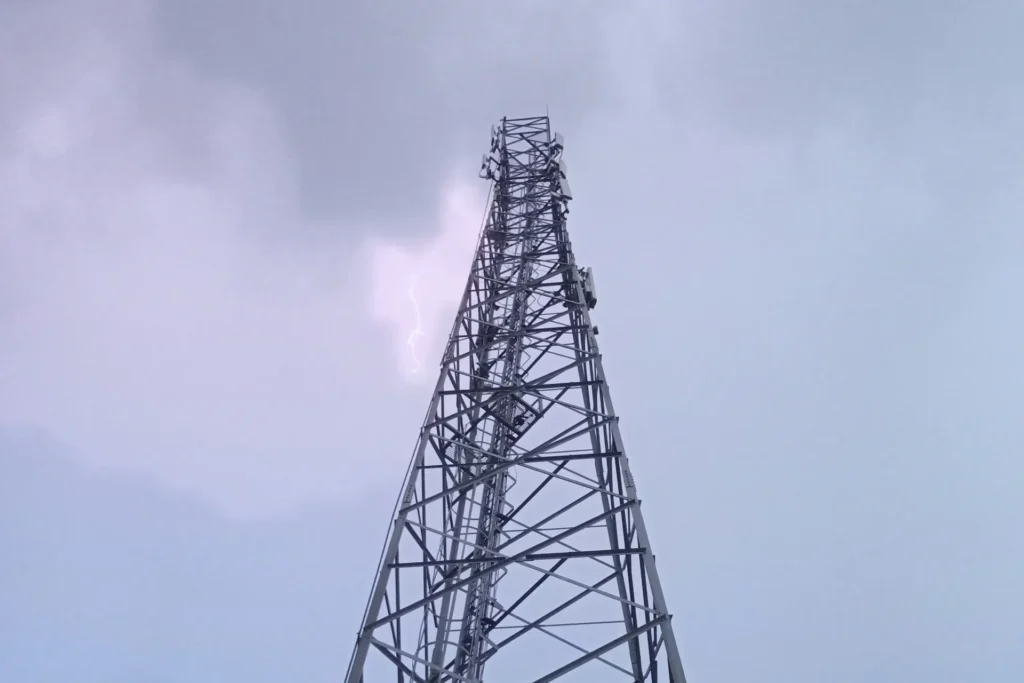
As exciting as 5G is for Pakistan, the road ahead is not without significant hurdles. Here is an honest assessment of the challenges that need addressing:
Low 5G Device Penetration
Fewer than 5% of phones currently in use in Pakistan are 5G-enabled. Around 40% of users still rely on feature phones, and approximately 10% of the population does not own any phone at all. Without affordable 5G smartphones in the hands of ordinary Pakistanis, even the most advanced network will go underused. The PTA has already urged the government to reduce taxes on telecom components to make 5G-capable devices more accessible.
Infrastructure Gaps
5G requires a much denser network of base stations and small cells compared to 4G. Pakistan’s existing tower infrastructure needs significant upgrades, particularly outside major cities. For context, Japan, Saudi Arabia, and China each have 1,000–1,400 MHz of assigned mobile spectrum — Pakistan’s current 597 MHz indicates that further spectrum releases will be necessary in future years to match global benchmarks.
Economic Constraints
Reserve prices were set in US dollars and converted to Pakistani rupees at the auction day’s exchange rate — exposing operators to currency risk. Large-scale telecom infrastructure investment is capital-intensive at a time when Pakistan’s macroeconomic environment, while stabilising, is still navigating post-IMF pressures and inflation.
Power Supply Reliability
5G base stations consume considerably more electricity than 4G equipment. Pakistan’s ongoing load-shedding challenges and electricity grid reliability issues could disrupt 5G network stability — especially in smaller cities and rural areas. Operators will need to invest in backup power solutions alongside network deployment.
Digital Literacy & Awareness
For 5G to be truly transformative rather than exclusive to urban elites, Pakistan must simultaneously invest in digital literacy programs, affordable device subsidies, and broadband awareness campaigns in underserved communities. Connectivity without capability is not inclusion.
Cybersecurity at Scale
5G’s expanded, always-on connectivity creates a vastly larger cybersecurity attack surface. Critical infrastructure, financial systems, healthcare networks, and personal data all need robust, end-to-end security frameworks built in parallel to the rollout — not as an afterthought — to prevent the new network from becoming a new vulnerability.
9. Pakistan’s 5G Rollout — A Complete Timeline
| Date | Milestone |
|---|---|
| January 9, 2026 | PTA issues the official NGMS / 5G spectrum auction notification. Bands from 700 MHz to 3500 MHz announced. 2025–26 formally designated as Pakistan’s “5G Transaction Period.” |
| March 9, 2026 | PTA releases a detailed pre-auction media brief. All three qualified operators confirmed: Jazz, Zong, and Ufone. |
| March 10, 2026 | Historic 5G spectrum auction concludes. $507 million raised. Jazz acquires 190 MHz, Ufone 180 MHz, Zong 110 MHz across 700, 2300, 2600, and 3500 MHz bands. |
| March 12, 2026 | Spectrum assignment stage. Operators receive specific frequency positions within each band. Network deployment groundwork begins. |
| Mid-2026 (Expected) | Commercial 5G launches in Islamabad, Karachi, Lahore, Peshawar, Quetta, and Rawalpindi. 4G improvements expected within 4–5 months even before full 5G. |
| Late 2026 – 2027 | 5G coverage extends to Faisalabad, Multan, Sialkot, Hyderabad, Gujranwala, and other major urban centres. |
| 2028 – 2035 | Phased national rollout to smaller cities, towns, and rural districts. Full nationwide 5G coverage targeted by 2035. |
10. Frequently Asked Questions
When will 5G officially launch in Pakistan?
Commercial 5G services are expected to launch in Islamabad and all provincial capitals within five to six months of the March 2026 auction — targeting mid-2026. A phased national rollout will continue through 2035.
Which cities will get 5G first?
Islamabad, Karachi, Lahore, Peshawar, Quetta, and Rawalpindi are in the first wave. Faisalabad, Multan, and other major cities follow in Phase 2 through late 2026 and 2027.
How fast will 5G be in Pakistan?
PTA has confirmed a guaranteed minimum of 50 Mbps download speed per user — a massive leap from the current 4G average of ~4 Mbps. Peak theoretical speeds can reach up to 10 Gbps. Even existing 4G speeds are expected to improve to 20–25 Mbps once 5G relieves network congestion.
Which operators won the 5G auction?
All three qualified operators secured spectrum: Jazz (190 MHz, $239M), Ufone/PTML (180 MHz), and Zong (110 MHz). Total government revenue: $507 million.
Do I need a new phone for 5G?
Yes — your handset must be 5G-enabled. Currently fewer than 5% of phones in Pakistan support 5G. As the network rolls out, manufacturers will offer more affordable 5G devices, and the government is being urged to reduce import taxes to accelerate affordability.
Will 5G replace home broadband or fiber?
Potentially yes, through Fixed Wireless Access (FWA). Ufone’s aggressive 3500 MHz acquisition strongly suggests this is their primary commercial strategy. FWA would allow 5G to replace DSL or cable connections entirely — delivering fast home internet wirelessly without expensive fiber cable installations.
Will 5G create jobs in Pakistan?
Yes, significantly. The government has committed to training 500,000 to 1 million young Pakistanis in AI, cybersecurity, and digital skills as part of the 5G rollout. The technology will also create sustained demand for network engineers, software developers, IoT specialists, smart city planners, and digital entrepreneurs.
Is Pakistan lagging behind in 5G compared to other countries?
Pakistan is later than some regional peers, but the March 2026 auction puts it on a credible path. India commercially launched 5G in late 2022 and has scaled rapidly. Pakistan’s advantage is the ability to learn from early movers and deploy newer, more efficient network technology from the start.
The Bottom Line: Pakistan’s Digital Turning Point
Pakistan’s 5G journey is not just a telecom story — it is a national transformation story. The $507 million spectrum auction that concluded on March 10, 2026, was not merely a financial transaction; it was a declaration that Pakistan is ready to compete in the global digital economy.
With Jazz, Zong, and Ufone now armed with spectrum across multiple bands — from rural-reaching 700 MHz to blazing-fast 3500 MHz — the infrastructure pieces are finally in place. The real work now begins: deploying towers, upgrading networks, making devices affordable, and ensuring that 5G’s benefits reach not just Karachi and Lahore, but Gilgit, Gwadar, and every village in between.
Pakistan has waited a long time for this moment. The countdown to a hyper-connected nation has truly begun.


