


Quantum Readiness Day 2026: Inside DigiCert and theCUBE’s Broadcast
As NIST's post-quantum standards enter enterprise production, DigiCert and theCUBE convene on Sept. 17 to confront the messy reality of cryptographic agility.
7 min read

TL;DR On September 17, 2026, DigiCert and theCUBE will host World Quantum Readiness Day to tackle the hardest engineering problems in post-quantum cryptography: protocol overhead, hybrid certificates, and the race against “Harvest Now, Decrypt Later.”
Two years ago, post-quantum cryptography (PQC) was primarily an architectural problem debated in working groups and ivory towers. Today, in late 2026, it is an operational fire drill.
When the National Institute of Standards and Technology released its finalized cryptographic standards—FIPS 203, 204, and 205—in August 2024, the enterprise response followed a familiar cadence: polite acknowledgment, a few pilot projects, and widespread executive procrastination. That comfort zone has evaporated. Commercial quantum labs are routinely reporting two-qubit gate fidelities north of 99.9%, fault-tolerant logical qubit demonstrations are scaling faster than anticipated, and state-sponsored adversaries continue vacuuming up encrypted network traffic under “Harvest Now, Decrypt Later” (HNDL) programs.
Against this backdrop, certificate authority giant DigiCert is partnering with SiliconANGLE Media’s theCUBE to host World Quantum Readiness Day on September 17, 2026.
This is not another introductory webinar explaining how Shor’s algorithm breaks RSA-2048. Rather, the broadcast aims to deliver a clinical, field-level inspection of enterprise cryptography: what breaks when you swap out elliptic curves, how software stacks choke on massive public key payloads, and how forward-leaning CISOs are tackling automated public key infrastructure (PKI) remediation.
Here is what enterprise architecture, security, and infrastructure teams should expect when the broadcast goes live.
The Shift from Awareness to Deep Cryptographic Debt
For nearly a decade, the quantum computing conversation was paralyzed by an obsession with “Q-Day”—the speculative date when a cryptanalytically relevant quantum computer (CRQC) reliably factored prime integers at scale. That framing led many enterprise leaders to delay investments, operating on the false premise that action was unnecessary until hardware arrived.
That excuse no longer flies in 2026. HNDL attacks have turned encrypted data with a multi-year shelf life—trade secrets, national defense telemetry, medical genomics, long-term legal contracts—into retroactively compromised assets. If an adversary steals your encrypted data packets today, they will decrypt them tomorrow.
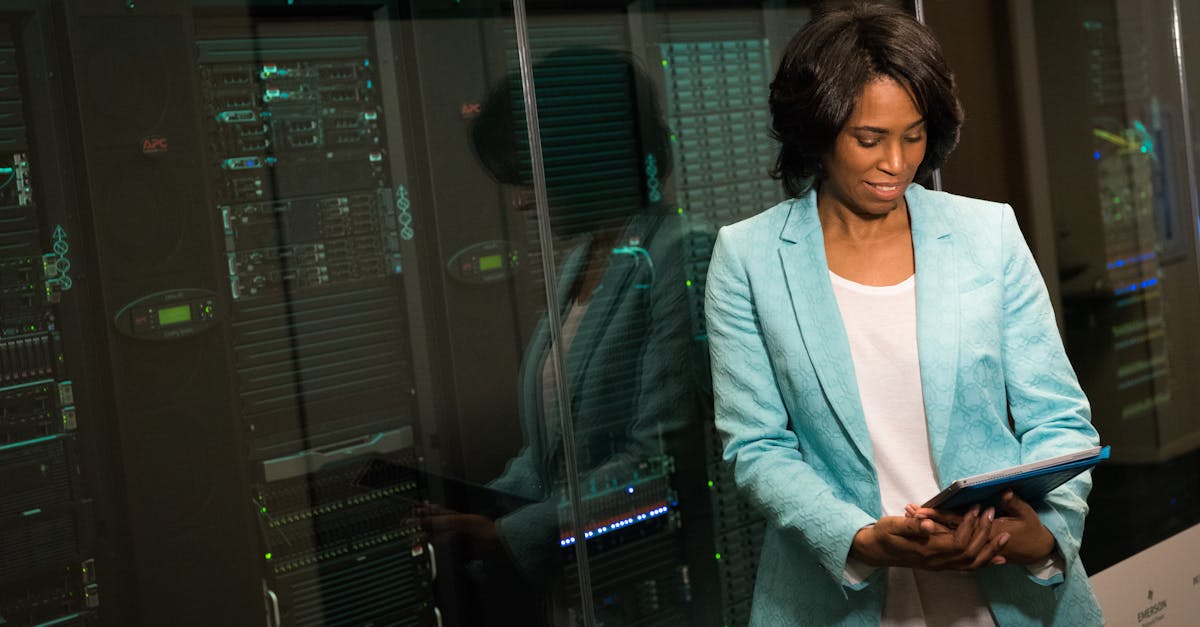 cybersecurity engineer working in server room datacenter — Photo by Christina Morillo on Pexels
During the September 17 event, expect DigiCert’s engineering leadership and guest analysts to frame PQC not as an esoteric physics question, but as standard, urgent technical debt. Much like the transition from SHA-1 to SHA-256 or the scramble to patch Heartbleed, quantum readiness requires organizations to understand every endpoint, container, microservice, and load balancer running in their environment.
The issue is that modern enterprises do not have a centralized cryptographic inventory. Most Fortune 500 companies have millions of active digital certificates, many of them shadow certificates spun up across ad-hoc cloud workloads by DevOps engineers without centralized oversight. DigiCert’s event will lean heavily into the mechanics of building an accurate Cryptographic Bill of Materials (CBOM) to identify which services will instantly break when legacy cipher suites are deprecated.
4 Crucial Themes Under the Microscope
The joint broadcast between DigiCert and theCUBE will run through several panel discussions, technical deep dives, and analyst breakdowns. Based on current enterprise deployment pain points, four specific technical vectors will dominate the conversation.
1. Hybrid Deployments and Dual-Certificate Stacks
No serious organization will flip a switch and migrate purely to lattice-based cryptography overnight. The industry standard path forward is hybrid implementation—nesting an existing classical algorithm (like ECDSA or RSA) alongside a post-quantum algorithm (such as ML-DSA).
The event will showcase how hybrid certificates operate in production environments. While hybrid models protect against algorithmic vulnerabilities in early PQC implementations, they dramatically expand certificate chain sizes and create complex validation logic for client applications.
2. The Network Overhead Bottleneck
Switching algorithms is not a drop-in replacement. Classical elliptic-curve cryptography (ECC) keys are tiny—typically 256 or 384 bits. In contrast, post-quantum alternatives require orders of magnitude more bandwidth.
When your digital certificates explode from a few hundred bytes to several kilobytes, network infrastructure notices. During the sessions, expect network architects to dissect the operational friction of maximum transmission unit (MTU) packet fragmentation, dropped TLS 1.3 handshakes, and increased latency across high-frequency trading platforms and mobile edge networks.
3. Automated Certificate Lifecycle Management (CLM)
With Google already enforcing 90-day maximum validity periods for SSL/TLS certificates and post-quantum transitions requiring frequent cipher rotation, manual certificate renewal is dead. You cannot remediate post-quantum vulnerabilities with spreadsheets and calendar alerts. The September 17 broadcast will focus on zero-touch PKI automation, evaluating protocols like ACME (Automated Certificate Management Environment) within modern, distributed cybersecurity architectures.
4. Regulatory Pressures and Mandate Timelines
Compliance teams are waking up to the reality that governments are enforcing hard migration deadlines. The U.S. National Security Agency’s Commercial National Security Algorithm Suite 2.0 (CNSA 2.0) guidelines mandate post-quantum capabilities across national security systems starting in the 2025–2027 window, with full deprecation of legacy algorithms by the early 2030s. Panelists will analyze how these sovereign mandates are bleeding directly into commercial vendor contracts, financial services oversight, and critical infrastructure regulations.
The Technical Reality: Classical vs. Post-Quantum Cryptography
To understand why the September 17 event matters, you have to look at the raw computational and spatial differences between the mathematics powering the modern internet and the algorithms finalized by NIST.
The following breakdown illustrates why modernizing PKI is fundamentally an infrastructure restructuring project:
| Standard / Scheme | Primary Algorithm | Underlying Problem | Public Key Size | Signature / Ciphertext Size | Quantum Vulnerability |
|---|---|---|---|---|---|
| RSA-2048 (Classical) | RSA | Integer Factorization | 256 bytes | 256 bytes | Broken by Shor’s Algorithm |
| ECDSA P-256 (Classical) | ECC | Discrete Logarithm | 64 bytes | 64 bytes | Broken by Shor’s Algorithm |
| FIPS 203 (PQC - General Encryption) | ML-KEM (Kyber-768) | Module Learning With Errors (LWE) | 1,184 bytes | 1,088 bytes | Quantum-Resistant |
| FIPS 204 (PQC - Digital Signatures) | ML-DSA (Dilithium3) | Module Learning With Errors (LWE) | 1,952 bytes | 3,293 bytes | Quantum-Resistant |
| FIPS 205 (PQC - Stateless Signatures) | SLH-DSA (SPHINCS+) | Hash-Based Signatures | 32 bytes | 7,856 bytes | Quantum-Resistant |
As this comparison highlights, using an algorithm like FIPS 204 (ML-DSA) involves handling a public key roughly 30 times larger than ECDSA and a signature more than 50 times larger. When an authentication flow involves multiple round trips, API gateways and embedded IoT chips can experience catastrophic performance degradation.
Navigating this trade-off requires enterprise-wide agility, forcing companies to reconsider their broader data security posture and storage architectures before legacy protocols are forcibly sunset.
What CISOs and Security Architects Need to Listen For
As theCUBE anchors the broadcast, viewers should look past the marketing varnish and listen for concrete deployment methodologies.

First, pay close attention to discussions around crypto-agility. The defining trait of a mature security organization in 2026 is not whether they have completely deployed ML-KEM across every edge device; it is whether their systems can seamlessly swap out a compromised cryptographic primitive without requiring code refactoring or infrastructure downtime. If a flaw is discovered in a lattice-based implementation next week, can your infrastructure pivot in hours, or will it take six months of emergency sprints?
Second, look for unvarnished metrics on legacy edge device survivability. Thousands of organizations rely on industrial control systems, automotive firmware, medical hardware, and connected meters that lack the memory and processing power to execute post-quantum key exchanges. How DigiCert and its enterprise partners address the bridging of these legacy assets will separate viable migration blueprints from unrealistic wish lists.
Third, watch how the conversation handles supply chain dependencies. An enterprise can spend millions hardening its internal infrastructure, but if its third-party SaaS vendors, API aggregators, and authentication identity providers remain chained to RSA-2048, the perimeter remains wide open.
The Real Test: Engineering Action Over Hype
World Quantum Readiness Day comes at a pivotal moment. The theoretical debates that characterized the early 2020s are obsolete; the regulatory deadlines of the late 2020s are bearing down.
The September 17 broadcast with theCUBE has the opportunity to cut through the paralyzing hype of the quantum industry. For security leaders, the event should not be treated as passive entertainment, but as an operational calibration session.
The transition to post-quantum cryptography is the largest, most pervasive infrastructure overhaul in the history of the commercial internet. The companies that use this September checkpoint to map their assets, pilot automated discovery, and deploy hybrid keys will absorb the migration as a routine engineering evolution. Those that wait will find that when Q-Day arrives, their time ran out years earlier.
Last updated Sep 7, 2026
Newsroom
Reporting and analysis from the InnotechInsider editorial team, covering the technology shaping tomorrow.
Related stories

Your Encrypted Data Already Has an Expiration Date
A quantum computer that can crack today's encryption doesn't exist yet. That hasn't stopped attackers from stockpiling your encrypted traffic to read later.

Anthropic Offers Free AI Security Scans to Open-Source Projects
Anthropic is opening its frontier reasoning models to open-source maintainers for free security audits. The move aims to patch a fractured software supply chain.

When Code Breaks the Bank: How Cyber Cascades Threaten Global Finance
Central bankers warn that the next systemic liquidity freeze won't stem from bad balance sheets, but from automated cyber attacks on critical settlement rails.