



The Silent Signal: How AI Found the Biomarkers Human Doctors Missed
AI foundation models are decoding multi-omic disease signals once dismissed as biological noise. Here is how machine learning is overhauling early diagnostics.
7 min read

TL;DR Deep learning architectures trained on high-dimensional multi-omics datasets are uncovering subtle molecular patterns that identify aggressive cancers, neurodegenerative decline, and autoimmune flare-ups years before conventional clinical symptoms emerge.
For decades, the search for disease biomarkers operated like police detectives scanning a grainy crowd photograph for a single, known suspect. Medicine looked for the smoking gun: an elevated prostate-specific antigen (PSA), an abnormal surge in cardiac troponin, or a localized spike in blood glucose.
That single-target approach worked well for acute, mechanically straightforward trauma. It failed miserably for systemic, creeping pathologies. Early-stage pancreatic adenocarcinoma, idiopathic pulmonary fibrosis, and Alzheimer’s disease do not announce themselves with a solitary molecular siren. Instead, they whisper across thousands of circulating peptides, fluctuating microRNAs, and subtle shifts in DNA methylation patterns—a symphony of faint metabolic anomalies that human biochemists routinely dismiss as biological noise.
By late 2026, the paradigm has definitively inverted. Rather than searching for isolated outlier molecules, clinical researchers are deploying specialized neural networks to analyze dynamic, distributed biomarker signatures across the human body. Machine learning has turned the chaotic background static of multi-omics into the clearest early-warning system medicine has ever seen.

The Collapse of the Single-Molecule Paradigm
The fundamental problem with legacy diagnostics is that biology is non-linear. A human cell does not break down in a vacuum; it compensates, down-regulates, recruits adjacent pathways, and modulates its microenvironment. Two patients suffering from molecularly identical breast tumors may present wildly different concentrations of individual serum proteins due to variations in age, circadian rhythms, or gut microbiomes.
When researchers trained classical statistical models on these samples, the false-positive rates were catastrophic. If an assay required 50 distinct protein thresholds to match simultaneously, clinical utility degraded rapidly.
Generative and self-supervised architectures have shattered this bottleneck. By treating cellular readouts much like large language models treat syntax, modern AI systems treat the epigenome and the circulating proteome as a dynamic language. Models trained on millions of mass spectrometry readouts and single-cell RNA sequencing datasets do not search for an absolute volume of a specific molecule. Instead, they assess relational topology—how the concentrations of three hundred marginal proteins drift relative to one another over time.
Where a human pathologist sees an inconclusive panel of slightly irregular enzymes, an attention-based diagnostic engine spots the undeniable geometric fingerprint of early oncogenesis. Integrating modern ai models directly into high-throughput spectrometry pipelines allows laboratories to identify systemic stress signatures months before an anatomical lesion becomes visible on a PET scan.
The Multi-Omic Engine: How the Diagnostic Pipeline Shifted
The leap forward seen throughout 2026 stems from the convergence of automated wet labs and foundation models capable of fusing disparate biological datasets. Diagnostic engines no longer rely on a single data layer; they ingest multi-omic inputs simultaneously to build a multidimensional picture of patient health.
To understand why this shift represents an evolutionary leap rather than an incremental upgrade, consider the architectural divergence between legacy biomarker identification and contemporary AI-driven multi-omic discovery:
| Dimension | Legacy Biomarker Discovery (Pre-2023) | AI Foundation Biomarker Pipeline (2026) |
|---|---|---|
| Primary Data Input | Single layer (e.g., individual serum protein, targeted gene mutation) | Multi-omic (Epigenetic methylation, proteome, metabolome, cell-free RNA) |
| Discovery Timeline | 4 to 8 years of hypothesis-driven wet-lab assays | Weeks of in silico candidate extraction followed by targeted robotic screening |
| Signal Resolution | Scalar (threshold-based: above/below X ng/mL) | High-dimensional relational topology across hundreds of low-abundance markers |
| False-Positive Mitigation | Manual cohort stratification and restrictive clinical cutoffs | Contextual attention mechanisms modeling underlying metabolic variations |
| Validation Pathway | Serial animal models and slow prospective observational trials | Closed-loop automated wet labs running high-throughput CRISPR perturbation screens |
This technical transformation is altering patient outcomes. Earlier this year, multi-center trials highlighted by the National Institutes of Health demonstrated that combinatorial liquid biopsies powered by deep learning could detect eight deadly cancer types at Stage I with an aggregate specificity topping 98%. Rather than relying on tumor shedding massive enough to generate prominent cell-free DNA fragments, the system analyzes the systemic immune-proteomic response—detecting the human body’s cellular alarm long before the tumor sheds detectable quantities of mutated genetic material.
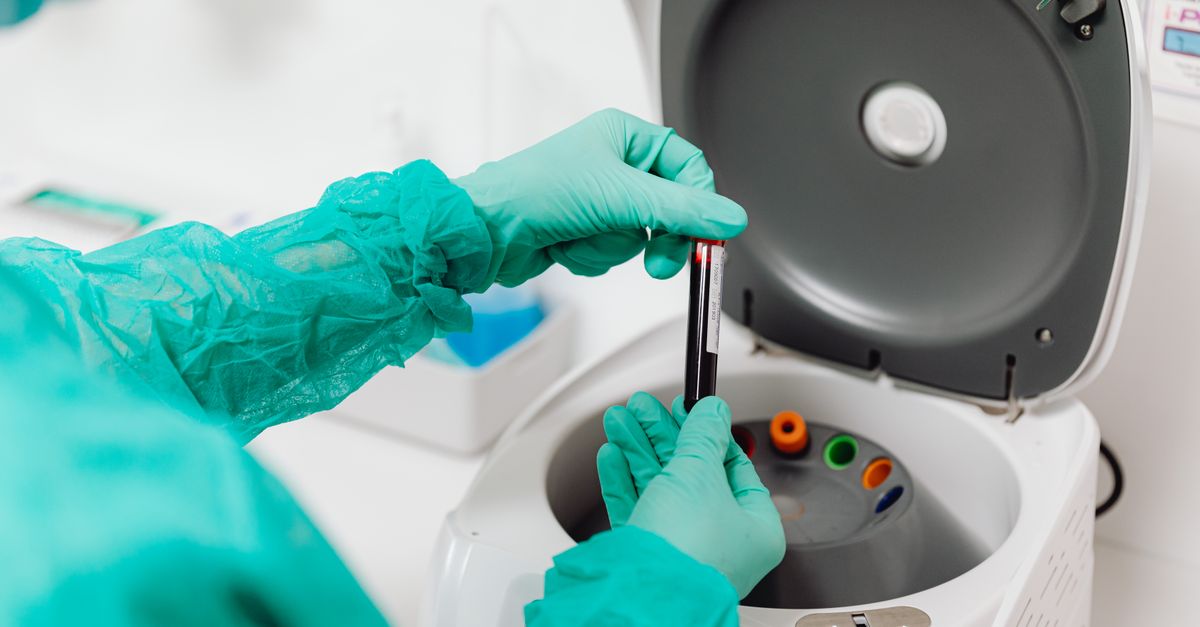 laboratory technician holding blood sample tube next to automated analyzer — Photo by https://kaboompics.com/ on Pexels
Cracking Neurodegeneration Before Synaptic Collapse
Oncology is the most visible beneficiary, but the real diagnostic frontier is neurodegenerative disease. For illnesses like Alzheimer’s and Parkinson’s, physical symptoms mark the final chapter of a pathology that has quietly wreaked havoc across the central nervous system for twenty years. By the time a patient presents with memory lapses or a resting tremor, billions of neurons are already irrevocably lost.
Historically, identifying peripheral blood markers that mirror brain pathology was nearly impossible due to the blood-brain barrier. Traces of neurofilament light chain (NfL) or phosphorylated tau species trickling into systemic circulation were diluted into near-undetectable fractions.
Today’s transformer models, however, are trained to spot micro-signatures across non-invasive biological fluids. By synthesizing mass spectrometry profiling of blood plasma with real-world longitudinal cognitive tests, AI models have isolated composite biomarker panels that predict clinical cognitive decline a decade before cognitive assessment scores slip.
According to research indexed across the National Cancer Institute and open translational registries, identifying these early metabolic deviations fundamentally redefines drug development. Experimental neuroprotective therapeutics, which spent decades failing late-stage clinical trials because they were administered to patients whose brains were already structurally decimated, can finally be deployed during the asymptomatic metabolic phase—the only window where saving neuronal tissue remains biologically viable.
The Explainability Paradox: The Model Knows, But Do We?
Despite this unprecedented clinical precision, the proliferation of deep learning in molecular biology has triggered friction between software engineers and regulatory bodies. The central debate of 2026 diagnostic medicine is the explainability problem.
If a multi-omic deep learning model identifies a 47-protein signature that predicts aggressive triple-negative breast cancer recurrence with 99% accuracy, but biochemists cannot map the precise biological pathway connecting those 47 proteins to the tumor’s mechanics, should the assay be cleared for clinical intervention?
Traditional diagnostics rely on mechanistic causality. Medical regulators, including the U.S. Food and Drug Administration, have historically mandated that a diagnostic test demonstrate not just predictive power, but a validated biological rationale. Deep neural nets break this regulatory expectation. They frequently exploit non-linear correlations spanning unrelated biological systems—linking hepatic enzyme variations with immune cell exhaustion—that human science has not yet cataloged.
AI Predictive Signal Discovery
Dimensionality Reduction & Cross-Validation
Mechanistic “Black Box” Uncertainty
- Regulatory Hesitation (Safety / Interpretability)
- Automated Wet-Lab Validation (CRISPR / Cell Models)
To bridge this chasm, biotechnology firms are building self-interrogating architectures. By implementing biological pathway constraints into the latent layers of the networks—often called “biologically informed neural networks”—engineers force the models to assign attention weights only to proteins that possess established, physical biochemical affinities.
At the same time, this drive toward explainability is accelerating investments in automated future tech laboratories, where autonomous robotic pipettes and microfluidic platforms experimentally perturb human cell lines to physically confirm the mechanistic hypotheses spit out by the discovery algorithms.
Synthetic Target Generation
The logical byproduct of AI biomarker identification is accelerated drug discovery. A validated biomarker is, quite frequently, a targetable vulnerability in disguise. When machine learning platforms pinpoint an obscure, misfolded cell-surface receptor as the hallmark signature of an immunotherapy-resistant tumor, they simultaneously hand medicinal chemists a bullseye.
Pharmaceutical majors are no longer treating diagnostic discovery and therapeutic development as siloed operations. Machine learning architectures identify the diagnostic fingerprint and simultaneously model small-molecule binders or computational antibody fragments engineered to latch onto that precise protein configuration. The boundary separating diagnostics from therapeutics has effectively dissolved into a continuous, data-driven feedback loop.
From Reactive Treatment to Molecular Surveillance
The widespread clinical integration of predictive biomarker discovery signals the end of medicine’s reactive era. For over a century, healthcare has waited for mechanical breakdown: a swollen lump, an agonizing chest spasm, an irreversible memory void.
By pushing diagnostic sensitivity down to the atomic whisper of early molecular drift, AI has turned the human body into a readable, continuously debuggable biological machine. We are pivoting rapidly away from broad, blunt diagnostic labels toward hyper-individualized molecular profiles that track the sub-clinical origins of disease in real time.
The primary challenges ahead are no longer strictly computational. The industry must now resolve difficult bioethical questions surrounding early disease notification, manage the psychological weight of knowing an illness is coming years before it strikes, and overhaul antiquated regulatory standards built for single-chemical tests. Yet the clinical mandate is undeniable: the algorithms have deciphered the body’s secret signaling channels, and modern medicine can never afford to unhear them.
Last updated Sep 25, 2026
Newsroom
Reporting and analysis from the InnotechInsider editorial team, covering the technology shaping tomorrow.
Related stories

Medieval Parchment Is Unlocking the Deep Genomic History of Sheeppox
Microscopic scrapings from 800-year-old parchment manuscripts are revealing intact viral genomes, rewriting the evolutionary timeline of deadly livestock plagues.

Beyond AlphaFold: Inside the Push to Embed AI Deep Inside the Wet Lab
As elite research centers embed dedicated AI fellows into wet labs, machine learning is evolving from a passive analytics tool to an active experimental engine.

Uganda's Dual Viral Threat: A Stress Test for Global Health Tech
Uganda faces a dire public health crisis as a confirmed Marburg case emerges amid a raging Ebola outbreak, pushing its healthcare system to the brink. This unprecedented dual threat serves as a critical stress test for global rapid response capabilities and cutting-edge health technology.