


Nvidia’s $500 Billion Wall Street Play: Financing the Global AI Supergrid
Nvidia is leveraging Wall Street to bankroll a $500 billion AI infrastructure expansion, transforming from a chip designer into a global platform financier.

TL;DR Nvidia is orchestrating a structural shift in global finance, channeling $500 billion in private debt, sovereign wealth, and Wall Street capital to build mega-scale AI data centers worldwide.
In finance, there is raising capital to grow a tech company, and then there is engineering global debt markets to underwrite the physical architecture of a new industrial epoch. Nvidia chief executive Jensen Huang has officially crossed that threshold. By organizing a syndicate of Wall Street private equity titans, debt originators, and sovereign wealth funds, Nvidia is catalyzing a $500 billion capital deployment strategy aimed at building out global artificial intelligence infrastructure over the next three years.
This is far more than a standard corporate borrowing round. Nvidia itself isn’t placing $500 billion onto its own balance sheet; instead, the semiconductor giant is acting as an investment catalyst, primary architect, and technology guarantor. It is creating specialized financing structures that allow “neo-cloud” providers, sovereign entities, and regional infrastructure operators to borrow staggering sums against hardware assets, power rights, and enterprise compute commitments. As traditional corporate budgets adapt to new biz it paradigms, Nvidia realizes that the speed of AI deployment is no longer constrained by tech firm enterprise budgets, but by project financing velocity.
The sheer scale of this financing effort signals a historic transformation in how technology infrastructure gets built. Where cloud computing’s first wave was funded by the organic cash flows of Big Tech balance sheets, this second, hardware-intensive wave requires the heavy machinery of project finance—the kind historically reserved for cross-continent oil pipelines, nuclear power stations, and deep-sea shipping fleets.
How Wall Street Structured the GPU Asset Class
To understand how half a trillion dollars flows into server racks without blowing up Nvidia’s balance sheet, you have to follow the evolution of the underlying collateral. In conventional project finance, lenders extend long-term credit against predictable physical cash flows—a municipal water contract or a 20-year power purchase agreement. In the generative AI era, enterprise GPU clusters running high-density workloads have suddenly emerged as an independent asset class capable of generating extraordinary yields.
Wall Street heavyweights including Blackstone, Apollo Global Management, and Blue Owl Capital have engineered special purpose vehicles (SPVs) that pull in global institutional debt. These vehicles purchase Nvidia hardware, deploy it into specialized data centers, and lease the compute back to hyper-growth AI developers and Fortune 500 corporations. If a cloud customer defaults, the modular nature of Nvidia’s software stack ensures that the compute cluster can be quickly re-leased to another customer with minimal operational downtime.

The transition from corporate balance-sheet capex to off-balance-sheet asset-backed debt fundamentally alters the competitive dynamics of technology infrastructure:
| Structural Dimension | Classical Cloud Capex Model | Nvidia-Wall Street Infrastructure Syndicate |
|---|---|---|
| Primary Financing Source | Internal corporate cash flow (Microsoft, AWS) | Private credit, SPV debt, sovereign co-investors |
| Primary Asset Collateral | Parent company corporate credit rating | Liquid GPU compute clusters & long-term PPA contracts |
| Buildout Pace | Bound by quarterly internal capex budgets | Unbound; limited only by private debt market depth |
| Geographic Strategy | Concentrated in centralized hyperscaler regions | Globally distributed across national sovereign sites |
| Target Enterprise | General software workloads & web services | Specialized LLM training, sovereign state projects |
| Residual Risk Exposure | Retained entirely by cloud providers | Structured across multi-tiered debt and equity tranches |
The Rise of Neo-Cloud Debt Vehicles
Under this financial framework, challenger cloud providers like CoreWeave, Lambda Labs, and Crusoe Energy are able to borrow billions against their existing hardware long before they achieve profitability. Nvidia often facilitates these transactions by offering secondary purchase commitments or underwriting capacity guarantees. The result is a self-reinforcing flywheel: Wall Street provides the liquidity, neo-clouds buy Nvidia’s high-margin chips, and global technology consumers receive the raw compute required to train next-generation systems.
Sovereign Compute and the Geopolitical Race for Silicon
While private equity handles the commercial side, sovereign states are driving the national security narrative. Governments across the globe have realized that depending on foreign-hosted cloud infrastructure for national artificial intelligence capabilities poses a major strategic risk. “Sovereign AI”—the concept that every nation must own its data, domestic cultural models, and physical compute capacity—has moved from theoretical policy whitepapers into line-item national budgets.
From the Gulf States to East Asia, national sovereign wealth funds are partnering with Nvidia to finance gigawatt-scale data center complexes. Public documentation filed with the U.S. Securities and Exchange Commission reveals an accelerating trend of sovereign-backed funds securing multi-billion-dollar debt facilities specifically designated for domestic GPU deployments.
This sovereign rush coincides with radical changes in energy networks. As energy grids struggle to supply the massive wattage required by megawatt-dense server racks, financing packages now routinely include dedicated power assets, ranging from utility-scale solar farms to modular grid connections. Deep investments in future tech like small modular reactors (SMRs) and direct-to-chip liquid cooling systems are now bundled directly into these capital allocations. Insights from the International Energy Agency forecast that global data center energy consumption could double within three years, ensuring that every financial facility raised on Wall Street must secure electricity alongside silicon.
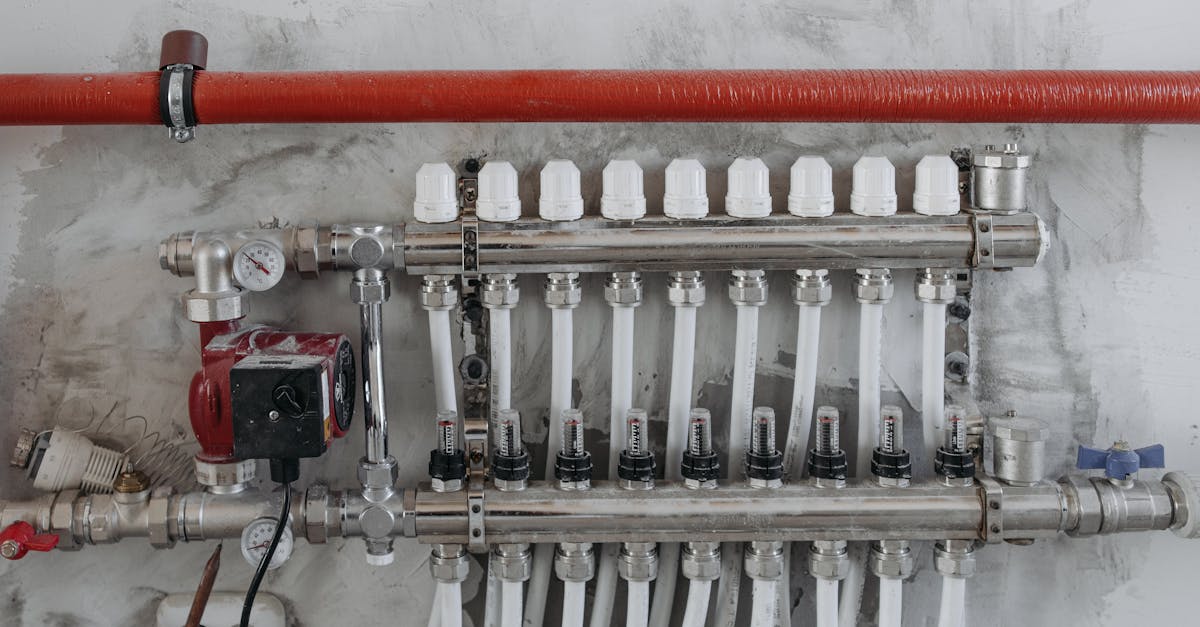 engineer inspecting liquid cooling manifold inside server room — Photo by Pavel Danilyuk on Pexels
The 4 Fatal Risks Facing Wall Street’s AI Debt Engine
Even as capital flows effortlessly, senior risk managers across major investment banks are voicing anxiety over the unprecedented speed of this leverage. Financial engineering on this scale creates systemic vulnerabilities, particularly when applied to rapidly evolving technology. Four major structural risks could shatter the assumptions underlying these half-trillion-dollar models:
- Accelerated Hardware Depreciation: Debt tranches in these SPVs are frequently structured over four-to-six-year repayment windows. However, if Nvidia releases a radically superior chip architecture every 12 to 18 months, older GPU clusters could suffer sudden capital write-downs long before the underlying debt is fully amortized.
- Grid Connection Interconnection Delays: Wall Street can structure and syndicate a multi-billion-dollar debt package in weeks, but regional electric utilities often require five to seven years to deliver a high-voltage transmission interconnect. If GPU hardware sits idling in warehouses while interest accrues, equity returns evaporate quickly.
- Algorithmic Efficiency Breakthroughs: The fundamental premise of the infrastructure buildout is that training frontier models requires exponentially more raw compute. If algorithmic refinements or smaller, highly distilled frontier ai models reduce the FLOP requirements per unit of intelligence, global demand for raw compute infrastructure could suddenly plateau.
- Customer Concentration and Counterparty Risk: Many debt-financed neo-cloud platforms derive up to 80% of their operational revenue from a small handful of venture-backed AI startups. If the broader software application layer fails to generate sustainable enterprise revenue, a wave of startup bankruptcies could trigger a default cascade across GPU-collateralized loans.
Furthermore, maintaining these ultra-dense computing environments requires strict adherence to complex hardware management protocols. Technical specifications established by the National Institute of Standards and Technology highlight that physical security, thermal dynamics, and cyber resilience in mega-compute sites introduce immense operational costs that Wall Street financial models routinely undercalculate.
Jensen Huang’s Financial Tollbooth
By constructing this half-trillion-dollar bridge between global debt markets and physical compute buildouts, Jensen Huang has pulled off one of the most remarkable corporate expansions in industrial history. Nvidia is no longer just a semiconductor firm, nor is it merely a software platform company defined by CUDA. It has evolved into the financial and operational orchestrator of the world’s next utility grid.
In this emerging landscape, Nvidia holds all the strategic levers: it designs the processors, writes the foundational software libraries, specifies the network interconnects, and now facilitates the capital structures that finance the real estate and power. Wall Street may be providing the raw capital, but Nvidia dictates where, how, and at what price that capital converts into intelligence.
For investors and technology executives, the implications are stark. The half-trillion-dollar supergrid is being built at breakneck speed. Whether this debt boom produces the structural foundation of a new digital economy or a historic asset write-down depends entirely on whether software applications can monetize compute as fast as Wall Street can finance it.
Last updated Aug 11, 2026
InnotechInsider Staff
Newsroom
Reporting and analysis from the InnotechInsider editorial team, covering the technology shaping tomorrow.
Related stories

Beyond Nvidia: How China Is Building an Unsanctionable Silicon Empire
Beijing is pouring hundreds of billions into domestic chip production to bypass US export bans. Here is how its workaround silicon ecosystem is taking shape.

Nvidia’s $59 Tensor Card: Silicon Democracy or a Clever Lock-In?
Nvidia's new ultra-affordable Tensor Link card aims to bring local AI acceleration to budget PCs. Here is what it means for privacy, the edge-AI race, and your wallet.

Stanford's 37,000 AI Agents Built a Biotech—and Merck Proved It Works
Stanford deployed 37,000 autonomous AI agents to simulate an entire biotech firm. Pharma giant Merck just confirmed one of their drug designs in a lab.