


Beyond AlphaFold: Inside the Push to Embed AI Deep Inside the Wet Lab
As elite research centers embed dedicated AI fellows into wet labs, machine learning is evolving from a passive analytics tool to an active experimental engine.
7 min read

TL;DR Elite biomedical research institutes are abandoning the traditional handoff between bench scientists and computational analysts, creating embedded AI fellowship programs that turn machine learning models into real-time co-pilots for wet-lab experimentation.
For decades, the division of labor in biological research was etched in stone: experimentalists at the bench pipetted, stained, and imaged biological specimens for months, eventually dumping massive CSV files and terabytes of raw imaging data onto the desks of computational biologists down the hall.
That workflow is officially broken.
As modern instruments like high-throughput spatial transcriptomics platforms and cryogenic electron microscopes (cryo-EM) generate exabytes of cellular telemetry, analyzing data weeks after an experiment finishes is no longer viable. In response, premier research hubs—such as the Stowers Institute for Medical Research, the Broad Institute, and the Francis Crick Institute—are restructuring their academic hierarchies. By establishing dedicated Artificial Intelligence Fellowship programs, these institutions are placing machine learning engineers directly alongside molecular biologists, signaling a structural transition toward closed-loop biological discovery.

The Paradigm Shift: From Post-Hoc Analytics to Active Hypothesis Engines
Traditional bioinformatics treated computing as an autopsy tool: the experiment happened, the cell died, and the computer attempted to quantify what occurred. Today, generative models and active inference algorithms are acting as live steerage systems for discovery.
When embedded computational fellows work directly within wet-lab teams, the nature of experimentation changes. Instead of running brute-force screens of tens of thousands of chemical compounds or genetic perturbations, algorithms evaluate intermediate results in near-real-time. These models then suggest the next optimal biological test to maximize information gain.
This integration reflects a broader shift across science disciplines, where raw data scale has finally outstripped human intuition. The biological problems currently facing modern medicine—such as chromatin remodeling, non-coding RNA function, and transient protein-protein interactions—operate in combinatorial state spaces that human cognition cannot intuitively map.
Why Standard Statistical Pipelines Collapsed
To understand why research institutes are hiring dedicated AI fellows rather than relying on standard commercial software, one must appreciate the sheer dimensionality of modern biological data.
A single spatial multi-omics run can measure the expression of 20,000 genes across hundreds of thousands of individual cells within an intact tissue slice, while simultaneously capturing spatial coordinates, morphological features, and cell-surface protein densities.
Biological Complexity vs. Analytical Tooling
- 1990s: Single-Gene Northern Blot → Manual Visual Inspection
- 2000s: Bulk Microarray / RNA-Seq → Linear Models & PCA
- 2010s: Single-Cell RNA Sequencing → t-SNE, UMAP & Clustering
- 2020s: Spatial Multi-Omics / Cryo-ET → Geometric Deep Learning & LLMs
Standard dimensionality-reduction tools like Principal Component Analysis (PCA) and Uniform Manifold Approximation and Projection (UMAP) compress these spaces into two-dimensional visualizations, but they discard critical non-linear correlations in the process. Foundation models trained on evolutionary biology, such as the Evolutionary Scale Modeling (ESM) series documented by the National Center for Biotechnology Information (NCBI), operate natively within high-dimensional latent representations, capturing subtle evolutionary constraints that simple statistical tools miss.
Bringing an AI specialist into the laboratory environment ensures that models are not treated as black boxes, but are tailored to the physical constraints, batch effects, and unique noise profiles of specific wet-lab instruments.
The Closed-Loop Lab: Comparing Methodologies
The practical impact of embedding machine learning into biomedical research is best understood by contrasting traditional linear research pipelines with autonomous, AI-driven loops.
| Feature / Phase | Traditional Wet-Lab Pipeline | AI-Augmented Closed-Loop Pipeline |
|---|---|---|
| Hypothesis Generation | Literature review + researcher intuition | Latent space exploration across multi-modal foundational datasets |
| Experimental Design | High-throughput brute-force screening | Bayesian optimization & active learning targeting high-uncertainty nodes |
| Data Acquisition | Static data capture over days/weeks | Dynamic sampling with automated microfluidic and robotic liquid handlers |
| Analysis Bottleneck | Weeks of post-hoc computational analysis | Continuous, real-time inferencing directly at the instrument interface |
| Iterative Cycle Time | Months to years per validation cycle | Hours to days per iteration loop |
This architectural evolution relies heavily on advances in ai models that translate biological tokens—amino acid sequences, nucleotide strings, and tertiary coordinate graphs—into actionable experimental protocols.
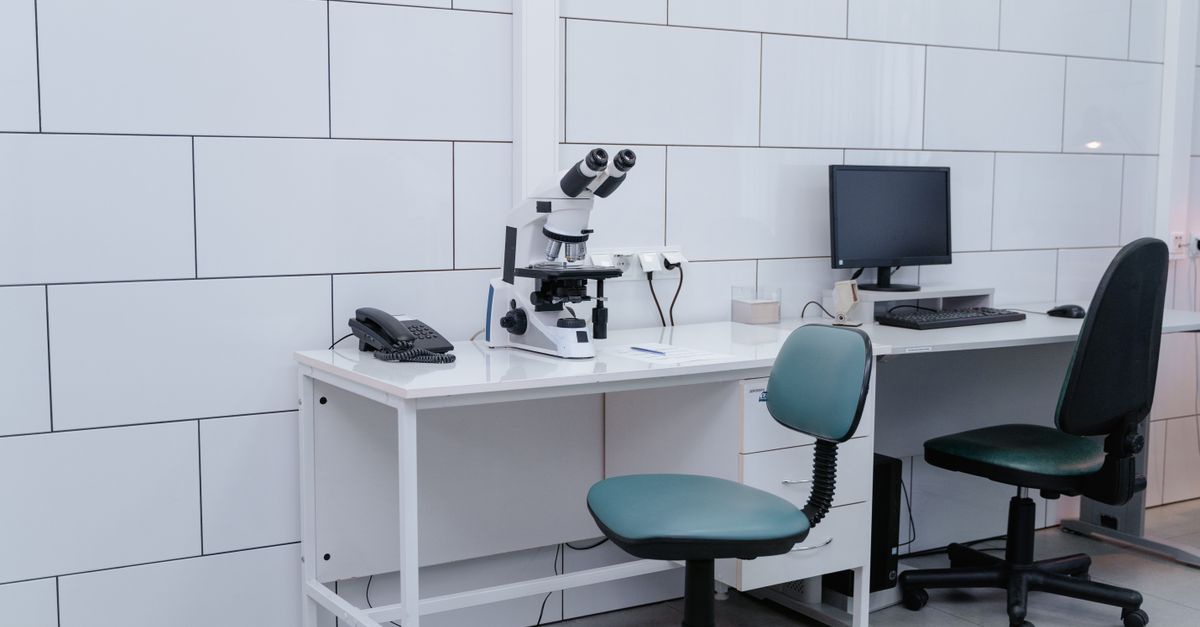 cryo electron microscope in clean room research facility — Photo by Tima Miroshnichenko on Pexels
Four Ways AI Fellows Are Overhauling Fundamental Biology
The day-to-day work of an AI fellow inside an advanced biological laboratory goes far beyond maintaining server infrastructure. These researchers are deploying novel architectures to solve previously intractable problems across cellular mechanics.
1. In Silico Embryogenesis and Latent Trajectories
Understanding how a single fertilized egg develops into a complex organism requires tracking millions of cells over time. AI fellows are building continuous vector fields (neural ordinary differential equations) over single-cell RNA-sequencing data to map the complete developmental trajectories of model organisms like Drosophila and zebrafish, predicting fate decisions before physical cellular differentiation manifests.
2. Cryo-Electron Tomography (Cryo-ET) Denoising
While Cryo-EM revolutionized structural biology by resolving isolated proteins at atomic resolution, Cryo-ET captures molecules inside intact, frozen cells. The resulting images suffer from extreme signal-to-noise deficits. Machine learning specialists are deploying 3D diffusion and generative adversarial architectures to de-noise tomograms, identifying molecular complexes in their native cellular environments without destructive isolation.
3. De Novo Structural Design of Macromolecules
Instead of screening natural peptide libraries, researchers now design synthetic proteins and molecular binders from scratch. Deep learning systems parameterize protein backbones and inverse-fold amino acid sequences to fit target binding pockets with sub-angstrom accuracy, accelerating the development of targeted biologics and molecular probes.
4. Active-Learning Robotic Experimentation
By pairing Bayesian optimization algorithms with high-precision automated pipetting systems, laboratories can execute autonomous exploration of biochemical phase space. The algorithm conducts an assay, reads the optical density or fluorescence, recalculates its uncertainty boundaries, and alters the reagent ratios for the next row of the microplate without human intervention.
The Cultural Collision: Computer Science Meets the Petri Dish
Despite the obvious upside, embedding computational purists into wet labs introduces distinct operational challenges.
The fundamental cultures of computer science and molecular biology are historically mismatched. Machine learning engineers prioritize rapid iterations, automated benchmarking, and high compute utilization. Wet-lab biologists contend with biological noise, uncooperative cell cultures, reagent lot inconsistencies, and experimental protocols that take weeks to mature.
When an algorithm suggests an experiment based on synthetic correlations in an improperly normalized dataset, the wet lab pays the price in expensive reagents and wasted time. Conversely, when experimentalists fail to structure their metadata to machine-readable standards, sophisticated neural network architectures are rendered useless.
Institutes establishing dedicated AI fellowships are explicitly attempting to bridge this dialectical gap. These initiatives create a hybrid class of technologist: bilingual researchers who understand both loss-function convergence and the messy realities of cell culture contamination. As these multidisciplinary teams mature, we are seeing the emergence of specialized future tech toolchains explicitly engineered to handle messy, incomplete biological data.
The Next Frontier: Whole-Cell Foundation Models
The long-term objective of these institutional expansions extends beyond solving individual protein structures or optimizing assay protocols. The ultimate prize is the development of a comprehensive foundation model for the eukaryotic cell.
Just as large language models tokenize human text to predict succeeding words in a sequence, a cellular foundation model tokenizes chromatin access, transcriptomic signatures, post-translational modifications, and morphological dynamics. Such a model would allow researchers to perform massive in silico perturbations—simulating the knockout of multiple genes simultaneously, testing combinatorial drug therapies, or predicting metastatic mutations—before spending a single dollar on wet-lab consumables.
Elite research institutes are signaling that AI is no longer a downstream service department for biological sciences; it is the scaffolding upon which the next century of mechanistic discovery will be built. By embedding computational theorists directly into the wet-lab ecosystem, biology is shedding its descriptive, observational roots and transforming into a predictive, programmable engineering discipline.
Last updated Aug 26, 2026
Newsroom
Reporting and analysis from the InnotechInsider editorial team, covering the technology shaping tomorrow.
Related stories

How DNA Sequencing and IoT Tracked a Fast-Food Outbreak to the Source
When a sudden foodborne outbreak hit Taco Bell, health officials turned to advanced genomic sequencing and IoT supply chain logs to pinpoint contaminated lettuce.

Claude Fable 5 Is Anthropic's Most Capable Model Yet, and Its Most Carefully Fenced
Anthropic's new Fable 5 posts state-of-the-art numbers across coding, science, and long-context work, but the most interesting decision is what the company held back.

To Save a Space Telescope, Engineers First Must Save Its Rescuer
When a commercial servicing craft aimed at extending NASA's Swift telescope hit a propulsion glitch, ground control had to rewrite the orbital rescue playbook.