


AI's Amnesia Problem: ChatSee Builds 'Failure Memory' for Smarter Enterprise Agents
Enterprise AI often repeats past mistakes, costing businesses dearly. ChatSee just raised $6.5M to give AI agents a crucial 'failure memory,' promising a future of resilient, context-aware automated systems.

TL;DR Enterprise AI agents, despite their power, often forget past failures, leading to repeated errors and significant costs. ChatSee’s $6.5M funding round highlights a critical shift towards building “failure memory” – a structured, actionable knowledge base of mistakes – to create more resilient, trustworthy, and continuously learning AI systems for businesses.
The year is 2024, and artificial intelligence is no longer a futuristic dream but a pervasive reality in the enterprise. From automating customer support to optimizing supply chains and accelerating code development, AI agents are increasingly embedded in the operational fabric of businesses worldwide. Yet, for all their dazzling capabilities, these digital assistants suffer from a peculiar, often frustrating ailment: chronic amnesia regarding their own mistakes. A customer service bot might repeatedly misinterpret the same nuanced query, or an internal AI might consistently fail to retrieve a specific piece of information, despite having been corrected on that exact point just hours before. This isn’t just an annoyance; it’s a costly, trust-eroding vulnerability that threatens to undermine the very promise of enterprise AI.
Enter ChatSee, a startup that has just secured $6.5 million in seed funding to tackle this fundamental flaw head-on. Their mission? To equip enterprise AI agents with what they call “failure memory.” It’s an ambitious concept that moves beyond simple error logging, aiming to give AI systems the capacity to not just register a mistake, but to deeply understand why it occurred, and crucially, to proactively prevent its recurrence. This isn’t merely about debugging; it’s about engineering resilience and continuous learning into the very core of autonomous enterprise operations. For businesses grappling with the reliability and scalability of their AI deployments, ChatSee’s approach could represent a watershed moment, shifting the narrative from “AI fails again” to “AI learns and adapts.”
The AI Amnesia Epidemic: Why Forgetting is So Costly
The current generation of large language models (LLMs) and the agents built atop them are astonishingly proficient at generating text, summarizing information, and performing complex tasks. However, their learning paradigms often prioritize pattern recognition and prediction over persistent, actionable memory of individual failures. Many interactions are effectively “stateless,” meaning each new prompt or query is treated as an isolated event, disconnected from previous attempts, even if they pertained to the same user or context. This architectural reality leads to a phenomenon often described as “AI amnesia.”
Consider the implications. In a customer support scenario, a user might engage with an AI agent regarding a complex billing issue. The agent, due to a subtle misinterpretation of jargon or a missing piece of contextual data, provides an incorrect solution. The user corrects it, perhaps escalates to a human, and the issue is resolved. But later that day, another user, or even the same user, asks a similar question, and the AI agent makes the exact same mistake. This isn’t a rare occurrence; it’s a systemic challenge. The cost isn’t just in wasted computational cycles; it’s in frustrated customers, reputational damage, increased human agent workload for escalations, and a slow erosion of confidence in the AI system itself.
Moreover, the problem extends beyond customer-facing applications. In internal knowledge management, an AI assistant might repeatedly misinterpret a specific company policy query, leading employees down the wrong path. In code generation, an agent might consistently produce code with a particular bug pattern, requiring human developers to fix the same error repeatedly. This “forgetfulness” translates directly into operational inefficiencies, delayed project timelines, and tangible financial losses. According to reports, enterprises often struggle with the reliability and ethical risks of AI, with repeated failures being a major contributor to a lack of trust and adoption [external_link: https://www.mckinsey.com/capabilities/quantumblack/our-insights/ai-survey-the-state-of-ai-in-2023-generative-ais-breakout-year]. The current paradigm assumes that models are “trained” once and then perform. But the real world is dynamic, and static learning is insufficient.
ChatSee’s Radical Approach: Engineering for Resilience
ChatSee’s vision for “failure memory” is far more sophisticated than simply logging errors. It’s about building a dynamic, intelligent system that actively learns from past shortcomings and integrates those learnings into future decision-making. Imagine an AI agent not just recording “failed to answer question X,” but rather recording: “failed to answer question X because it misinterpreted ‘invoice number’ as ‘order ID’ in context Y, leading to a hallucination of data. Human corrected by providing explicit definition Z.”
Beyond Simple Error Logs
This deep, contextual understanding of failure modes is critical. ChatSee’s system likely involves several key components:
- Semantic Failure Capture: Going beyond keyword matching to understand the semantic intent of the user, the AI’s internal reasoning path, and the precise point of divergence or error. This could involve leveraging smaller, specialized models to analyze interaction logs and identify root causes.
- Structured Knowledge Representation: Transforming unstructured failure data into a queryable, actionable knowledge graph or database. This isn’t just a flat log file; it’s a rich representation of “anti-patterns” and corrective actions. Think of it as a specialized, negative-feedback RAG (Retrieval Augmented Generation) system, where the AI queries its own past mistakes to avoid repeating them.
- Feedback Loop Integration: Building mechanisms for human operators to provide clear, actionable feedback on AI failures. This feedback is then structured and incorporated into the failure memory, allowing for continuous improvement. This could involve techniques akin to [external_link: https://en.wikipedia.org/wiki/Reinforcement_learning_from_human_feedback] (RLHF) but focused specifically on error correction and prevention.
- Proactive Remediation: The ultimate goal is for the AI agent itself, or an orchestrating layer, to query this failure memory before responding. If a new query closely resembles a past failure scenario, the agent can either adjust its response, seek clarification, or even escalate to a human with relevant context, rather than repeating the mistake. This represents a significant leap towards truly intelligent and self-correcting AI systems.
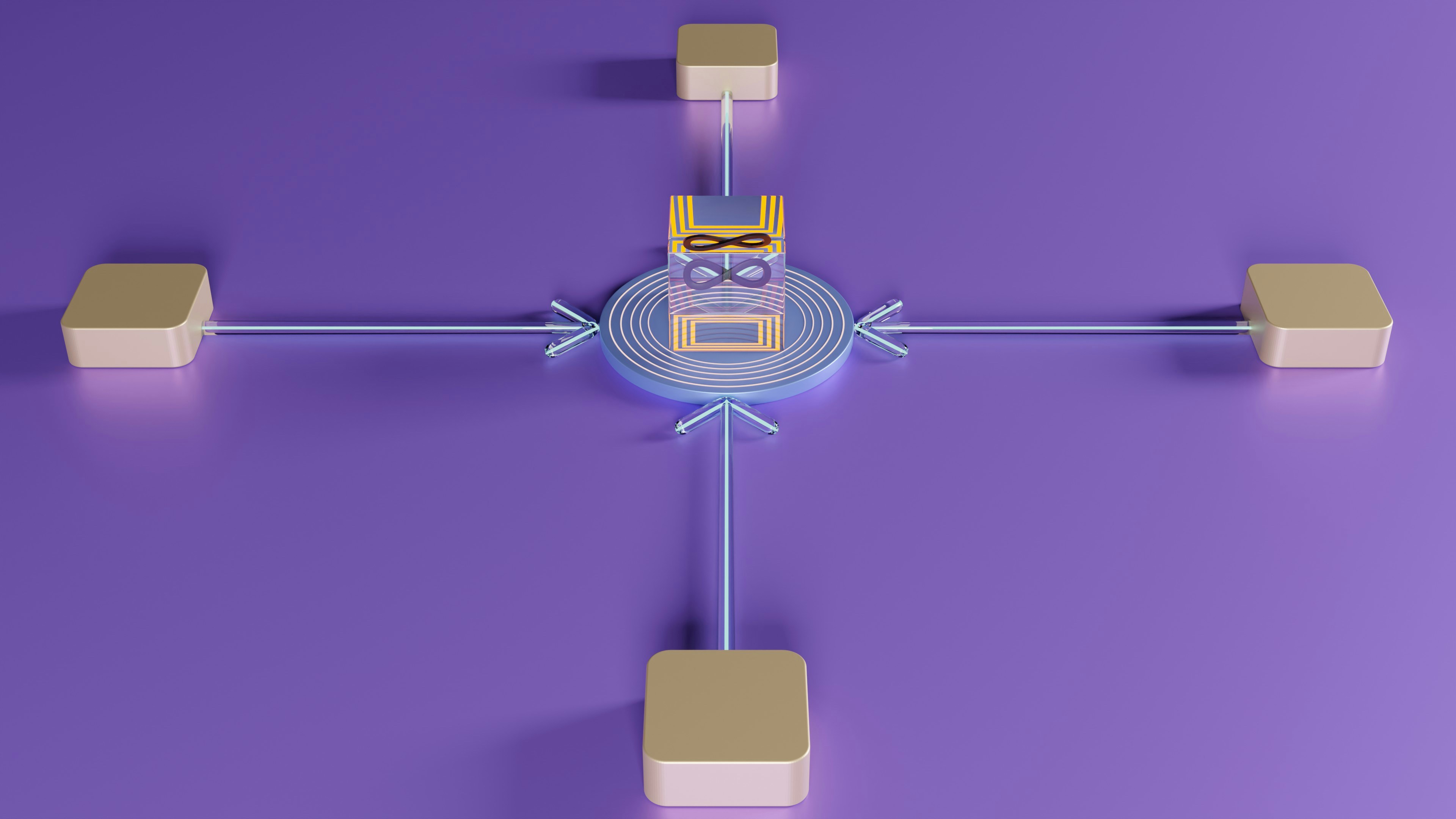
This approach transforms AI from a static, pre-trained entity into a continuously evolving, resilient system. It’s a fundamental shift from simply reacting to errors to proactively preventing them by internalizing lessons learned. For businesses already investing heavily in ai apps, this kind of reliability engineering becomes paramount for long-term success.
The Business Case: From Frustration to Functionality
The implications of robust “failure memory” for enterprise AI are profound, extending across various sectors and functions.
1. Enhanced Customer Experience and Trust: In customer service, imagine a chatbot that actually gets smarter with every interaction, avoiding past pitfalls. This directly leads to higher customer satisfaction, reduced frustration, and builds trust in automated systems, freeing human agents for more complex, empathetic tasks.
2. Reduced Operational Costs: Fewer repeated errors mean fewer escalations to human agents, less time spent debugging and retraining, and more efficient task completion. For large enterprises running thousands of AI agents, even marginal improvements in error rates can translate into millions in savings. The reduction in “AI rework” can be substantial.
3. Faster AI Development and Deployment: Developers and data scientists currently spend significant time identifying, diagnosing, and fixing recurring AI failures. With structured failure memory, this process can be dramatically accelerated. Debugging shifts from reactive firefighting to proactive system improvement, allowing teams to focus on building new capabilities rather than fixing old ones. This also accelerates the feedback loop necessary for rapid iteration and improvement of AI models.
4. Improved Compliance and Risk Mitigation: In highly regulated industries like finance, healthcare, and legal, AI errors can have severe consequences, from regulatory fines to reputational damage. An AI system with robust failure memory can be designed to learn from compliance missteps, ensuring that it adheres more closely to rules and guidelines over time, reducing critical risks. This can be particularly vital for tasks like contract analysis or regulatory reporting, where accuracy is non-negotiable.
5. Better Decision Support for Human Teams: When AI agents can articulate why they failed or how they learned from a previous mistake, they provide invaluable insights to human decision-makers. This fosters a collaborative environment where humans and AI grow smarter together, leveraging each other’s strengths. This ability to introspect and report on learning is a significant step towards more transparent and explainable AI.

This moves AI from being a source of occasional frustration and unreliable automation to an indispensable, consistently improving asset for biz it across the board.
Navigating the Technical Labyrinth and Ethical Considerations
While the promise of failure memory is compelling, its implementation presents significant technical and ethical hurdles.
On the technical front, defining “failure” itself can be complex. Is a suboptimal answer a failure? What about an answer that’s technically correct but poorly phrased? The granularity and categorization of failure types will be crucial for the system to learn effectively. Moreover, building a scalable and efficient knowledge base of failures that can be queried in real-time by numerous agents is a non-trivial engineering feat. This requires sophisticated indexing, retrieval, and contextual matching algorithms that go beyond standard database lookups. The integration with existing agentic frameworks and LLMs also needs to be seamless, ensuring that the “memory” can actually influence the AI’s output without introducing undue latency or complexity.
Ethically, the concept of “failure memory” raises questions about bias. If an AI agent learns from human feedback that inadvertently propagates existing biases, the failure memory could inadvertently reinforce those biases, making the system more resilient to being corrected on discriminatory patterns. Careful oversight, continuous monitoring, and explainable AI techniques will be essential to ensure that failure memory drives positive, equitable learning rather than entrenching problematic behaviors. Data privacy is another concern: if failures often involve sensitive customer or internal data, how is that data handled within the failure memory system? Anonymization, strict access controls, and robust data governance policies will be critical.
Furthermore, who “owns” the memory? Is it specific to an agent, a team, or the entire enterprise? How is it shared, updated, and managed? These organizational and data management questions are as important as the technical implementation details. ChatSee will need to build robust tooling for enterprises to manage and curate this crucial dataset effectively.
The Future of Reliable AI
ChatSee’s successful funding round signals a maturing AI landscape, one that is moving beyond the initial fascination with raw generative power to a deeper focus on robustness, reliability, and continuous improvement. The next frontier for enterprise AI isn’t just about making models bigger or faster; it’s about making them smarter in the human sense—capable of introspection, learning from mistakes, and adapting to dynamic environments.
This shift will be pivotal for mainstream enterprise adoption. For AI to truly become an indispensable business tool, it must be trustworthy. Businesses need confidence that their AI systems will perform consistently, learn from their errors, and minimize the need for constant human oversight and correction. Companies like ChatSee are not just building a feature; they are attempting to lay a fundamental layer of intelligence that will underpin the next generation of enterprise AI applications. Their success could mean that the era of “brittle” AI, prone to repeating its past blunders, might finally be drawing to a close.
The journey towards truly resilient, self-improving AI agents is long and complex, but the investment in “failure memory” is a clear indication that the industry is recognizing and actively addressing one of AI’s most vexing challenges. As AI becomes more autonomous and takes on increasingly critical roles, the ability to learn from its past — both successes and failures — will be the ultimate measure of its intelligence and its lasting value to the enterprise.
Last updated Jun 13, 2026
InnotechInsider Staff
Newsroom
Reporting and analysis from the InnotechInsider editorial team, covering the technology shaping tomorrow.
Related stories

Legal AI Titan Harvey Eyes $15.5B Valuation in Massive New Raise
Harvey's reported $500 million mega-round signals a seismic shift in professional services. Generative AI is no longer a gimmick—it's restructuring elite law firms.

ChatGPT's Lockdown Mode: OpenAI's Enterprise Gambit to Secure AI's Future
OpenAI's expansion of ChatGPT's Lockdown Mode marks a pivotal moment, directly addressing enterprise data privacy fears by walling off sensitive information. This isn't just a feature; it's a strategic move to unlock widespread corporate AI adoption, but questions of ultimate control and trust persist.

Everyone Suddenly Has 'AI Agents.' Most of Them Are Bluffing.
Agentic AI is the buzzword of the year, slapped on everything from chatbots to spreadsheets. Strip away the marketing and a real, narrow definition is worth understanding.