


Europe's Space Ambitions Grounded: Another Crucial Mission Scrubbed
Europe's crucial Earth observation mission, Copernicus Sentinel-7, faced yet another launch scrub, signaling deeper systemic issues for the continent's commercial space sector. This repeated setback threatens Europe's geopolitical independence and its competitive standing against agile global rivals.

TL;DR Europe’s latest attempt to launch the critical Copernicus Sentinel-7 satellite was scrubbed again due to a technical anomaly, highlighting a worrying pattern of delays and underscoring the continent’s struggle to compete in a rapidly evolving global commercial space market dominated by more agile, privately funded players. This isn’t just a technical glitch; it’s a strategic setback.
The countdown clock ticked towards zero, then froze. The voice from the control room was calm, almost practiced, as it announced the scrub. “Mission hold. Technical anomaly detected in the launch vehicle’s upper stage. Standby for further updates.” For the fourth time in as many weeks, the launch of the Copernicus Sentinel-7, a cornerstone of Europe’s ambitious climate monitoring and data sovereignty efforts, was called off. The payload, a sophisticated Earth observation satellite designed to deliver unprecedented data on atmospheric composition and pollution, remains grounded, a silent testament not just to the complexities of rocket science, but to the deeper systemic challenges plaguing Europe’s commercial space enterprise.
This isn’t an isolated incident. It’s part of a worrying pattern that suggests Europe, once a proud pioneer in space, is increasingly struggling to maintain its footing in a hyper-competitive, rapidly privatizing arena. While companies like SpaceX routinely launch payloads with unprecedented frequency and cost-efficiency, Europe’s flagship programs, particularly those tied to the beleaguered Ariane 6, are bogged down by delays, budget overruns, and a perceived lack of agility. The latest scrub isn’t merely a missed window; it’s a flashing red light signaling a critical inflection point for European geopolitical ambitions, technological independence, and economic competitiveness.
The Sentinel’s Strategic Silence
The Copernicus programme, a joint initiative of the European Commission and the European Space Agency (ESA), is arguably one of Europe’s most vital strategic assets. It provides a constant stream of Earth observation data, crucial for everything from climate change monitoring and environmental protection to urban planning, disaster management, and security. The Sentinel satellites are its eyes in the sky. Sentinel-7, specifically, is designed to enhance Europe’s capacity for monitoring greenhouse gases and air quality, directly feeding into the EU’s Green Deal objectives and its commitment to combating climate change.
The repeated grounding of Sentinel-7 means critical data gaps, delayed insights, and a potential loss of leadership in a field where timely, accurate information is paramount. But beyond the scientific implications, the delays erode trust and demonstrate a fragility in Europe’s ability to execute on its most strategic initiatives. Nations, even those within the EU, look for reliability. When Europe’s own capabilities falter, it creates openings for reliance on other space-faring powers, potentially compromising data integrity and technological autonomy.
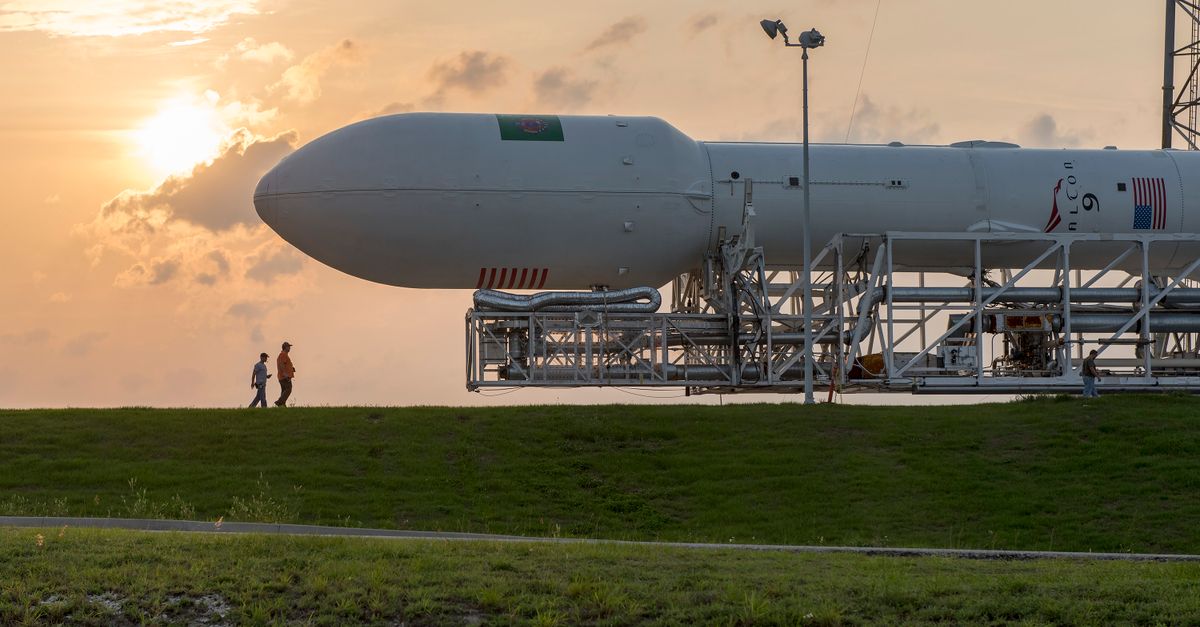 Ariane 6 rocket on launchpad with European flag — Photo by SpaceX on Pexels
This mission, like many others awaiting Europe’s next-generation launcher, represents not just scientific progress but also the promise of high-tech jobs, innovation clusters, and a robust, independent space supply chain. Each delay translates into lost opportunity, stalled investment, and a growing perception that Europe is falling behind.
A Legacy of Lags: The Ariane 6 Conundrum
The shadow hanging over Europe’s commercial space sector is long and distinctly shaped like the Ariane 6. Conceived as the successor to the highly successful Ariane 5, Ariane 6 was designed to be more cost-effective and flexible, capable of launching a wider range of payloads. Yet, its development has been plagued by setbacks. Initially slated for a 2020 debut, its maiden flight has been repeatedly pushed back, now optimistically targeted for mid-2024.
The reasons are multifaceted:
- Technical Complexity: Developing a new generation of rockets is inherently challenging, and the Ariane 6 introduced significant design changes aimed at reducing costs through modularity and industrialization.
- Pandemic Impact: COVID-19 certainly played a role, disrupting supply chains and slowing down development and testing schedules.
- Funding Models: The reliance on a complex public-private partnership, while designed to share risk, can also slow down decision-making and innovation compared to a more vertically integrated, privately funded entity.
- Industrial Fragmentation: The intricate web of national interests and industrial partners across Europe, while fostering collaboration, can also lead to delays as consensus is sought and national contributions are balanced.
The protracted development of Ariane 6 has forced Europe to turn to competitors for critical launches. The ESA has had to book launches with SpaceX for missions like Galileo navigation satellites, a stark admission of its own launch shortfalls. This reliance on an American competitor for cornerstone European projects is not just an ironic twist; it’s a strategic vulnerability. It undermines the very notion of European autonomy in space.
The Vega-C’s Wobble
It’s not just Ariane. Europe’s smaller launcher, the Vega-C, designed for lighter payloads, also faced a high-profile failure in December 2022 and another subsequent delay, further compounding the problem. These twin setbacks have created a significant gap in Europe’s independent access to space, impacting everything from national security payloads to commercial satellite constellations. The lack of reliable, independent launch capability puts Europe at a severe disadvantage in the burgeoning global space economy.
The New Space Reality Check
While Europe grapples with its legacy systems, the global space industry has undergone a radical transformation. The rise of “New Space” — characterized by private funding, rapid innovation cycles, reusability, and aggressive cost reduction — has fundamentally rewritten the rules. SpaceX, with its Falcon 9 and Starship, has become the undisputed leader, demonstrating a launch cadence and cost efficiency that traditional players could only dream of a decade ago. Other private ventures, like Blue Origin, Rocket Lab, and a host of smaller players, are also pushing the boundaries.
 SpaceX Falcon 9 rocket landing vertically — Photo by SpaceX on Pexels
Europe’s traditional space ecosystem, heavily reliant on institutional contracts and a more conservative, risk-averse approach, has struggled to adapt. The ESA, while a highly respected scientific and research body, is not structured for the kind of rapid commercialization and iterative development that defines New Space. Its primary role has historically been to coordinate national space efforts and procure services, not to drive market-based innovation at speed.
This is a critical distinction. The US, for instance, actively leveraged agencies like NASA to foster commercial space, offering contracts and support that allowed companies like SpaceX to mature. Europe’s approach has been more fragmented, with national agencies and institutions often pursuing their own agendas, leading to duplication of effort and a slower pace of innovation. There’s no single, powerful European entity analogous to NASA with a clear mandate to catalyze a private space sector.
Reaching for the Stars: What Needs to Change?
The repeated scrub of Sentinel-7, and the broader struggles of European launchers, should serve as a wake-up call. If Europe is to secure its future in space, a fundamental shift in strategy and execution is urgently needed.
1. Embrace Commercial Agility
Europe needs to foster a genuine “New Space” ecosystem, not just pay lip service to it. This means:
- Streamlined Funding: Creating mechanisms for faster, more agile funding for European space startups, reducing bureaucratic hurdles.
- Risk Tolerance: Encouraging a culture of calculated risk-taking and rapid iteration, rather than the slow, perfectionist approach that has historically dominated.
- Procurement Reform: ESA and national agencies should evolve their procurement processes to favor innovative, cost-effective solutions from private companies, rather than solely relying on established, often slower, industrial prime contractors.
- Public-Private Synergy: Developing robust frameworks for collaboration where institutional expertise can genuinely accelerate commercial ventures.
2. Consolidate and Coordinate
While national pride is understandable, fragmentation undermines collective strength. Europe needs to look for opportunities to consolidate its space efforts, particularly in launch services. A unified European strategy, perhaps with a more centralized commercial arm, could provide the scale and focus needed to compete. The current model, where different nations contribute to different parts of a rocket, while democratic, can lead to inefficiencies. A truly European space champion, empowered to compete globally, is sorely needed. This might involve a more aggressive push for the “European preference” in launch services, but only if European services are actually competitive.
3. Invest in Disruptive Technologies
Reusability, in-orbit servicing, satellite manufacturing in space, and advanced propulsion systems are the future. Europe needs to significantly increase investment in these disruptive technologies, moving beyond incremental improvements to existing systems. This includes both public funding for foundational research and creating incentives for private sector investment. We need more than just iterative improvements; we need revolutionary leaps.
4. Re-evaluate the Ariane Strategy
The continued delays with Ariane 6 force a difficult question: Is the current development path sustainable and competitive? While political commitments are strong, the economic realities of the global launch market are brutal. Europe needs an honest assessment of whether Ariane 6, in its current form, can realistically compete on cost and cadence with the likes of SpaceX. If not, alternatives or a radical re-imagining of its operational model might be necessary. This could involve exploring more radical reusability options or even commercializing aspects of its development and operation.
The challenge is not merely technical; it’s cultural and political. Europe’s space ambition, enshrined in treaties and grand statements, needs to be matched by a pragmatic, agile, and unified execution strategy. The world is not waiting.
The Clock is Ticking
The repeated scrub of a mission as vital as Copernicus Sentinel-7 isn’t just a minor technical hitch; it’s a profound symptom of a deeper malaise. Europe’s commercial space enterprise stands at a crossroads. The choice is clear: adapt and innovate with unprecedented speed and unity, or risk becoming a spectator in a global space race it once helped to define. The stakes are nothing less than Europe’s strategic autonomy, its economic future, and its capacity to lead on critical global challenges like climate change. The time for deliberation is over; the time for decisive action is now. Without it, Europe’s celestial ambitions will remain, quite literally, grounded.
Sources:
- European Space Agency (ESA) website: https://www.esa.int/
- Copernicus Programme official website: https://www.copernicus.eu/en
- Arianespace official website: https://www.arianespace.com/
Last updated Jun 16, 2026
James Whitfield
Space & Science Correspondent
James Whitfield has covered spaceflight, physics, and emerging science for eleven years, reporting on launches from three continents and briefing readers on peer-reviewed research as it breaks. He holds a background in aerospace engineering and has toured launch and mission-control facilities firsthand.
Related stories

To Save a Space Telescope, Engineers First Must Save Its Rescuer
When a commercial servicing craft aimed at extending NASA's Swift telescope hit a propulsion glitch, ground control had to rewrite the orbital rescue playbook.

Inside CuspAI’s $450M Megaround: The AI Revolution Hits Physical Science
CuspAI just secured a massive $450M war chest. Here is why the next frontier of artificial intelligence isn't chatbots, but the physical elements of our planet.

The Physics of the Screamer: Why Inline-Four Motorcycles Are Going Silent
Explore the high-RPM acoustics and firing intervals behind motorcycle 'screamer' engines. Discover why this mechanical masterpiece is facing extinction.