


Want to Drive a Real Tank? 5 Elite Venues and the Tech Behind Them
Experience raw mechanical engineering firsthand. Discover five premier venues where civilians can legally pilot real armored tanks and crush obstacle courses.

TL;DR Driving a 40-ton armored combat vehicle is no longer reserved for military personnel. Thanks to specialized adventure parks and technical preservationists, civilians can legally pilot vintage Cold War armor, main battle tanks, and armored personnel carriers across obstacle courses and through crushed-car scrap heaps.
There is a visceral, bone-rattling sensation that occurs when a 700-horsepower multi-fuel engine turns over beneath two inches of rolled homogeneous armor plate. The ground vibrates, diesel exhaust fills the air, and the sheer inertia of thirty tons of metal reminds you that automotive physics operates on an entirely different scale once tracks replace tires.
For automotive enthusiasts, historians, and engineering nerds, sitting in the driver’s hatch of a real combat vehicle represents the pinnacle of heavy machinery interaction. Far from the polished touchscreens and predictive algorithms transforming the landscape of future tech mobility, tanks are unforgiving, physical machines governed by heavy planetary gearsets, mechanical braking bands, and raw hydraulic pressure.
If you have ever wanted to experience the sheer torque of an armored beast firsthand, you do not need an enlistment contract. You just need a driver’s license, closed-toe boots, and a booking at one of the world’s dedicated civilian tank-driving proving grounds.
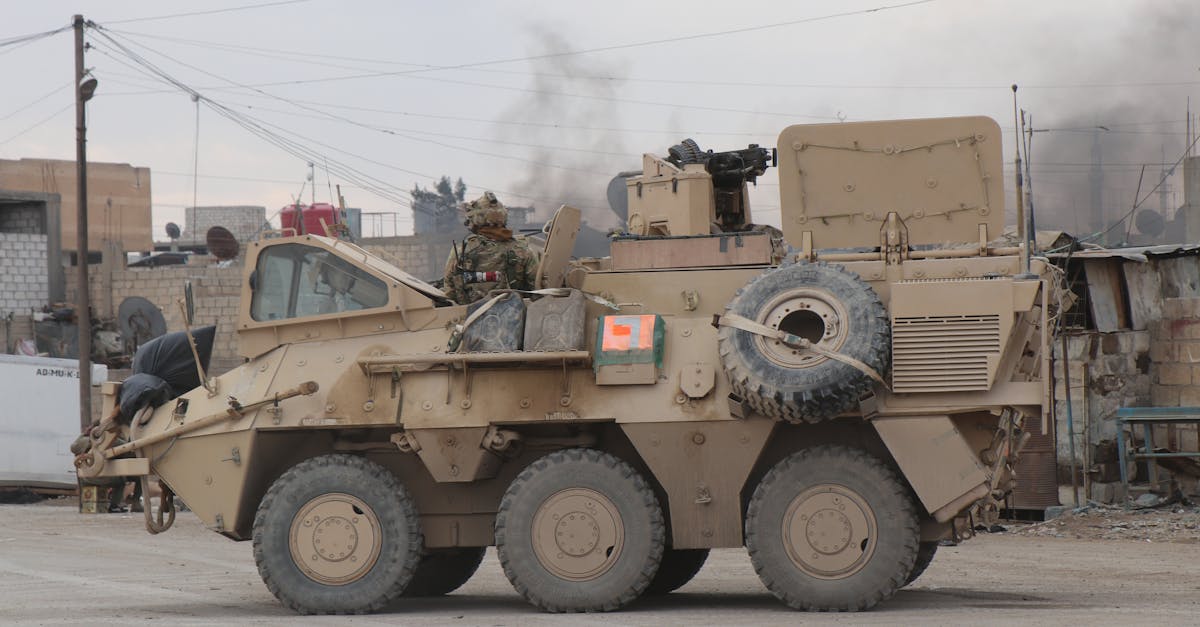 FV432 armored personnel carrier driving through mud course — Photo by Ivan Hassib on Pexels
1. Ox Ranch / DriveTanks.com (Uvalde, Texas)
Located roughly two hours west of San Antonio in the rugged Texas Hill Country, DriveTanks operates on the expansive 18,000-acre Ox Ranch. It stands out as the only civilian facility in the world where visitors can not only drive real armored vehicles over rough terrain but also fire authentic, functional main guns and artillery pieces.
DriveTanks boasts an unmatched collection of historical armor. You can climb into the driver’s seat of a World War II-era M4A3E8 Sherman—the famous “Easy Eight” equipped with a Ford GAA V8 engine—or take the controls of a Soviet T-54/55, one of the most widely produced main battle tanks in military history. The facility features a custom-built anti-tank obstacle course designed to test track articulation, complete with deep mud bogs, steep berms, and concrete vehicle barriers.
For those fascinated by weapons mechanics, DriveTanks maintains live-fire authorizations under federal National Firearms Act guidelines, allowing visitors to fire operational rounds from howitzers, anti-tank guns, and machine guns under strict supervision.
2. Drive A Tank (Kasson, Minnesota)
Operating out of rural Minnesota, Drive A Tank was one of the earliest pioneers of the civilian armor experience in North America. The facility focuses heavily on British armor platforms, particularly the agile FV432 Trojan armored personnel carrier and the FV101 Scorpion / FV102 Striker combat reconnaissance vehicles.
Drive A Tank offers structured historical and technical briefings before letting drivers loose on their wooded obstacle courses. Drivers sit low in the hull, learning to navigate blind corners using mechanical periscopes and steering levers.
The highlight of the Minnesota facility is its car-crushing arena. Drivers can pilot a British Chieftain Main Battle Tank—a 55-ton titan powered by an opposed-piston Leyland multi-fuel engine—directly over structural sedans, flattening them into scrap metal beneath massive steel track shoes.
3. Battlefield Vegas (Las Vegas, Nevada)
If your travels take you to the desert southwest, Battlefield Vegas maintains an extensive fleet of armored fighting vehicles just minutes from the Las Vegas Strip. While famous for its massive indoor armory, the outfit operates a dedicated 200-acre tactical desert range where clients can drive main battle tanks and mechanized infantry vehicles.
Their inventory features the British Chieftain, Soviet BMP-1 amphibious combat vehicles, and classic American M113 tracked personnel carriers. Battlefield Vegas leans heavily into spectacle, offering dedicated car-crushing packages where drivers crush clunkers while hooked up to communications headsets, guided by military veteran instructors perched atop the commander’s cupola. It offers a convenient, high-octane option for travelers seeking extreme machinery without traveling deep into rural areas.
4. Armourgeddon (Leicestershire, United Kingdom)
Across the Atlantic, the United Kingdom boasts a rich military engineering heritage, and nowhere is that more accessible than Armourgeddon. Situated in the rolling hills of Leicestershire, this facility is built on the site of a World War II bombing decoy airfield.
Armourgeddon is renowned for its proprietary “Tank Paintball” battles. Visitors take the driver, loader, and commander positions inside modified FV432s equipped with pneumatic cannons capable of firing giant paint-filled ping-pong balls. Drivers must maneuver through heavily rutted, mud-soaked tracks while their gunner dials in elevation and traverse to tag opposing vehicles.
Beyond simulated combat, Armourgeddon maintains an impressive military museum and offers solo driving experiences in platforms like the Abbot FV433 Self-Propelled Gun, celebrated for its comparatively smooth power-assisted steering controls.
5. Tank Town USA (Morganton, Georgia)
Nestled in the Blue Ridge Mountains of North Georgia, Tank Town USA offers a focused, no-nonsense approach to heavy machinery. Founded by heavy equipment and construction veterans, Tank Town treats military armor as the apex form of off-road tractors.
Visitors get behind the controls of a 17-ton British FV432 equipped with a Rolls-Royce K60 multi-fuel engine. The 10-minute technical course forces drivers to tackle deep mud troughs, navigate tight timber gates, and handle vehicle weight shifts on uneven grades. For those who want the full industrial experience, Tank Town also lets clients operate 40,000-pound commercial construction excavators, digging utility trenches and moving massive boulders alongside their tank runs.
Tale of the Tapes: Comparing Civilian-Drivable Armor
Not all combat vehicles handle the same. Weight, engine layout, and steering technology completely dictate the physical exertion required from the driver.
| Vehicle Model | Origin | Weight (Tons) | Engine & Output | Steering Architecture | Top Speed |
|---|---|---|---|---|---|
| FV432 Trojan | United Kingdom | ~16.8 | Rolls-Royce K60 (240 hp) | Dual-lever controlled differential | 32 mph |
| Chieftain Mk 6 | United Kingdom | ~55.0 | Leyland L60 (750 hp) | Wilson regenerative triple-differential | 30 mph |
| T-55 Main Battle Tank | Soviet Union | ~40.0 | V-55 V12 Diesel (580 hp) | Two-stage planetary steering | 31 mph |
| M4A3 Sherman | United States | ~33.5 | Ford GAA V8 (500 hp) | Controlled differential (braked) | 26 mph |
| FV433 Abbot SPG | United Kingdom | ~18.2 | Rolls-Royce K60 (240 hp) | Hydrostatic / power differential | 29 mph |

The Hidden Tech: How Tracked Steering Actually Works
Driving a tracked combat vehicle requires unlearning nearly every instinct developed behind the wheel of a conventional road car. Tanks do not steer by angling wheels; they turn via differential steering, altering the relative velocity of the left and right track assemblies.
1. Skid Steering and Brake Bands
In older WWII-era platforms like the Sherman or Soviet T-34, steering relies on mechanical friction. The driver operates two long vertical levers, each controlling a track. Pulling the left lever engages a brake band on the left output shaft, slowing or stopping that track completely while the right track continues to receive engine power. The vehicle pivots violently around the dragging track.
This system causes significant energy loss because excess power is converted directly into heat across the brake pads. In low-traction mud, it works reliably, but on dry tarmac, it can easily throw a track or stall the engine.
2. Regenerative Planetary Steering
By the time platforms like the Chieftain Main Battle Tank entered service, engineers had shifted to regenerative steering differentials. Instead of wasting engine power as heat through friction brakes, planetary gearsets transfer kinetic energy from the inner track directly to the outer track.
When you turn the tiller bar or levers, the outer track speeds up by the exact mechanical ratio that the inner track slows down, maintaining constant tractive power across both sides of the hull. This dynamic control is essential to understand the principles of heavy machinery, much like how modern science teams study powertrain dynamics to improve heavy industrial equipment.
3. Modern Hydrostatic Steer
Later-generation light armor, such as upgraded variants of the FV432, often features hydrostatic steering units. A variable-displacement hydraulic pump drives a hydraulic motor coupled to the differential. This design gives the driver continuous, seamless yaw control using a standard motorcycle-style handlebar or miniature steering yoke, eliminating the jerky, stepped turning characteristic of pure mechanical clutch-and-brake systems.
Modern automotive developers are studying similar torque-vectoring dynamics as they build heavy, multi-motor setups for evs designed for extreme off-road environments.
What to Expect on Your First Run: Protocols and Physics
Before strapping into a 30-ton armored chassis, prospective drivers should keep several operational realities in mind:
- Ergonomics Are Brutal: Military hulls prioritize ballistic protection, not lumbar support. Ingress and egress require hoisting yourself through narrow steel hatches, dodging exposed universal joints, and squeezing into spartan metal seats surrounded by bare wiring harnesses.
- Blind Spots Are Massive: When driving with the hatch open (“head-out”), forward and peripheral vision are decent, but you have zero direct view of what is immediately within ten feet of the front tracks. A commander always sits in the turret hatch to act as your external eyes and guide you through blind spots.
- The Physics of the “Car Crush”: Crushing a car is not like driving over a speed bump. A civilian car’s engine block and A-pillars present immense structural resistance. As the tank climbs the hood, the center of gravity shifts skyward until the suspension collapses, resulting in a sudden, violent downward drop as the tracks bite through the sheet metal and pancake the chassis.
The Final Verdict: Mechanical Authenticity You Can’t Simulate
In an era dominated by haptic feedback simulators, virtual reality goggles, and drive-by-wire software, driving a real battle tank is an analog antidote. There are no traction control computers smoothing out your inputs and no anti-lock brakes preventing a slide. It is pure, unfiltered mechanical engineering—a living historical record of how mid-century metallurgists, powertrain designers, and hydraulic engineers conquered extreme terrain under the harshest operational conditions imaginable.
Whether you choose to crush cars in Minnesota, engage in tactical paintball combat in the English countryside, or rattle the desert floor in Texas, piloting a multi-ton armored vehicle delivers an irreplaceable appreciation for the raw limits of internal combustion and steel.
Last updated Aug 17, 2026
InnotechInsider Staff
Newsroom
Reporting and analysis from the InnotechInsider editorial team, covering the technology shaping tomorrow.
Related stories

Celebrities, Silicon, and the Strange Death of the Tech Keynote
Google brought in Trevor Noah to sell its latest AI smartphone. When consumer silicon hits a wall, late-night humor becomes the ultimate feature mask.

Google Made by Google Event: Pixel 11, Pixel Tag, and Ambient Gemini
Google just unveiled its most ambitious hardware lineup yet. From the Tensor G6-powered Pixel 11 to ambient spatial tags, silicon takes center stage.

Atlas Swaps Its Own Battery: The End of Humanoid Downtime
Boston Dynamics' electric Atlas can now swap its own battery in under three minutes. The self-servicing routine unlocks true 24/7 factory automation.