


Nokia Federal Nets Defense Contract to Turn Cellular Arrays into Drone Radar
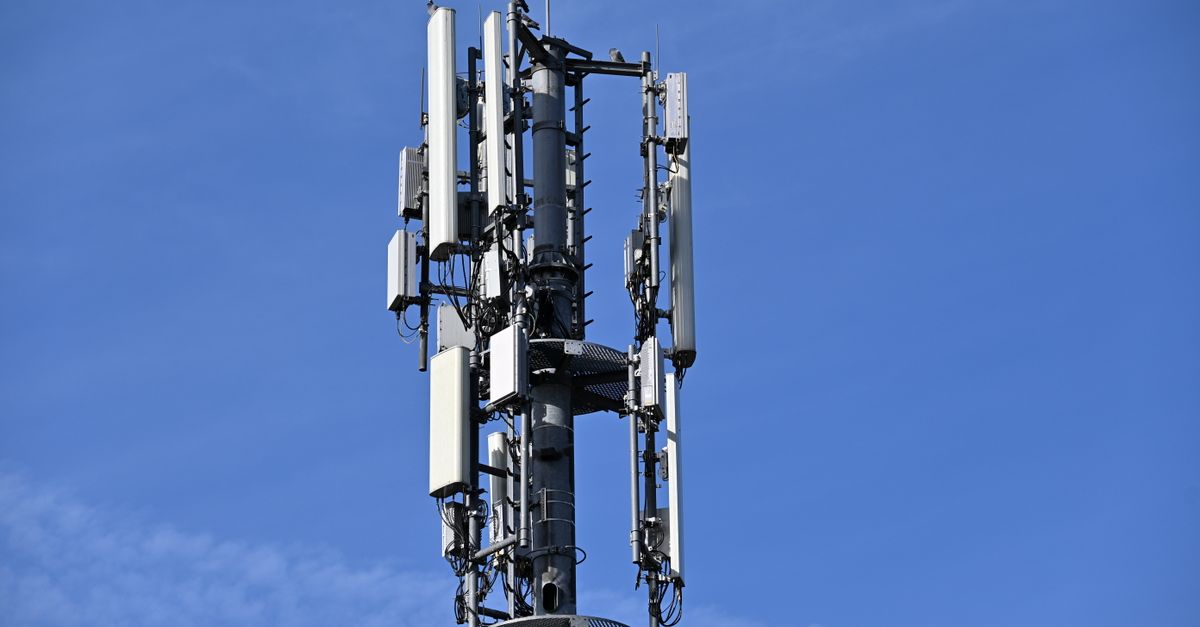
Photo by Mario Caruso on Unsplash
4 min read
TL;DR Nokia Federal Solutions has secured a defense prototyping contract under the RAPID framework to test Integrated Sensing and Communication (ISAC), using cellular signals as distributed radar to track small drones.
Federal defense procurement is increasingly turning to commercial telecom infrastructure to solve battlefield airspace problems. Nokia Federal Solutions has been awarded a prototype project contract under the defense RAPID vehicle to demonstrate dual-use 5G and experimental 6G radio sensing technology designed to track uncrewed aerial systems (UAS).
The contract focuses on Integrated Sensing and Communication (ISAC)—an engineering objective that allows existing radio access networks to do double duty. Rather than serving strictly as data pipes for field communications, network base stations are calibrated to emit radio waveforms that bounce off physical objects, capturing the backscatter to calculate an object’s velocity, bearing, and altitude.

Turning Cellular Base Stations Into Distributed Radar
Small aerial drones pose an asymmetric challenge across military facilities and critical infrastructure. Conventional pulse-Doppler radar systems struggle with low-altitude, slow-moving quadcopters whose carbon-fiber and plastic bodies offer tiny radar cross-sections. Dedicated counter-UAS radar installations are also expensive, power-hungry, and emit distinct RF signatures that adversaries can pinpoint.
Under the project scope, Nokia is adapting commercial radio arrays to act as bistatic and multistatic radar nodes. Because cellular deployments already blanket operational bases and forward operating areas, treating every transmission tower as a passive or active sensor provides layered low-altitude coverage without deploying specialized standalone sensors.
As standard-setting bodies like the 3GPP refine technical specifications for Release 19 and early 6G studies, sensing has emerged as a cornerstone function. Modern advanced radio systems operating across mid-band and millimeter-wave frequencies already process wide swaths of spectrum with massive MIMO antenna arrays. By altering the pilot and reference signals, developers can extract environmental reflection data from the environment while voice and telemetry packets flow uninterrupted.
The tactical upside is substantial. Modern 5g deployments provide high spatial resolution; moving toward higher frequencies planned for 6G prototypes narrows beamwidths further, theoretically allowing networks to distinguish between a commercial consumer drone and a flock of birds.
| Metric | Standalone Tactical Radar | 5G / 6G ISAC Deployment |
|---|---|---|
| Primary Function | Dedicated target tracking | High-speed data delivery + opportunistic radar |
| RF Detectability | High (distinct, predictable pulse) | Low (hidden within standard cellular traffic) |
| Node Density | Sparsely deployed perimeters | Ubiquitous mesh (every mast/small cell) |
| Target Profile | Optimized for fast, metallic aircraft | Optimized for low-altitude, micro-Doppler signatures |
| Hardware Footprint | Specialized, heavy chassis | Off-the-shelf commercial base stations |
Dual-Use Spectrum and Operational Hurdles
Nokia established its dedicated Federal Solutions division to fast-track commercial telecom innovations into defense frameworks. By using the federal RAPID contracting conduit, agencies bypass protracted multi-year procurement cycles, evaluating working testbeds directly on military ranges.
The engineering hurdles remain steep. Multipath interference in cluttered physical environments creates severe echo artifacts. In urban or industrial operations, cellular signals ricochet off steel hangars, concrete barriers, and vehicles, generating ghost targets.
 millimeter wave phased array radio antenna circuit board — Photo by Edvin Gál on Pexels
Software-defined signal processing must isolate the minute micro-Doppler signature of spinning drone rotor blades from ground clutter. In forward operating areas where future-tech capabilities must function in congested frequency bands regulated by the Federal Communications Commission, managing signal power without interfering with civil bands is a delicate balance.
Electronic survivability also matters. When cellular infrastructure doubles as tactical tracking hardware, base station security becomes an operational necessity. Encrypting sensory telemetry and hardening beamforming management against spoofing requires integrated cybersecurity protocols directly at the radio access network layer.
The Pragmatic Path to 6G
While consumer telecommunications providers remain cautious about rolling out new network generations until 5G capital investments show clearer returns, defense requirements are quietly underwriting the foundation for 6G. Military planners are less interested in theoretical mobile download speeds and far more focused on spectrum efficiency, localization accuracy, and dual-use adaptability.
Nokia’s contract validation tests will assess how smoothly cellular transceivers switch between data transport and spatial tracking under real-world interference. If base station sensing proves capable of identifying micro-drones across military installations, commercial cellular hardware will have secured a permanent role in perimeter defense long before the first consumer 6G handsets reach the public.
Tags
Sources
Last updated
Newsroom
Reporting and analysis from the InnotechInsider editorial team, covering the technology shaping tomorrow.
Related stories
 5G
How Attention-Driven AI Solved 5G Network Slicing's Big Bottleneck
Telecom carriers promised custom network slices for critical tech, but edge allocation lagged behind. Attention-based models finally make real-time slicing work.
 5G
The Great De-Wiring: How 5G Gateways Are Taking Over Industry
Industrial wireless gateways are quietly replacing industrial Ethernet. Driven by 5G FWA and edge AI, the sector is primed for explosive decade-long growth.
 5G
NASA's Lunar Cellular Rush: Why 5G Is Heading to the Moon
As Artemis crews prepare for long-duration surface missions, NASA and telecom pioneers are turning commercial 5G into the backbone of off-world exploration.