


Why 6G Networks Are Breaking the Fundamental Rules of Machine Learning
Oct 3, 2026, 10:49 AM UTC
Photo by Seyfettin Geçit on Pexels
9 min read
TL;DR Classical machine learning assumes stable data distributions, abundant compute, and forgiving latency windows—assumptions that disintegrate entirely when confronted with the sub-millisecond, terahertz environments of emerging 6G wireless architectures.
For the past decade, the tech sector operated under a convenient consensus: whatever the engineering challenge, you could throw a deeper neural network and a cluster of data center GPUs at it until the error rate dropped. That brute-force philosophy worked wonders for conversational agents, image synthesis, and predictable enterprise workloads.
It is now crashing headfirst into the physical laws of next-generation telecommunications.
As the International Telecommunication Union finalizes the foundational technical requirements for IMT-2030—colloquially known as 6G—telecom researchers and computer scientists are coming to an uncomfortable realization. The machine learning rules that powered the last generation of software do not survive contact with sub-terahertz radio frequencies, dynamic beamforming, and microsecond-scale physical layers.
A wave of recent meta-surveys and academic post-mortems across wireless engineering groups is pointing to a structural rift: machine learning cannot simply be “applied” to 6G as an optimization layer. Instead, the physical realities of 6G are demanding that we dismantle and rebuild the core principles of AI from the silicon up.

The Terahertz Collision: When Latency Budgets Shrink to Zero
The fundamental premise of 6G is extreme performance: peak data rates surpassing 100 Gbps (and reaching toward 1 Tbps), sub-millisecond end-to-end latency, and operation in the sub-terahertz bands (100 GHz to 300 GHz). At these wavelengths, electromagnetic waves behave radically differently than they do in mid-band 5G. Signals suffer brutal atmospheric attenuation, scatter off rain droplets, and are blocked by something as mundane as a human hand or a moving vehicle.
To keep a connection alive at 140 GHz, the network must continuously steer razor-thin, pencil-like beams via massive MIMO antenna arrays. That beam-alignment decision has to happen in roughly 10 to 50 microseconds.
Here lies the first rule break: inference time budgets.
In conventional deep learning, a modern transformer running on an optimized server might return an inference in 15 to 30 milliseconds. In enterprise software, that is blistering speed. In 6G radio access networks (RAN), 15 milliseconds is an eternity. By the time a standard neural network calculates the optimal spatial beam trajectory, the physical channel has shifted, the receiver has moved, and the connection has dropped.
When researchers attempt to move these workloads through modern future tech infrastructure platforms, they find that network interface latency alone wipes out the performance gains. You cannot dispatch channel metrics across an optical bus to an off-chip accelerator, wait for matrix multiplications, and expect the physical layer to wait.
The Five Classical AI Assumptions 6G Destroys
To understand why standard machine learning algorithms struggle inside 6G architectures, one must examine the baseline assumptions embedded into almost every textbook AI framework.
| Classical Machine Learning Assumption | The 6G Network Reality | Consequence for Engineers |
|---|---|---|
| I.I.D. Data: Samples are independent and identically distributed over time. | Rapid Non-Stationarity: The channel state changes unpredictably within microseconds. | Models suffer catastrophic performance drop-offs as channel dynamics drift faster than weights can adapt. |
| Abundant Compute: Inference can exploit massive tensor cores and large memory pools. | Extreme Edge Scarcity: Operations must execute on antenna-integrated ASICs with milliwatt energy budgets. | Models cannot exceed micro-scale memory footprints, ruling out multi-million parameter networks. |
| Stationary Encodings: Data maintains consistent semantics regardless of network state. | Channel-Aware Semantics: Meaning must be compressed dynamically relative to available channel capacity. | Shannon-style bit transmission gives way to lossy, meaning-first transmission protocols. |
| Centralized Coordination: Aggregating data across devices to a central node is cheap. | Uplink Bottlenecks: Channel feedback overhead consumes the very bandwidth needed for user payloads. | Distributed learning must coordinate across thousands of nodes with sparse, lossy gradient exchanges. |
| Deterministic Latency Tolerance: If inference takes 5ms longer due to contention, it is acceptable. | Hard Microsecond Deadlines: A late inference is equivalent to a network failure. | Probabilistic inference must be backed by hard real-time execution guarantees or analog fallback paths. |
The Death of Static Datasets
Textbook deep learning assumes that the underlying distribution of data, even if complex, remains relatively static during the inference phase. In 6G, the wireless propagation environment is inherently non-stationary. A vehicle accelerating past a reflective glass building creates a Doppler shift and scattering profile that invalidates the model’s operating environment within a fraction of a second. Standard online learning algorithms cannot update their weights quickly enough without encountering catastrophic forgetting.
The Energy Equation
In 6G designs, base stations and user terminals are tasked with executing AI models simultaneously for channel estimation, interference cancellation, and resource allocation. If running those models consumes tens of watts, the energy efficiency gains promised by the 3GPP specifications are wiped out. Machine learning inside 6G cannot be a power hog; it has to live inside an almost non-existent power envelope.
Semantic Communications and the Collapse of Shannon’s Boundary
For nearly eight decades, telecommunications engineering followed the dogma of Claude Shannon: the semantic meaning of a message is irrelevant to the engineering problem of transmitting symbols across a noisy channel. The goal was simple—reproduce the exact sequence of 1s and 0s transmitted at point A at point B.
6G is actively abandoning that dogma in favor of semantic communication.
Because transmitting raw, uncompressed bitstreams at terahertz frequencies requires absurd amounts of power and radio spectrum, researchers are training joint source-channel coding (JSCC) autoencoders. Instead of digitizing an image, compressing it to JPEG, and transmitting the bits via QAM modulation, a semantic neural network extracts the high-level intent or semantic features, translates those directly into physical radio symbols, and reconstructs the intended meaning at the receiver.
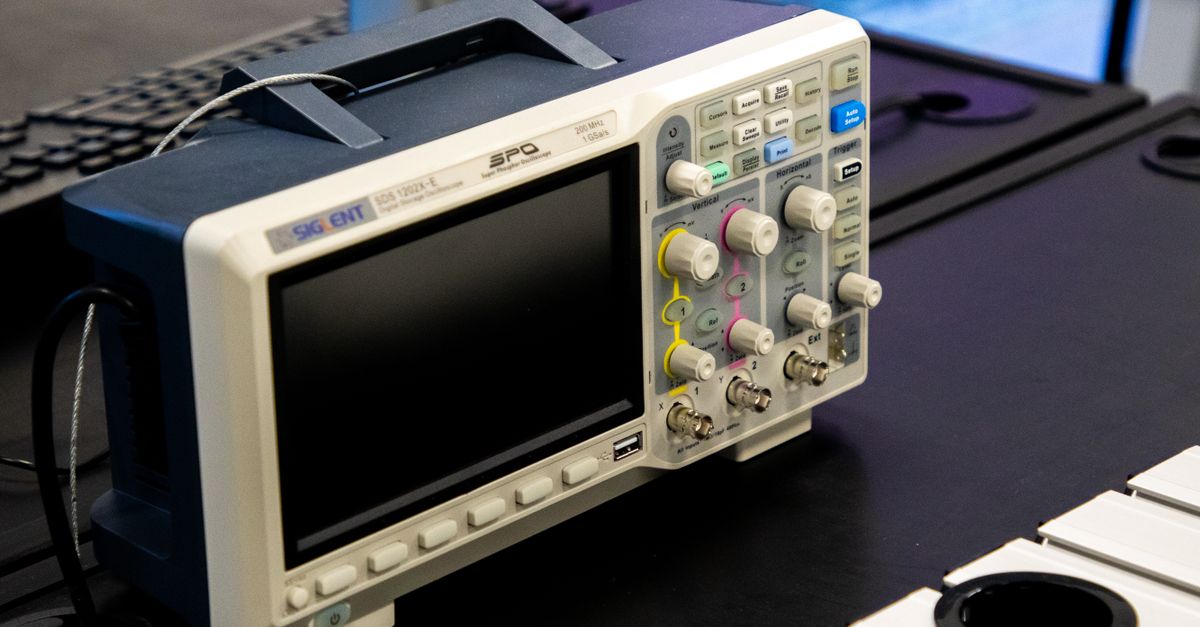 laboratory test bench with RF spectrum analyzer and oscilloscope displays — Photo by Ludovic Delot on Pexels
This breaks classical ai models architectures because the encoder and decoder are deeply entangled with the physical channel itself. If the physical channel experiences unexpected atmospheric fading, the semantic model must instantly alter its feature extraction logic. The boundary between the application layer (what the user is doing) and the physical layer (the voltages driving the antenna) has effectively disappeared.
From Federated Learning to Split Intelligence at the Radio Edge
During the mid-5G era, federated learning was hailed as the definitive privacy-preserving mechanism for distributed systems. The idea was simple: keep the raw data on the user’s phone, train local models, and transmit only the parameter updates (gradients) to a central aggregation server.
In 6G, that paradigm is collapsing under its own overhead. Synchronizing billions of model parameters across millions of edge devices creates massive uplink congestion. Furthermore, standard federated learning assumes synchronous training rounds—a luxury that breaks down when devices operate on intermittent, energy-harvesting links.
Instead, the telecom sector is pivoting toward split inference and neuromorphic radio processing:
- Feature Splitting: Deep networks are severed midway through their layer stack. The early, lightweight layers run directly on the baseband processor of the mobile terminal, transforming raw sensor or channel data into compact latent representations.
- Analog Over-the-Air Computation (AirComp): Rather than transmitting digital packets containing floating-point weights, devices transmit their model updates simultaneously on the same radio frequency. The physical wireless channel acts as the mathematical summation operator, performing the federated aggregation step in the air before the signal even enters the base station’s digital receiver.
- Event-Driven Spiking Networks: To escape the clock-cycle bottlenecks of digital floating-point matrix multiplications, researchers are shifting physical-layer control loops to neuromorphic architectures. Spiking neural networks (SNNs) process signals only when a state change occurs, drastically reducing power consumption.
This shift has deep operational implications for biz it leaders planning enterprise wireless rollouts. Network orchestration is no longer just about allocating spectrum or managing VPN tunnels; it requires dynamically scheduling computing tasks across a mesh of heterogeneous micro-accelerators embedded inside antenna masts and edge routers.
The Hardware Wall: Why GPUs Cannot Solve the 6G Problem
The ultimate friction point between 6G and modern AI is hardware architecture. The AI explosion was underwritten by the Von Neumann architecture’s modern descendants: high-bandwidth memory (HBM) coupled via massive buses to parallel compute units.
At 6G speeds, the energy cost of moving data from memory to the arithmetic logic unit (the memory wall) exceeds the energy budget of the entire radio front end. Furthermore, digital analog-to-digital converters (ADCs) operating at 100 GHz consume catastrophic amounts of power if forced to process high-resolution bit depths.
To bypass this hardware wall, 6G physical-layer machine learning is being driven into two radical domains:
- Analog Computing in Memory (CIM): Performing neural network matrix multiplications directly within the resistive crossbar arrays of non-volatile memory, eliminating the memory bus entirely.
- Silicon Photonics: Using integrated photonic circuits to perform optical matrix-vector multiplications at the speed of light, calculating beamforming weights directly on optical carrier signals before they are converted into radio waves.
These approaches do not run PyTorch or TensorFlow out of the box. They require bespoke, low-precision, noise-tolerant mathematical formulations. In these environments, backpropagation is often biologically impossible or mathematically intractable; engineers must rely on forward-only learning algorithms or evolutionary strategies.
The Dawn of Native Wireless AI
The machine learning field spent fifteen years optimizing algorithms for environments where the silicon is cool, the power is abundant, the cloud is reachable, and data points sit obediently in stationary vectors.
6G networks offer none of those comforts. They are harsh, dynamic, microsecond-critical, and energy-starved environments governed by the uncompromising physics of Maxwell’s equations.
As the industry moves closer to commercial 6G field trials near the end of the decade, the narrative that machine learning is merely a handy toolkit for network optimization has officially evaporated. 6G is forcing AI out of its comfort zone, stripping away the luxury of parameter bloat and compute abundance. The result will not just be faster mobile networks—it will be a leaner, faster, and fundamentally more resilient species of machine intelligence.
Sources
Last updated Oct 3, 2026
Newsroom
Reporting and analysis from the InnotechInsider editorial team, covering the technology shaping tomorrow.
Related stories
 5G Aug 28, 2026
 The 6G Land Grab: Why the Next Wireless Era Is Built for Machines
While consumers shrug off 5G, telecom giants and nation-states are pouring billions into 6G. The catch? The next cellular standard isn't built for your phone.
 5G Aug 14, 2026
 How Silkworm Protein Is Unlocking Ultra-Fast 6G Terahertz Networks
Terahertz wireless promises terabit speeds, but dielectric signal loss remains a massive hurdle. Enter natural silk fibroin, the ultimate 6G waveguide material.
 5G Oct 22, 2026
 T-Mobile Fights SpaceX Over Spectrum Rules and 5G Interference
T-Mobile has urged the FCC to reject SpaceX’s push for relaxed spectrum rules, warning satellite downlinks could degrade urban mobile broadband networks.