


Inside Amazon’s Robotics Inflection: The Reality for Logistics Jobs
Oct 21, 2026, 11:10 AM UTC
Photo by Homa Appliances on Unsplash
7 min read
TL;DR Amazon enters peak season 2026 with its most automated fulfillment network to date, quietly crossing the threshold where package volume growth permanently diverges from warehouse headcount expansion.
Inside Amazon’s modern generation fulfillment centers this autumn, the acoustics tell the story before the numbers do. The chaotic clatter of metal carts and rhythmic squeak of thousands of safety boots—once the auditory hallmark of peak pre-holiday preparation—have been replaced by a low, hypnotic whir of brushless electric motors and compressed air actuators.
Heading into late October 2026, the retail and cloud giant is preparing to process what analysts project will be its heaviest holiday shipping volume in company history. Yet across its sprawling fulfillment network, the frantic seasonal hiring sprees of five years ago have noticeably narrowed. The long-theorized inflection point has quietly arrived: Amazon is moving more physical goods than ever, but the human footprint required to transport a cardboard box from shelf to doorstep is shrinking fast.
What began as an acquisition of Kiva Systems in 2012 has evolved into a fully orchestrated, end-to-end hardware and software matrix. As enterprise logistics operators worldwide watch closely, the reality of warehouse automation is no longer a pilot project or a tech demo—it is an operational mandate transforming the nature of industrial employment.
The Mechanized Floor: Sequoia, Sparrow, and the Fleet
Amazon’s robotics division has spent the last decade rolling out single-purpose machines. Today, those disjointed systems operate as a unified physical pipeline. Central to this transformation is Sequoia, an automated storage and retrieval system that condenses inventory into dense, modular structures, integrated alongside Sparrow, the articulated robotic arm capable of identifying and handling millions of discrete individual products.
 industrial robotic arm sorting packages in distribution center — Photo by GB The Green Brand on Pexels
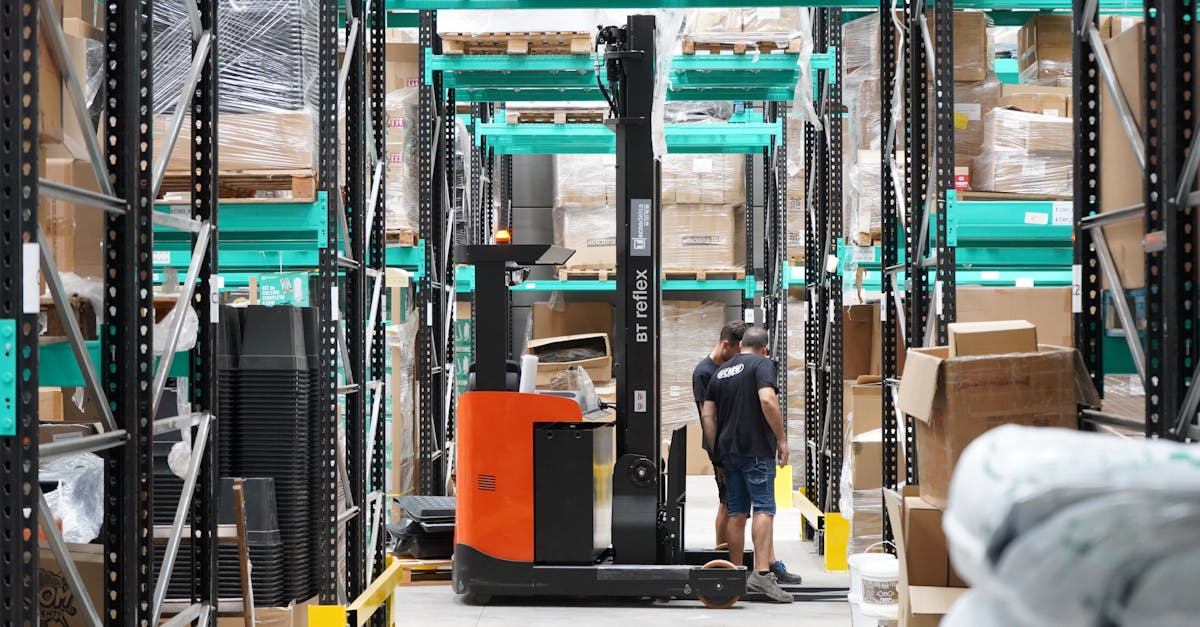
Where human pickers once walked ten to fifteen miles a shift through endless aisles of high-bay shelving, automated mobile drive units now ferry entire tote stacks directly to stationary workstations. Once there, computer-vision-guided robotic arms handle item-level manipulation—traditionally the hardest problem in fulfillment robotics due to the sheer variety of product packaging, flexibility, and weight.
To understand how rapidly this hardware stack has matured, consider the operational roles across modern Amazon fulfillment centers in 2026:
| Robotic System | Primary Function | Human Task Replaced | Current Deployment Stage (2026) |
|---|---|---|---|
| Proteus | Autonomous mobile payload transport | Manual pallet jacking and cart pushing | Fleet-wide in Tier-1 facilities |
| Sequoia | High-density tote handling and consolidation | High-bay inventory picking and walking | Deployed across major regional hubs |
| Sparrow | Single-item picking, identification, and sorting | Manual tote-to-bin package stowage | Scaled across primary picking lines |
| Digit / Bipedal | Tote shuttling and unstructured transport | Repetitive manual vertical lifting | Selective production trials |
According to documentation on Amazon Robotics, the initial Kiva architecture merely moved shelving pods to pickers. In contrast, the current hardware stack isolates human touch points strictly to inspection, exception handling, and edge cases where vision models fail to determine item boundaries.
The Decoupling of Volume and Headcount
For years, corporate leadership maintained that robotic automation would simply eliminate dangerous tasks while functioning as an economic flywheel that created more overall jobs. For an extended period, the macroeconomic data supported that claim: between 2015 and 2021, Amazon added hundreds of thousands of fulfillment workers even as it brought tens of thousands of drive units online.
That narrative has hit an unmistakable mathematical wall. Data from the U.S. Bureau of Labor Statistics tracking warehousing and storage employment reveals a sustained plateau in raw logistics headcounts across tier-one metro areas, even as aggregate e-commerce throughput hits record highs. Through advances in [artificial-intelligence] orchestration engines that dynamically route inventory before an order is even finalized, Amazon has achieved the holy grail of corporate logistics: decoupling physical volume from linear labor costs.
This efficiency drive is not happening in a vacuum. Labor overhead—spanning wages, recruitment friction, workers’ compensation, and benefits—remains the single largest variable cost on the logistics balance sheet. By compressing cycle times (the time from customer click to parcel dispatch) down to minutes rather than hours, automation provides predictable throughput that cannot call out sick, burn out during mandatory sixty-hour peak weeks, or seek union representation.
The economic pressure of this shift extends far beyond Seattle. As regional warehouse hubs find their operations bottlenecked by local labor pools, enterprises are treating automated material handling as a core component of their [enterprise-software] and capital expenditure budgets rather than an experimental R&D line item.
Ergonomics, Surveillance, and the New “Cobot” Reality
Amazon’s public relations apparatus continues to frame its automation blitz as a safety initiative. The company frequently highlights reductions in musculoskeletal strain and ergonomic injuries, noting that machines take on repetitive bending, twisting, and heavy lifting. Federal regulators at agencies like the National Institute for Occupational Safety and Health have long identified repetitive heavy lifting as the leading contributor to chronic logistics injuries.
 autonomous mobile robots moving inventory racks in modern warehouse — Photo by Peter Xie on Pexels
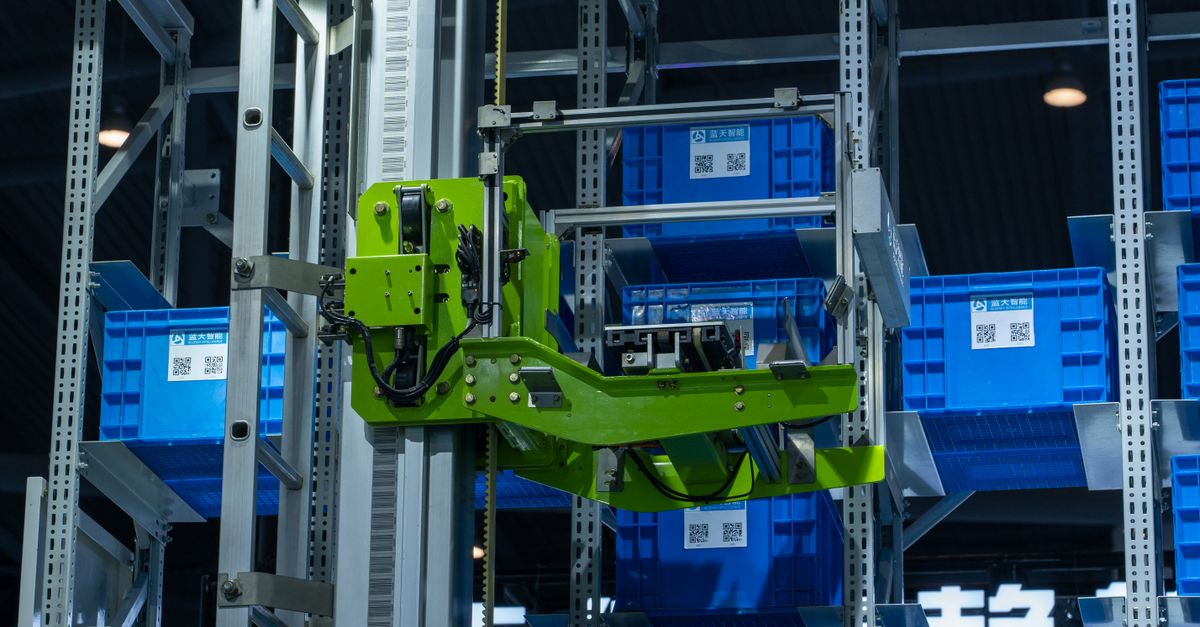
Yet workers on the floor describe a more nuanced, double-edged reality. When humans are integrated into an automated line as “collaborative elements” (cobots), the human pace is dictated by the machine, not the reverse.
When Sparrow feeds items to a human workstation at an unyielding interval, the human worker must match that cadence. Every fraction of a second spent correcting a misplaced box or struggling with tape is logged by overhead depth cameras and optical scanners. The physical burden of hauling fifty-pound boxes has been mitigated, but it has been replaced by high-frequency cognitive surveillance, where “time off task” metrics are enforced with microsecond precision by warehouse management algorithms.
The nature of the job has pivoted:
- The Floor Sweeper is now a Fleet Monitor: Entry-level staff spend less time physically retrieving inventory and more time clearing jams, unsticking jammed rollers, and resetting error flags on drive paths.
- Specialized Maintenance Over General Labor: Demand for mechanical technicians, mechatronics apprentices, and pneumatic specialists has exploded, creating internal wage disparities between legacy floor workers and technical support crews.
- Deskilled Packing Work: Computer-vision packing stations calculate the exact millimeter of cardboard and volume of packing tape required, instructing workers through wearable haptics or optical projection systems, reducing human decision-making to zero.
The Competitive Shockwave Across Supply Chains
Amazon’s logistics supremacy has never stayed confined within its own walls. The company’s internal efficiencies systematically set baseline expectations for the entire global supply chain. When Amazon compresses its fulfillment costs per unit, third-party logistics providers (3PLs), big-box retailers, and traditional freight networks must respond or face margin collapse.
Retailers like Walmart and Target have aggressively accelerated their own supply chain automation initiatives, partnering with third-party robotics vendors to retrofit existing distribution centers. But Amazon holds a structural advantage: vertical integration. Because Amazon designs its own drive units, writes its own warehouse execution systems, and hosts its telemetry on native [cloud-computing] infrastructure, its development loop is years ahead of competitors who must assemble piecemeal solutions from fragmented hardware vendors.
This dynamic is rapidly driving enterprise consolidation. Smaller logistics operations unable to secure eight-figure capital investments for automated tote-retrieval grids are being squeezed out or relegated to servicing irregular, non-conveyable freight that robots still struggle to handle—such as lumber, automotive tires, and unboxed industrial parts.
What Logistics Work Looks Like Going Forward
The narrative that automation causes overnight, catastrophic unemployment is historically inaccurate; the actual mechanism is attrition, non-replacement, and role compression. Amazon has not conducted sweeping mass layoffs of warehouse workers under the banner of automation. Instead, it simply stops hiring to fill the famously high natural turnover rates of fulfillment centers. Over time, facilities that once required 3,500 workers to operate at peak capacity are running seamlessly with 1,800.
The remaining roles are indisputably more technical, but there are fundamentally fewer of them. A facility upgraded with Sequoia and Sparrow does not replace 500 pickers with 500 mechatronics engineers; it replaces 500 pickers with ten technicians, twenty maintenance specialists, and a fleet of autonomous software agents monitored remotely from a regional corporate office.
As peak season 2026 kicks off, Amazon is demonstrating to the broader business world that the theoretical limits of automated fulfillment have moved. The technology works, the unit economics are undeniable, and the capital expenditure is paying operational dividends. For the millions of workers who have relied on the logistics industry as a reliable source of low-barrier-to-entry employment, the warehouse doors remain open—for now. But the factory floor belongs, increasingly and irreversibly, to the machines.
Last updated Oct 21, 2026
Newsroom
Reporting and analysis from the InnotechInsider editorial team, covering the technology shaping tomorrow.
Related stories
 Business Sep 26, 2026
The High-Stakes Silicon Heist That Yielded 20 Tons of Sand
A brazen cargo theft ring targeted what they thought was an $80 million haul of enterprise AI silicon. Instead, they hijacked an elaborate decoy of builder's sand.
 Business Jun 8, 2026
Forget the Demos. Here's the Real Work AI Agents Are Already Doing.
In actual companies, AI agents aren't running the business. They're quietly handling one narrow, tedious slice of it, and it's rarely the slice anyone predicted.
 Business Oct 21, 2026
When Virginia Falls: Inside AWS's Outage and the Multi-Region Illusion
A devastating control-plane collapse in AWS US-East-1 exposes critical enterprise resilience flaws, proving multi-region setups remain dangerously brittle in 2026.