


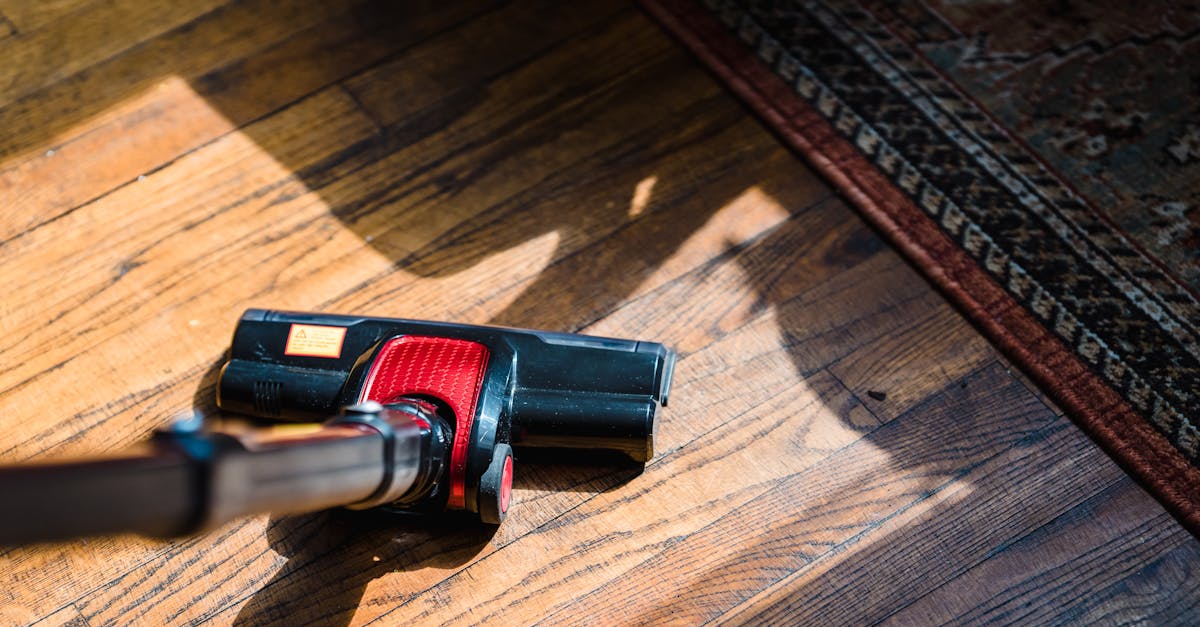
Photo by Dreame Vacuum Cleaner on Unsplash
6 min read
TL;DR Bissell’s enduring Little Green remains roughly $30 cheaper than Shark’s StainForce during Black Friday 2026 promotions, trading specialized dual-chamber chemical delivery for straightforward, repairable mechanical extraction.
Spot cleaners rarely receive the design scrutiny lavished on robotic vacuums or solid-state batteries, yet portable carpet extractors represent one of the most fiercely contested categories in household hardware. Every November, high-volume retail promotions push consumer appliances into direct competition, and 2026 has brought a distinct divergence in engineering priorities between legacy simplicity and high-pressure chemistry.
At the center of this weekend’s retail activity sits the Bissell Little Green Portable Carpet Cleaner, discounted across major retailers to roughly $79. Competing directly for the same closet space is Shark’s StainForce portable line, which typically sells north of $130 and has settled around $99 to $109 during current holiday sales.
For buyers navigating holiday hardware promotions, the price spread raises an engineering question: does Shark’s proprietary fluid-mixing system deliver measurably superior extraction over Bissell’s decades-old suction formula, or is the baseline machine all you need?
Architecture and Extraction: How the Hardware Compares
Portable spot cleaners rely on three foundational mechanical elements: fluid delivery pressure, mechanical agitation via brush bristles, and vacuum lift generated by an electric motor. While autonomous floor-cleaning equipment increasingly leans on sophisticated computer vision discussed across future tech developments, handheld extractors still succeed or fail entirely on fluid dynamics and motor build quality.
 Bissell Little Green portable carpet cleaner on rug — Photo by Liliana Drew on Pexels
The Bissell Little Green (Model 1400B and its iterative variants) relies on a proven 3-amp motor pulling air through an intake manifold positioned immediately behind a static brush head. You depress a manual trigger to spray an ambient water-and-detergent solution, scrub manually, and drag the suction nozzle across the textile. It is primitive, durable, and uses a single clean-water tank paired with an isolated recovery tank.
Shark took a distinctly different mechanical approach with the StainForce. Rather than blending cleaning formula directly inside the primary water reservoir, the unit utilizes dual fluid chambers. The machine meters concentrate and water separately, combining them under pressure directly at the spray tip. Shark pairs this with a higher-draw motor rated closer to 4.5 amps, driving noticeably stronger static lift at the nozzle.
| Feature / Metric | Bissell Little Green | Shark StainForce |
|---|---|---|
| Typical Motor Draw | ~3.0 Amps | ~4.5 Amps |
| Fluid System | Premixed single tank | Dual-chamber instant mixing |
| Clean Tank Capacity | 48 fl oz | 36 fl oz (water) + concentrate reservoir |
| Dirty Tank Capacity | 48 fl oz | ~32 fl oz |
| Hose Length | 4.5 feet | 5.0 feet |
| Typical Holiday Price (2026) | $79 – $89 | $99 – $119 |
| Weight (Empty) | 9.6 lbs | 8.8 lbs |
The operational differences emerge in how water lift translates to dry time. In domestic extraction, leaving excessive residual moisture in synthetic carpet backing creates a breeding ground for mildew, a failure mode tracked by structural moisture guidelines from agencies like the U.S. Environmental Protection Agency. Shark’s higher wattage pulls more moisture out of dense pile on a single pass, typically reducing drying windows by roughly an hour compared to standard passes with the Little Green.
Formula Chemistry vs. Raw Suction
The fundamental tension between these two units lies in how they address pigment breakdown. Bissell designs its hardware as a passive carrier for ambient water and surfactant. If you need enzymatic breakdown for biological messes, you buy an enzymatic formula and rely on dwell time—the period the liquid sits on the fabric before you extract it.
Shark attempts to bypass extended dwell times by mechanizing formula activation. By keeping enzymatic cleaners and oxygenated agents separate until the exact millisecond of dispensing, the StainForce prevents the oxidizing agent from degrading the shelf life or potency of the active cleaning solution.
 Shark portable spot cleaner nozzle spraying water on fabric — Photo by Liliana Drew on Pexels
Yet this technical advantage comes with an operational tax. Shark’s architecture nudges owners into a proprietary ecosystem of dual-cartridge refills. Bissell’s standard single-reservoir design allows users to deploy almost any low-foaming extraction shampoo without voiding warranties or gumming up narrow metering valves, an economic consideration analyzed across retail commerce channels in biz it tracking.
Bissell’s design also holds an advantage in fluid capacity. With a 48-ounce clean tank, it requires fewer trips to the sink during larger remediation jobs, such as cleaning an entire automotive interior or a full three-cushion couch. Shark’s modular tanks reduce overall chassis bulk, making it easier to maneuver on carpeted staircases, but demand frequent refills if you are tackling more than localized pet accidents.
The Reality of Maintenance and Longevity
Cleaners of this type rarely fail because their motors burn out; they fail because pet hair, dried soap scum, and grit accumulate in non-serviceable flow paths. In that department, Bissell’s extended presence on store shelves works in its favor.
Because the Little Green platform has remained mechanically steady for over a decade, replacement parts are ubiquitous. Replacement dirty-water tank plugs, replacement flex hoses, and alternative brush heads are widely available through first- and third-party suppliers. If a gasket degrades, repairing it does not require buying a replacement machine.
Shark has improved modularity on the StainForce by including a self-cleaning hose-rinse tool—an accessory Bissell only bundles with specific sub-variants—which flushes residual muck from the hose interior before storage. It solves one of the most frustrating aspects of legacy carpet extractors: the sour, damp smell that lingers inside flexible plastic tubing after cleaning dirty fibers.
Consumers examining these devices through broader appliance reliability standards, such as those monitored by the Federal Trade Commission regarding product warranties, will notice that both manufacturers provide standard limited warranties covering defects in materials for one to two years.
Weighing the Choice
For shoppers evaluating both machines during holiday hardware discounting, the decision hinges on the specific nature of your cleaning tasks:
- Choose the Bissell Little Green if your priority is cost efficiency and long-term repairability. If you clean occasional beverage spills, light mud, or surface stains on car upholstery, the Little Green’s lower price point, generous tank volume, and universal formula compatibility make it the more economical choice.
- Choose the Shark StainForce if you frequently deal with high-pigment stains or pet accidents that demand deeper fluid extraction. The higher-draw motor delivers superior suction lift, and its hose-clearing attachment addresses a major hygiene pain point of legacy portable cleaners.
The $20 to $30 gap separating these appliances this shopping season reflects a legitimate divergence in hardware philosophy: Bissell delivers reliable, bare-metal extraction, while Shark sells a more complex, higher-suction system that asks for higher upfront and consumable costs.
Sources
Last updated
Newsroom
Reporting and analysis from the InnotechInsider editorial team, covering the technology shaping tomorrow.
Related stories
 Future
The 2026 Holiday Tech Gift Guide: Gadgets Truly Worth Buying
Sorting through late-2026 consumer electronics reveals practical hardware finally beating AI gimmickry. Here are the standout gifts across four key categories.
 Future
The $300 JBL PartyBox Just Hit $180 for Black Friday: Buy or Wait?
Early Black Friday promotions have cut popular party speakers from $300 to $180. We break down the hardware value, audio codecs, and holiday pricing dynamics.
 Future
Aina's $399 Ring Turns Your Thumb Into an AI Approval Switch
Aina is shipping a $399 titanium smart ring designed to solve agent fatigue by turning routine thumb gestures into hardware-signed approvals for AI actions.