


How Mathematicians Learned to Stop Panicking and Love AI
Oct 24, 2026, 7:07 AM UTC
Photo by Vitaly Gariev on Pexels
5 min read
TL;DR Pure mathematics was supposed to be the intellectual redoubt most hostile to probabilistic language models, but formal theorem assistants have turned the discipline into machine reasoning’s most productive proving ground.
When OpenAI CEO Sam Altman remarked earlier this month that academic mathematicians have executed a whiplash transition—hurtling from despairing that “we’re cooked” to casually offloading tedious lemma verification to machine systems—he captured something profound about how intellectual disciplines adapt to synthetic reasoning.
Just two years ago, elite departments viewed generative models with disdain mixed with dread. Large language models were famous for fabricating sources, mangling basic algebra, and hallucinating proofs that looked syntactically impeccable while unraveling at the first deductive juncture. If you asked an early transformer to evaluate a problem in algebraic topology, it often produced fluent nonsense.
Fast forward to late 2026, and the tone in common rooms from Princeton to Cambridge has inverted. The dread did not vanish because the models became infallibly wise; rather, mathematicians figured out how to tether synthetic reasoning to ground truth.

The Short Arc of Academic Shock
The mathematics community’s initial terror differed from the displacement fears rattling copywriters or entry-level software developers. Pure mathematics is an aesthetic pursuit as much as an analytical one. Practitioners spend years agonizing over whether a conceptual framing is “natural” or “illuminating,” not just whether a calculation holds.
The initial alarm surfaced around 2024, when early reasoning models demonstrated flashes of genuine heuristic synthesis—conjecturing structural parallels between seemingly disconnected mathematical domains. If an automated system could jump the creative canyon between disparate fields, the fear went, human mathematicians might soon be reduced to mere ceremonial clerks stamping machine-derived proofs.
Yet as specialized ai models were pointed directly at competitive benchmarks and unproved lemmas, the failure modes became clear. Language models optimize for plausible next tokens, whereas rigorous proof requires absolute structural validity. A single invalid deduction collapses an entire hundred-page paper.
The realization that models could produce elegant-sounding garbage created a counter-reaction: skepticism bordering on dismissal. That dismissal, however, was equally short-lived.
The Lean Bridge: Turning Hallucinations into Verification
The breakthrough that converted skeptics into power users was not a sudden leap in model size. It was the integration of large models with interactive theorem provers, principally Lean, an open-source formal language managed by the Lean Community.
Unlike natural language papers submitted to journals, code written in Lean can be programmatically verified by a tiny, trusted cryptographic kernel. A proof is either synthetically and formally complete, or the compiler rejects it. There is no middle ground, and there is no room for hallucination.
theorem modest_step (p q : Prop) : p ∧ q → q ∧ p := by intro h cases h with hp hq exact ⟨hq, hp⟩
When labs began training neural systems to generate formal code within Lean’s environment rather than raw English prose, the verification bottleneck broke open. The model could propose ten thousand proof attempts overnight; the compiler discarded the nine thousand nine hundred and ninety that contained logical flaws, and preserved the ten that worked.
Prominent figures like Fields Medalist Terence Tao documented this progression publicly, demonstrating how formal verification could parallelize complex collaborative projects. By late 2025, formalizing modern proofs had migrated from a niche hobby for computer science dual-majors into a mainstream vehicle for stress-testing cutting-edge work in science programs worldwide.
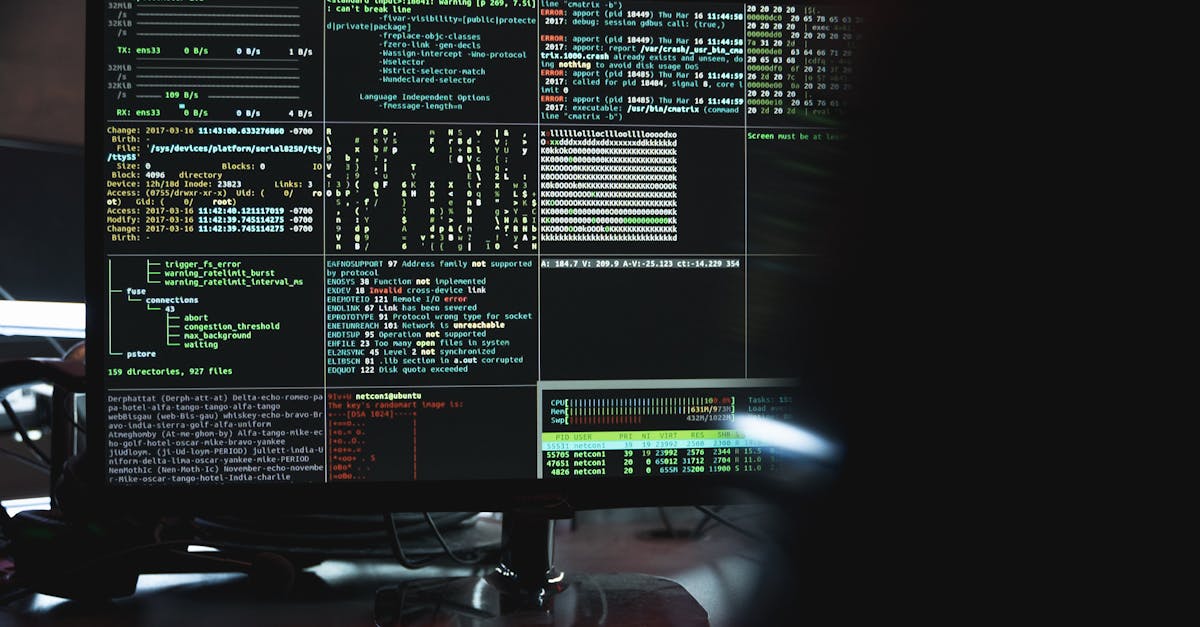 computer monitor displaying lean theorem prover code with terminal diagnostics — Photo by Tima Miroshnichenko on Pexels
The Division of Labor
The panic faded because mathematicians realized the technology was taking on their least favorite work while leaving conceptual architecture intact. The modern workflow splits research responsibilities along operational strengths:
| Research Phase | Primary Driver | Tooling / Method | Output |
|---|---|---|---|
| Conceptual Strategy | Human Researcher | High-level intuition, analogies | Structural conjectures, outlines |
| Intermediate Tactics | AI Reasoning Model | Monte Carlo tree search, prompt chaining | Candidate lemmas, formal fragments |
| Proof Verification | Formal Engine (e.g., Lean) | Algorithmic kernel compilation | Binary validity (Accepted / Rejected) |
| Literature Synthesis | Shared | Specialized semantic retrievers | Mappings across known theorem graphs |
Mathematicians frequently describe the hardest part of their job as the “intermediate slog”—verifying seventy pages of technical scaffolding to ensure an intuitive insight holds at every boundary condition. AI agents linked to formal verifiers excel precisely at this unglamorous tactical search.
Instead of replacing the architect, the software has become an indefatigable apprentice that sweeps the floor, checks the foundation bolts, and tests structural load margins while the architect considers the skyline.
What Mathematics Tells the Rest of Knowledge Work
The rapid normalization of machine assistance in pure mathematics offers an instructive blueprint for other high-abstraction fields exploring future tech integrations.
First, panic typically peaks when a technology appears capable of imitating an expert’s output without showing its work. The cure for that panic is verification infrastructure. In mathematics, that role was played by interactive theorem provers. In software engineering, it is automated unit testing and compiler sandboxes. In medicine or law, where formal verification engines do not natively exist, adoption remains fraught precisely because checking an answer can be as labor-intensive as producing it.
Second, the relationship between human and tool stabilizes when the boundary of competence is rigorously understood. Pure mathematicians no longer expect machine models to magically solve the Riemann Hypothesis. Instead, they treat them as erratic savants that require tight mechanical supervision.
Altman’s observation is accurate: the hand-wringing has largely ceased. Mathematics did not surrender its soul to compute clusters; it simply acquired an extremely fast, compiler-checked calculator. Those who feared the end of human mathematical creativity failed to recognize that when you automate the drudgery of checking details, you leave researchers with more time to think about what to prove next.
Sources
Last updated Oct 24, 2026
Newsroom
Reporting and analysis from the InnotechInsider editorial team, covering the technology shaping tomorrow.
Related stories
 AI Models Oct 24, 2026
OpenAI Cuts Off the Public Web for Next Frontier Model Training
OpenAI is pulling the plug on scraping the live internet for frontier model pre-training, moving instead to closed vaults, synthetic reasoning, and verified data.
 Science Oct 21, 2026
How Claude Built De Novo Protein Binders to Neutralize Scorpion Venom
Anthropic has bridged generative reasoning and molecular biology, deploying Claude to engineer synthetic protein binders against lethal scorpion neurotoxins.
 Science Oct 11, 2026
Neanderthal Wooden Tools Preserved in Stone Rewrite Human Tech Origins
Discovered in Spanish travertine, 60,000-year-old wooden artifacts encased in stone reveal sophisticated Neanderthal carpentry, upending deep technological history.