


NASA Roman Space Telescope Launch: Watch Guide and Why It Matters
NASA's Nancy Grace Roman Space Telescope brings a field of view 100 times larger than Hubble. Here is how to watch the launch milestone and what it reveals.
7 min read

TL;DR NASA’s Nancy Grace Roman Space Telescope pairs Hubble-class resolution with a field of view 100 times larger, revolutionizing dark energy research and exoplanet hunting. Here is the complete mission breakdown, livestream guide, and scientific context behind astrophysics’ next flagship observatory.
If the James Webb Space Telescope is astronomy’s ultra-deep zoom lens, peering through a cosmic drinking straw into the dawn of time, the Nancy Grace Roman Space Telescope is a panoramic wide-angle rig built to capture the entire stadium.
Named in honor of Nancy Grace Roman—NASA’s first chief astronomer and the visionary widely regarded as the “Mother of Hubble”—this flagship observatory solves one of the most frustrating bottlenecks in modern astrophysics: the trade-off between optical resolution and field of view. Roman delivers the pinpoint spatial clarity of Hubble across an area of sky 100 times larger in a single exposure.
Whether you are tuning into the livestream to watch a SpaceX Falcon Heavy deliver the six-ton observatory toward its deep-space vantage point or seeking to understand the petabyte-scale data revolution it represents, here is everything you need to know.
Launch Timeline and How to Watch
The Roman Space Telescope departs from Launch Complex 39A at NASA’s Kennedy Space Center in Florida aboard a tailored SpaceX Falcon Heavy rocket. Because the observatory requires a precise insertion onto a transfer trajectory bound for the second Sun-Earth Lagrange point (L2)—located roughly one million miles directly behind Earth from the perspective of the Sun—the launch window is governed by tight orbital mechanics.
Roman Space Telescope: Key Mission Milestones • Liftoff: Launch Complex 39A, Kennedy Space Center • Booster Separation: T+2 min 30 sec (Dual side-booster landing) • Fairing Jettison: T+4 min 15 sec (Exposing Roman’s outer barrel assembly) • Second-Stage Cutoff: T+8 min 45 sec (Initial parking orbit) • Trans-L2 Injection Burn: T+45 min 00 sec (Departure trajectory burn) • Spacecraft Separation: T+1 hr 12 min (Roman begins autonomous deployment)
NASA provides continuous, multi-angle coverage across NASA+, the agency’s official YouTube channel, and NASA TV. Live broadcasting typically begins four hours before T-0, featuring cleanroom archival footage, technical panel interviews, and real-time telemetry from Goddard Space Flight Center.
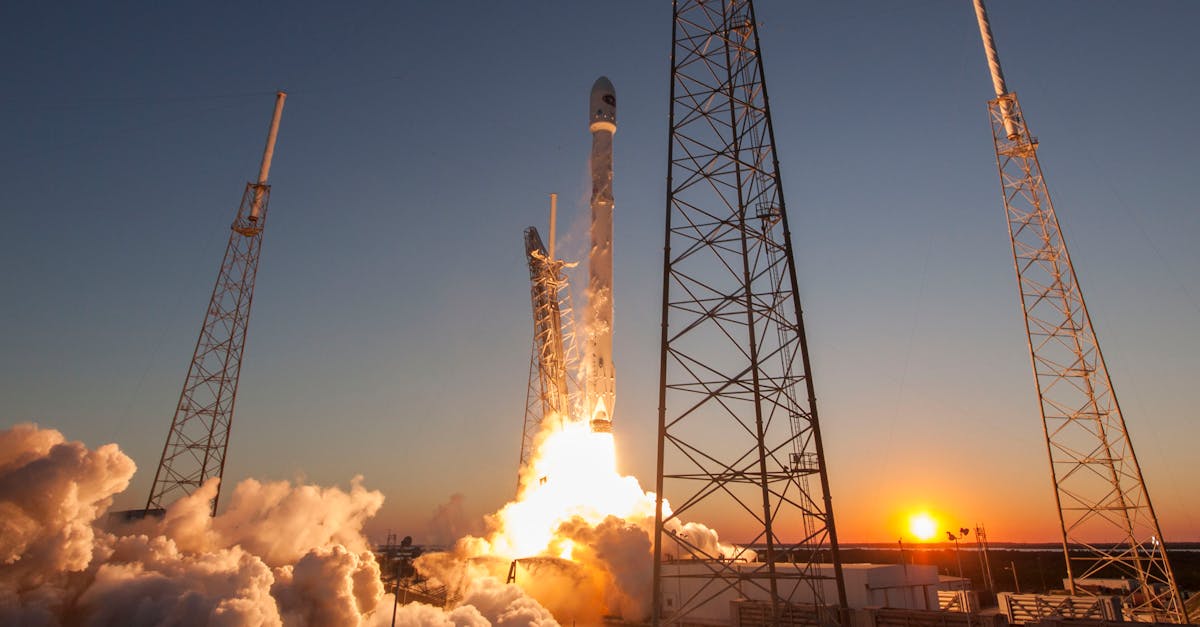 SpaceX Falcon Heavy rocket standing vertical on launch pad 39A at sunrise — Photo by SpaceX on Pexels
Watching a mission like Roman clear the pad is a testament to how standard high-energy orbital mechanics have become across the commercial launch sector. The heavy-lift architecture provided by spacex allows Roman to carry a full suite of propellant and robust structural baffling without forcing engineers into severe mass-cutting compromises that plagued earlier flagship designs.
Hubble vs. Webb vs. Roman: The New Astrophysics Triad
To understand why Roman matters, you must discard the idea that it is an “upgrade” designed to obsolete either Hubble or JWST. Modern space science relies on an interconnected fleet of observatories operating across complementary wavelengths and observational scales.
| Metric / Capability | Hubble Space Telescope | James Webb Space Telescope | Nancy Grace Roman Space Telescope |
|---|---|---|---|
| Primary Mirror Diameter | 2.4 meters | 6.5 meters | 2.4 meters |
| Primary Wavelength Range | Visible, UV, Near-IR (0.1–1.7 µm) | Infrared (0.6–28 µm) | Visible to Near-IR (0.5–2.0 µm) |
| Field of View | 0.0055 sq. degrees (WFC3) | ~0.0026 sq. degrees (NIRCam) | 0.281 sq. degrees (WFI) |
| Operational Orbit | Low-Earth Orbit (~540 km) | Sun-Earth L2 (1.5M km) | Sun-Earth L2 (1.5M km) |
| Primary Science Goal | General astrophysics, deep look | Early universe, faint infrared | Wide-area surveys, dark energy, exoplanet census |
| Data Output Volume | ~20–30 GB / day | ~50–60 GB / day | ~1.4 Terabytes / day |
Where Hubble would require hundreds of years of continuous exposures to mosaic a large swath of the Andromeda Galaxy or map the distribution of thousands of galaxy clusters, Roman can accomplish the identical mapping campaign in a matter of days. It turns what used to be once-in-a-career survey projects into routine seasonal observational runs.
The Optical Engine: Inside the Wide Field Instrument and CGI
The heart of the NASA Roman Space Telescope consists of two revolutionary scientific payloads mounted behind an ex-National Reconnaissance Office 2.4-meter primary mirror:
1. The Wide Field Instrument (WFI)
The WFI is a 300-megapixel focal plane array composed of 18 Teledyne H4RG-10 mercury-cadmium-telluride (HgCdTe) detectors. Operating at cryogenic temperatures, these sensor modules capture near-infrared radiation with unprecedented statistical throughput. Each single Roman snapshot delivers a slice of the cosmos containing hundreds of thousands of individual galaxies and millions of stars, with minimal optical distortion at the sensor perimeter.

2. The Coronagraph Instrument (CGI)
While the WFI handles broad astronomical surveys, the CGI is an ultra-high-contrast technology demonstrator designed to solve one of planetary science’s hardest physics problems: finding a dim planet orbiting directly beside an intensely bright star.
Using complex internal masks, deformable mirrors, and dynamic speckle-nulling algorithms, the Coronagraph suppresses parent starlight by a factor of roughly one billion to one. This allows astronomers to directly image giant exoplanets and circumstellar debris disks in reflected visible light—a crucial engineering step enabling future tech architectures that will eventually photograph habitable Earth analogues in the 2030s and 2040s.
The Core Science: Mapping the Dark Universe
Roman is engineered to systematically tackle the two greatest mysteries in modern cosmology: dark energy (the unknown pressure driving the accelerated expansion of the universe) and dark matter (the invisible mass scaffolding galaxy formation).
ROMAN OBSERVATIONAL PIPELINE
- High-Latitude Wide Area Survey
- (Weak Lensing & Galaxy Spatial Clustering)
- Supernova Type Ia Timelines
- (Cosmic Distance Ladder Precision Checks)
- Galactic Bulge Microlensing
- (Cold Exoplanets, Rogue Planets, Primordial)
- Weak Gravitational Lensing: As light from billions of distant background galaxies travels toward Roman’s detectors, it passes through vast webs of intervening dark matter. The mass of this dark matter slightly warps spacetime, creating tiny, correlated distortions in the observed shapes of those background galaxies. By statistically measuring the subtle shear across millions of targets, Roman will reconstruct a high-resolution 3D map of the universe’s invisible matter distribution.
- Supernova Tomography: Roman will discover and catalogue thousands of Type Ia supernovae out to redshifts never before reached in statistical volume. Because these exploding white dwarfs act as standard candles, their apparent brightness directly charts how cosmic expansion has sped up over the last 10 billion years.
- Gravitational Microlensing Exoplanet Census: By continuously monitoring the crowded stellar field of the galactic bulge, Roman will track subtle spikes in starlight caused when a foreground star (and its planetary system) drifts across a background star, bending its light via gravitational lensing. This technique is uniquely sensitive to planets orbiting far from their host stars—like Jupiter, Saturn, and Uranus—as well as free-floating “rogue” planets drifting unbound through interstellar space.
The Open-Data Revolution
Beyond its hardware, Roman introduces a philosophical turning point in how orbital astronomical data is managed and distributed. Historically, principal investigators received exclusive proprietary access to their telescope observations for up to a year to write their research papers before releasing the raw files to the broader scientific community.
Roman abandons the proprietary lock-in model entirely. All raw and calibrated science data collected by the observatory will be processed through the Space Telescope Science Institute (STScI) and made available immediately to researchers worldwide via cloud pipelines.
Because the observatory will generate approximately 1.4 terabytes of compressed telemetry per day, traditional manual pixel analysis is impossible. The extraction of new physical laws from Roman’s massive data stream will rely heavily on automated machine learning classification, advanced computer vision, and distributed high-performance computing—connecting fundamental science directly to modern big-data software engineering.
High-Throughput Astronomy Has Arrived
For more than three decades, space-based optical astronomy was defined by deep, highly selective, patient target acquisition. We selected single nebulae, isolated galaxies, or individual planetary candidates, pointing our premier space assets at them for hours or days at a time.
The Nancy Grace Roman Space Telescope fundamentally reshapes that workflow into an engine of high-throughput discovery. By combining Hubble-class sharpness with the scanning speed of a panoramic survey machine, Roman does not merely search for interesting phenomena—it maps the cosmic fabric itself at an industrial scale. As the rocket clears the pad and sets course for the quiet dark of L2, astrophysics enters a decade where serendipitous discovery is no longer a happy accident, but the operational default.
Last updated Aug 30, 2026
Newsroom
Reporting and analysis from the InnotechInsider editorial team, covering the technology shaping tomorrow.
Related stories

To Save a Space Telescope, Engineers First Must Save Its Rescuer
When a commercial servicing craft aimed at extending NASA's Swift telescope hit a propulsion glitch, ground control had to rewrite the orbital rescue playbook.

The Twilight Zone Paradox: A 10-Year Probe of Ocean Deep Reefs
Ten years of continuous autonomous data from the ocean’s mesophotic reefs are finally in. The verdict challenges everything we assumed about marine climate refugia.

The Silent Signal: How AI Found the Biomarkers Human Doctors Missed
AI foundation models are decoding multi-omic disease signals once dismissed as biological noise. Here is how machine learning is overhauling early diagnostics.