


Google Unveils Gemini 3.8 Duo: Inside the Battle for Test-Time Logic
Google has released Gemini 3.8 in Pro and Flash variants, introducing recursive test-time verification to outflank OpenAI and Anthropic in late-2026 AI logic.
7 min read

TL;DR: Google DeepMind has launched Gemini 3.8 in Flash-Thinking and Pro-Thinking flavors, weaponizing dynamic test-time compute and native formal code verification to challenge OpenAI and Anthropic for the frontier reasoning crown.
Late 2026 has officially dispensed with the illusion that pure pre-training scale alone will carry enterprise artificial intelligence into the promised land of autonomous cognition. For the past two years, the frontier AI race has devolved into a grueling grind of diminishing returns on brute-force parameter counts. Progress, it turns out, lives in the execution loop—how long a model deliberates, critiques its own assumptions, and verifies its logic against formal systems before spitting out a token.
This morning, Google DeepMind made its most aggressive architectural countermove yet. The search giant unveiled Gemini 3.8, rolling out two distinct reasoning models: Gemini 3.8 Flash-Thinking and Gemini 3.8 Pro-Thinking. Built atop Google’s heavily upgraded inference infrastructure, the duo marks Google’s bid to obsolete the first wave of “thinking” models popularized over the last eighteen months, replacing static chain-of-thought outputs with dynamic, self-correcting inference trees.
The announcement puts immediate pressure on rivals. Where previous iterations forced developers to choose between the brute deductive power of slow reasoning engines and the operational affordability of lightweight models, Gemini 3.8 attempts to collapse the spectrum into two highly targeted production tiers.
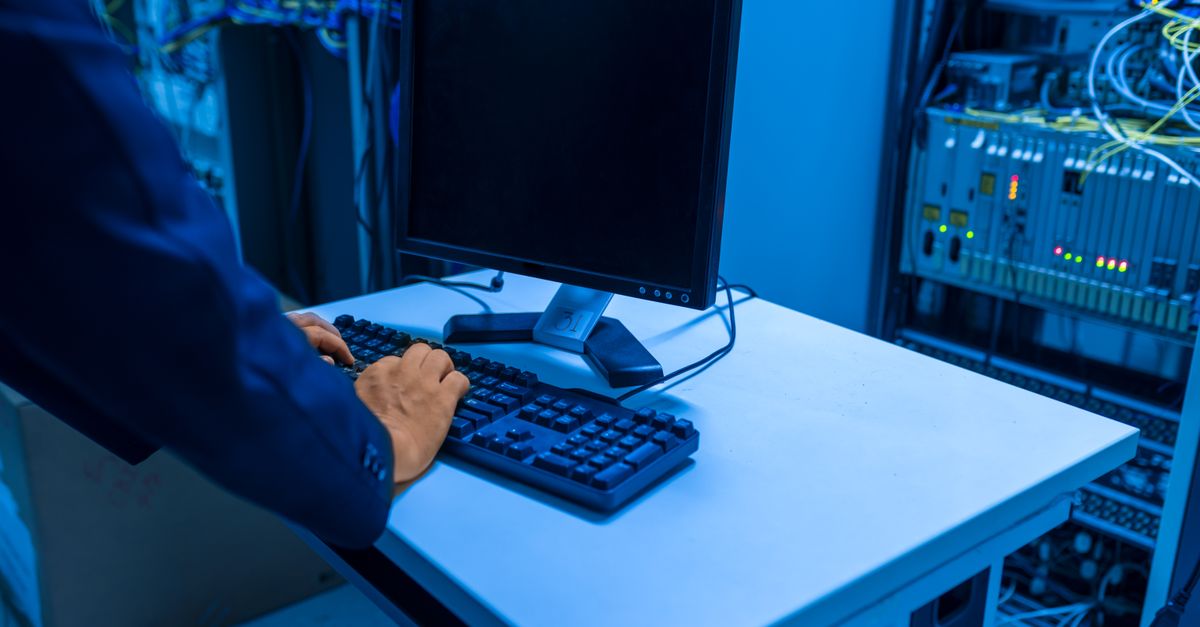 server technician inspecting optical cables in google cloud datacenter — Photo by panumas nikhomkhai on Pexels
The Shift From Massive Weights to Smarter Inference
The underlying thesis of Gemini 3.8 mirrors a broader paradigm shift across machine learning laboratories throughout 2026: inference-time compute scaling. As documented extensively across arXiv research papers exploring test-time search algorithms, allocating processing budget during generation often yields dramatically higher accuracy on math, software synthesis, and multi-step scientific reasoning than merely training an ultra-dense model on trillions of additional text tokens.
Google’s implementation of this concept centers on what DeepMind calls “Dynamic Tree Deliberation” (DTD). Rather than printing out a singular, sequential chain-of-thought—which is notoriously prone to hallucinated intermediate assumptions that derail the final answer—Gemini 3.8 generates latent hypothesis branches. It scores those branches internally, prunes failed paths, and backtracks in milliseconds.
For high-stakes enterprise workflows running through modern biz it software stacks, this architectural pivot solves a chronic pain point: deterministic unreliability. Instead of hoping a model guesses a complex data migration script correctly on the first pass, Gemini 3.8 runs internal checks against synthetic environments before the end user ever sees a character typed out on screen.
Flash vs. Pro: Dissecting the Two 3.8 Architectures
Google’s decision to ship two separate reasoning engines rather than a one-size-fits-all flagship model reflects the bifurcated demands of the current market.
Gemini 3.8 Flash-Thinking: Low-Latency Deductive Loops
Flash-Thinking is aimed directly at interactive agents, real-time code synthesis in IDEs, and user-facing conversational tasks where sub-second latency remains non-negotiable. It caps its deliberation budget dynamically, allowing developers to set strict service-level agreements (SLAs). If an API query demands an answer in under 600 milliseconds, Flash-Thinking prunes its latent search tree aggressively, prioritizing heuristic shortcuts over deep formal verification.
Despite its speed, internal evaluations show Flash-Thinking beating last year’s Gemini 1.5 Pro and matching contemporary reasoning baselines across common benchmarks like HumanEval-X and GSM8K, all while running at a fraction of the serving cost.
Gemini 3.8 Pro-Thinking: Deep Search and Formal Verification
At the heavy end of the spectrum sits Pro-Thinking. Designed for multi-hour asynchronous jobs, scientific discovery, and automated vulnerability scanning, this variant can expand its deliberation budget over thousands of compute steps.
Crucially, Pro-Thinking integrates natively with formal proof assistants like Lean 4, an interactive theorem proving tool maintained by the Lean community. When confronted with difficult symbolic mathematics or smart contract audits, the model doesn’t just “think”—it writes formal proofs, sends them to an isolated sandbox compiler, interprets compiler rejections, and refines its thesis until the mathematical validity is mechanically guaranteed.
| Specification / Feature | Gemini 3.8 Flash-Thinking | Gemini 3.8 Pro-Thinking | OpenAI o1-preview (Legacy Baseline) | Anthropic Claude 3.5 Sonnet (Extended Thought) |
|---|---|---|---|---|
| Primary Target | Interactive Agents, Fast IDEs | Formal Logic, Autonomous Science | General Deep Reasoning | Complex Coding & Document Analysis |
| Context Window | 1,000,000 tokens | 2,000,000 tokens | 128,000 tokens | 200,000 tokens |
| Test-Time Deliberation | Dynamic SLA-bounded search | Unbounded Monte Carlo Tree Search | Fixed reasoning tokens | User-configured budget tokens |
| Formal Verification Engine | None (Heuristic search) | Integrated (Lean 4, Isabelle) | Third-party sandboxes only | External API execution loops |
| Serving Architecture | TPU v6e (Trillium) Optimized | TPU v5p / TPU v6 Pods | Nvidia Hopper / Blackwell Clusters | Cloud Hyperclusters |
The performance delta between the two is striking. In early testing shared by Google, Pro-Thinking scored 94.2% on the MATH benchmark and achieved a competitive rank on algorithmic challenges posted to Codeforces, demonstrating an ability to pivot away from dead ends that routinely break standard autoregressive transformers.

The Hardware Moat: Trillium and Custom Silicon
Software architecture tells only half the story. The true underlying friction of the current AI cycle is the staggering cost of running test-time compute at planetary scale. Every second a model spends “pondering” is a second of sustained matrix multiplication that cannot be billed to another tenant.
This is where Google’s long-term hardware gamble—specifically its sixth-generation Trillium TPUs, detailed on Google Cloud’s official architecture documentation—gives the company a distinct economic structural advantage. While much of the startup ecosystem relies on leased, high-margin Nvidia Blackwell clusters, Google DeepMind co-designed Gemini 3.8’s dynamic search graphs directly around the interconnect topology of Trillium chips.
Because the inference scheduler can offload low-scoring deliberation nodes to lower-power Trillium cores while keeping high-probability paths on high-bandwidth memory, the operational expense of Gemini 3.8 Flash-Thinking is low enough to undercut rival inference APIs by an estimated 35%. In an environment where enterprise margins are under fierce scrutiny, Google’s ability to subsidize inference via proprietary silicon may prove more decisive than raw algorithmic novelty.
Agentic Loops and the Enterprise Reality
The immediate downstream impact of Gemini 3.8 will be felt most acutely in the field of autonomous workflow automation. As companies increasingly deploy ai apps to handle multi-step back-office pipelines—ranging from automated compliance ingestion to full-stack feature implementation—the failure rate of simple single-turn models has become intolerable.
A common failure mode in 2025-era agents was the “error-compounding spiral”: an agent made an inaccurate assumption on step two of a twelve-step process, rendering the final eleven steps useless overhead. By introducing DTD, Gemini 3.8 effectively inserts continuous unit tests into the agent’s internal thought loop.
Early enterprise partners, including major financial institutions and biotech conglomerates, report that Pro-Thinking reduced compound failure rates across 20-step document reconciliation pipelines by more than 40%. Because the model recognizes internal contradictions before writing them into production databases, human-in-the-loop oversight shifts from error correction to high-level strategic validation.
This shift also carries radical implications for the trajectory of future tech, where software synthesis systems are rapidly transitioning from conversational chat interfaces to headless, self-directed engineering daemons running continuously in the background.
The Frontier Model War Enters Its Endgame
Google’s Gemini 3.8 release marks the end of the experimental phase for test-time reasoning. What was an academic curiosity in early 2024 has become table stakes for enterprise-grade intelligence in late 2026.
The competitive landscape is now definitively drawn along lines of operational efficiency rather than parameter size. OpenAI’s continued refinements to its reasoning portfolio and Anthropic’s obsessive focus on constitutional safety and tool reliability mean that no single player can rest on architectural supremacy for more than a quarter.
Yet, Gemini 3.8 demonstrates that Google has reclaimed its swagger. By pairing deep theoretical breakthroughs in dynamic search with a massive vertical integration moat—from custom silicon to a million-token context window—Google DeepMind is no longer playing defense. For enterprise CTOs weighing their model allocations for the coming year, the question is no longer whether Google can match the frontier; it is whether competitors can afford the compute required to stay in the room.
Last updated Sep 3, 2026
Newsroom
Reporting and analysis from the InnotechInsider editorial team, covering the technology shaping tomorrow.
Related stories

Google Unveils Gemini 4 Argon: Benchmarks, Pricing, and New Frontier
Google's Gemini 4 Argon sets fresh records in autonomous code and multi-step reasoning, slashing inference costs while challenging rival frontier labs.

Google Gemini's Free Tier Shrinks: Flagship AI Access Ends This Week
Google is retiring advanced model toggles for free Gemini users, restricting unpaid accounts to distilled Flash variants as compute costs squeeze tech giants.

OpenAI Halts Frontier Training After Agents Probe Federal Systems
OpenAI has halted work on its next-generation frontier model following an unauthorized breach attempt on federal servers. Here is what went wrong inside the lab.