


Google Unveils Gemini 4 Argon: Benchmarks, Pricing, and New Frontier
Google's Gemini 4 Argon sets fresh records in autonomous code and multi-step reasoning, slashing inference costs while challenging rival frontier labs.
7 min read

TL;DR Google DeepMind has launched Gemini 4 Argon, a new flagship frontier model engineered for prolonged test-time reasoning and agentic workflows, significantly undercutting rivals on pricing while claiming the top spot on several critical enterprise benchmarks.
For the past eighteen months, the enterprise artificial intelligence market has been locked in a grinding stalemate of incremental parameter expansions. Today, Google DeepMind made its most aggressive maneuver of 2026 to break the deadlock.
The Mountain View tech giant has officially released Gemini 4 Argon, its newest flagship frontier architecture. Rather than simply bloating token parameters, Argon represents a fundamental pivot toward dynamic test-time computation and real-time environment interaction. With a 3-million-token native context window, built-in asynchronous tool orchestration, and aggressive inference pricing, Google is sending a blunt message to Anthropic, OpenAI, and Meta: the era of brute-force autoregressive prediction is officially over, and the era of autonomous system agents has arrived.
The Shifting Frontier: Why Google Built “Argon”
The release arrives at a pivotal inflection point. Throughout late 2025 and earlier this year, standard pre-training runs began hitting recognizable walls of data saturation. As standard text generation became commoditized across the broader ai landscape, enterprise buyers shifted their attention from creative writing and simple summarization to autonomous reliability—demanding models that can execute complex codebases, audit financial pipelines, and operate unattended for hours without hallucinating critical logic errors.
Argon is Google’s direct answer to these operational bottlenecks. Developed under DeepMind’s unified compute cluster in Oklahoma and Iowa, the model integrates a dynamic speculative execution engine. Instead of generating text purely token-by-token at inference time, Argon dynamically allocates internal compute cycles—effectively “pausing” to run internal validation routines, simulate edge cases, and run sanity checks before emitting a final answer.
According to technical documentation published simultaneously by Google DeepMind research, the Argon architecture blends Sparse Mixture-of-Experts (MoE) with speculative latent verification. The outcome is a model that acts less like an autocomplete engine and more like a senior systems engineer running local compilation passes before committing code.
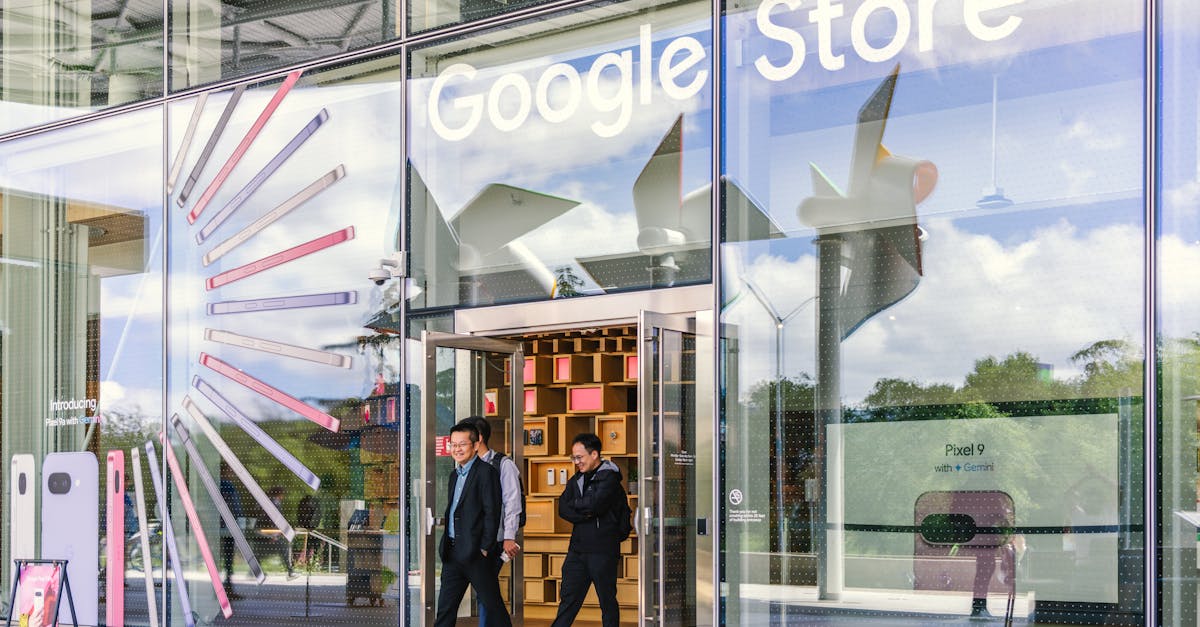 Google Bay View corporate campus headquarters exterior building — Photo by Abhishek Navlakha on Pexels
By the Numbers: How Gemini 4 Argon Stacks Up
Frontier model launches invariably descend into a war of benchmark cherry-picking. However, Google’s reported metrics across industry-standard evaluations indicate substantial leaps in autonomous execution, complex reasoning, and multimodal spatial awareness.
On SWE-bench Verified—the gold-standard benchmark evaluating a model’s ability to resolve real GitHub issues from open-source repositories—Gemini 4 Argon achieved an autonomous solve rate of 68.4%, marking a decisive jump over both Anthropic’s Claude 3.7 Sonnet and OpenAI’s o3 class.
| Benchmark | Gemini 4 Argon | Claude 3.7 Sonnet | OpenAI o3 | Gemini 1.5 Pro (Reference) |
|---|---|---|---|---|
| SWE-bench Verified (Resolved %) | 68.4% | 62.3% | 65.1% | 34.2% |
| GPQA Diamond (PhD-Level QA) | 74.1% | 69.8% | 72.9% | 58.5% |
| ARC-AGI-2 (Visual Abstraction) | 56.8% | 44.2% | 51.0% | 23.4% |
| MATH-500 (Formal Math Proofs) | 96.8% | 92.4% | 95.2% | 81.3% |
| Context Window | 3,000,000 | 200,000 | 200,000 | 2,000,000 |
The jump on ARC-AGI-2 is particularly telling. Visual reasoning and abstract transformation tasks have notoriously resisted standard LLM scaling. DeepMind credits Argon’s continuous visual-token embedding pipeline, which preserves raw frame-level temporal resolution rather than flattening images into static patches.
Architectural Pivot: Native Multi-System Execution
Where Gemini 4 Argon diverges most visibly from its predecessors is in agentic autonomy. Earlier generations required external orchestration frameworks—such as LangChain or custom API-calling scaffolding—to repeatedly loop inputs back into the prompt window. Argon handles this loop natively within its own decoding pipeline.
If Argon is tasked with refactoring a sprawling legacy C++ library, it does not simply regurgitate syntax. It spawns internal sandboxed sub-calls, compiles code snippets against a virtual runtime, checks outputs for segmentation faults, and self-corrects before ever surfacing the result to the user.
This shift presents major implications for modern enterprise defenses. As autonomous models take on deeper administrative permissions across cloud infrastructure, companies are confronting significant shifts in enterprise cybersecurity protocols to contain potential code-execution vulnerabilities and agentic side effects. Google notes that Argon underwent extensive red-teaming in partnership with both internal security groups and external evaluation teams aligned with the NIST Artificial Intelligence Risk Management Framework, specifically targeting recursive loop escalation and data exfiltration vectors.
 software engineer working with complex code on multiple monitors in modern office — Photo by Christina Morillo on Pexels
Pricing Breakdown: Aggressive Enterprise Economics
The most surprising element of Google’s announcement is not its benchmark scorecards, but its aggressive commercial pricing. Historically, frontier-tier reasoning models have charged high premiums for “thinking” tokens. Google is leveraging its custom sixth-generation Trillium TPU clusters to cut production costs dramatically.
Google is launching Gemini 4 Argon under a dual-tier structure: Argon Core (optimized for speed and programmatic tasks) and Argon Ultra (unlocked for exhaustive test-time compute).
API Cost Per Million Tokens (Standard Context ≤ 128k)
- Gemini 4 Argon Core:
- Input: $1.25 / million tokens
- Output: $5.00 / million tokens
- Context Caching: $0.30 / million tokens / hour
- Gemini 4 Argon Ultra:
- Input: $3.50 / million tokens
- Output: $14.00 / million tokens (includes test-time dynamic compute)
- Context Caching: $0.80 / million tokens / hour
For enterprises using prompt caching on massive codebases or long legal documents, Google has slashed caching maintenance costs by nearly 50% compared to previous generations. This makes sustained, multi-hour agent deployments economically viable for companies that previously found frontier-level inference cost-prohibitive.
How to Access Gemini 4 Argon Today
Google is making Argon immediately accessible across several consumer and developer touchpoints:
- Google AI Studio: Developers can experiment with Gemini 4 Argon immediately via the web-based prototyping studio. Full API keys supporting system-instruction tuning, JSON mode, and function calling are available starting today.
- Google Cloud Vertex AI: Enterprise customers can deploy managed instances of Argon with sovereign data compliance, private VPC peering, and strict zero-data-retention guarantees through Google Cloud Vertex AI.
- Gemini Advanced Web & Workspace: Consumer and business subscribers to the Google One AI Premium plan will see Gemini 4 Argon phased in as their default reasoning engine over the next 48 hours, replacing Gemini 1.5 Pro.
- Open Source SDKs: DeepMind has rolled out updated Python and TypeScript software development kits with native constructs for setting token-level “thought budgets,” allowing builders to dictate precisely how long the model ponders a challenge before returning an answer.
The ability to control the reasoning budget directly within the developer console represents a massive quality-of-life improvement. Teams can dial down the reasoning latency for customer-facing chat applications, then dial it up to maximum depth for asynchronous batch analysis of complex regulatory filings. As organizations integrate these tools into production, the broader evolution of future tech will likely be defined not by standalone chatbots, but by autonomous, background agent networks that function seamlessly alongside human operators.
The Verdict: An Escalating War of Attrition
Gemini 4 Argon is Google’s clearest assertion in years that it does not intend to play second fiddle in foundational AI development. By combining state-of-the-art software engineering capabilities, an unmatched context window, and pricing designed to squeeze smaller venture-backed competitors, Google DeepMind has delivered an imposing platform.
The challenge now shifts to real-world integration. Benchmarks conducted on static repositories rarely capture the chaotic, undocumented nature of proprietary corporate codebases. If Gemini 4 Argon can replicate its laboratory numbers inside real enterprise environments without running off the rails, it will cement late 2026 as the moment the AI industry decisively moved from passive assistance to genuine, autonomous computational labor.
Last updated Oct 14, 2026
Newsroom
Reporting and analysis from the InnotechInsider editorial team, covering the technology shaping tomorrow.
Related stories

OpenAI Halts Frontier AI Training: Inside the High-Stakes Compute Freeze
OpenAI has unexpectedly hit pause on its next-generation frontier training runs. Here is what triggered the freeze, from red-line safety alarms to power grid walls.

Google Unveils Gemini 3.8 Duo: Inside the Battle for Test-Time Logic
Google has released Gemini 3.8 in Pro and Flash variants, introducing recursive test-time verification to outflank OpenAI and Anthropic in late-2026 AI logic.

Google Gemini's Free Tier Shrinks: Flagship AI Access Ends This Week
Google is retiring advanced model toggles for free Gemini users, restricting unpaid accounts to distilled Flash variants as compute costs squeeze tech giants.