


Survival Mode: How Rivian and Lucid Are Enduring the Great EV Squeeze
Oct 21, 2026, 11:08 AM UTC
Photo by Simon Kadula on Unsplash
8 min read
TL;DR: Facing persistent price compression from Tesla and capital constraints across the auto sector, Rivian and Lucid are navigating late 2026 by divergent playbooks—one banking on software licensing and midsize mass appeal, the other reliant on sovereign wealth and ultra-efficient powertrain engineering.
The optimism that buoyed the American electric vehicle sector four years ago has congealed into a brutal war of attrition. As late 2026 sets in, the showroom floor looks radically different from the speculative boom of the early 2020s. Cheap capital is a distant memory, legacy Detroit giants have quietly watered down pure battery-electric commitments in favor of extended-range hybrids, and Tesla continues to treat gross margins like expendable ballast whenever it needs to defend market share.
For the two surviving flagships of the pure-play American EV vanguard—Rivian and Lucid—the mandate has shifted from vision to arithmetic. Making gorgeous, technologically ambitious luxury vehicles was hard; making hundreds of thousands of them at a positive unit margin while Elon Musk trims another $2,000 off a Model Y is an existential marathon.
Both companies enter the final quarter of 2026 with their assembly lines humming, but their pathways to survival could not be more polarized.
The Bleeding Stops—Barely
To understand the urgency inside Rivian’s Normal, Illinois plant and Lucid’s AMP-1 facility in Casa Grande, Arizona, you have to look at the margin erosion wrought by the past 24 months of pricing pressure. When Tesla launched its aggressive price-cutting offensive, it wasn’t just attempting to stimulate flagging retail demand; it was setting fire to the lawn to see whose house had structural insurance.
For Rivian, gross margin positivity was a promised land that finally materialized in late 2024 and expanded throughout 2025 after a massive overhaul of its R1 production architecture. By stripping hundreds of individual parts, redesigning its wiring harnesses, and swapping out third-party ECUs for an in-house zonal network, Rivian shaved tens of thousands of dollars off the bill of materials for each R1T pickup and R1S SUV.
Yet unit profitability on a $75,000 flagship does not save a carmaker when mainstream transaction prices for electrics are plunging toward $40,000. While the broader push for infrastructure has steadily expanded charging corridors across North America, consumer appetite for six-figure lifestyle trucks has unmistakably plateaued.
Lucid, conversely, has faced an even steeper climb. Peter Rawlinson’s engineering masterclass, the Air sedan, remains the benchmark for volumetric powertrain efficiency and real-world range, according to testing regimens verified by the U.S. Department of Energy. But the executive sedan segment is notoriously small, and even deep price cuts failed to transform the Air into a high-volume cash engine. Lucid’s operational losses have historically made industry veterans wince, requiring relentless capital injections just to keep the lights burning.

Rivian’s Dual Lifeline: R2 and the Software Bailout
Rivian Chief Executive RJ Scaringe has executed a calculated pivot. The company’s long-term survival hinges almost entirely on two anchors: the commercial ramp of the midsize R2 platform and the institutional backing of the Volkswagen Group.
Announced in mid-2024 and operationalized across 2025 and 2026, the $5.8 billion joint venture between Volkswagen and Rivian has fundamentally rewritten Scaringe’s balance sheet. Rather than burning through cash reserves while retooling its Illinois facility for the R2, Rivian monetized its crown jewel: its vertically integrated zonal architecture and software stack. Volkswagen, desperate to solve its decade-long software dysfunction, effectively underwrote Rivian’s bridge to mass production.
Now, as the R2 platform enters early volume assembly ahead of widespread customer deliveries, Rivian must prove it can build a compact crossover at scale for roughly $45,000 without incinerating margin.
The Engineering Trim
The R2 isn’t merely a shrunken R1; it is an exercise in extreme mechanical pragmatism:
- Structural Battery Integration: The pack serves as the vehicle floor, utilizing high-density 4695 cylindrical cells that dramatically reduce interconnect complexity.
- Consolidated Compute: Down from dozens of distributed microcontrollers to just three primary ECUs handling infotainment, autonomous driving compute, and chassis dynamics.
- Die-Cast Subassemblies: Leveraging high-pressure megacastings front and rear to eliminate hundreds of stamped sheet-metal components and automated weld points.
If Rivian hits its targeted production ramp over the next two quarters, it transitions from a niche maker of outdoor status symbols to an authentic high-volume manufacturer. If the ramp stumbles, the burn rate could devour the VW cash cushion faster than the joint venture can commercialize its IP.
Lucid Bets the Farm on Gravity—and Riyadh
While Rivian looks to the mass market, Lucid is attempting a two-stage escape velocity maneuver. The first stage is the Lucid Gravity, the three-row luxury SUV that began customer deliveries in earnest earlier this year.
The Gravity is arguably the most capable electric family hauler on the market, boasting 440 miles of range and interior packaging that outclasses the Tesla Model X. But luxury SUVs are capital-intensive to build, and Lucid’s margins remain heavily weighed down by underutilized factory capacity in Arizona and its nascent assembly outpost in King Abdullah Economic City, Saudi Arabia.
Lucid’s primary structural advantage over every other EV startup is not its battery chemistry; it is the Public Investment Fund (PIF) of Saudi Arabia. Holding an ownership stake exceeding 60%, the sovereign wealth fund has repeatedly affirmed that Lucid is a strategic pillar of the Kingdom’s Vision 2030 industrial diversification program. According to regulatory disclosures filed via the U.S. Securities and Exchange Commission, the PIF has injected billions through private placements and credit facilities whenever liquidity appeared strained.
Sovereign Patronage Vs. Strategic Syndication
- Lucid: Backed by ~60%+ Saudi PIF equity; insulated from public capital
- market freezes, but tied to sovereign industrialization milestones.
- Rivian: Backed by Volkswagen joint venture ($5.8B total deal value) and
- commercial fleet commitments from Amazon; reliant on industrial execution.
Yet even sovereign wealth is not infinite, nor is it unconditionally patient. The Kingdom wants localized manufacturing and technological prestige, not an indefinite subsidy sink. Lucid’s real test lies in its upcoming “midsize” platform, designed to compete directly with the Tesla Model 3 and Model Y. That vehicle, slated for late 2026 tooling validation, requires billions more in factory expansion and a supply chain scaled for hundreds of thousands of drive units annually.
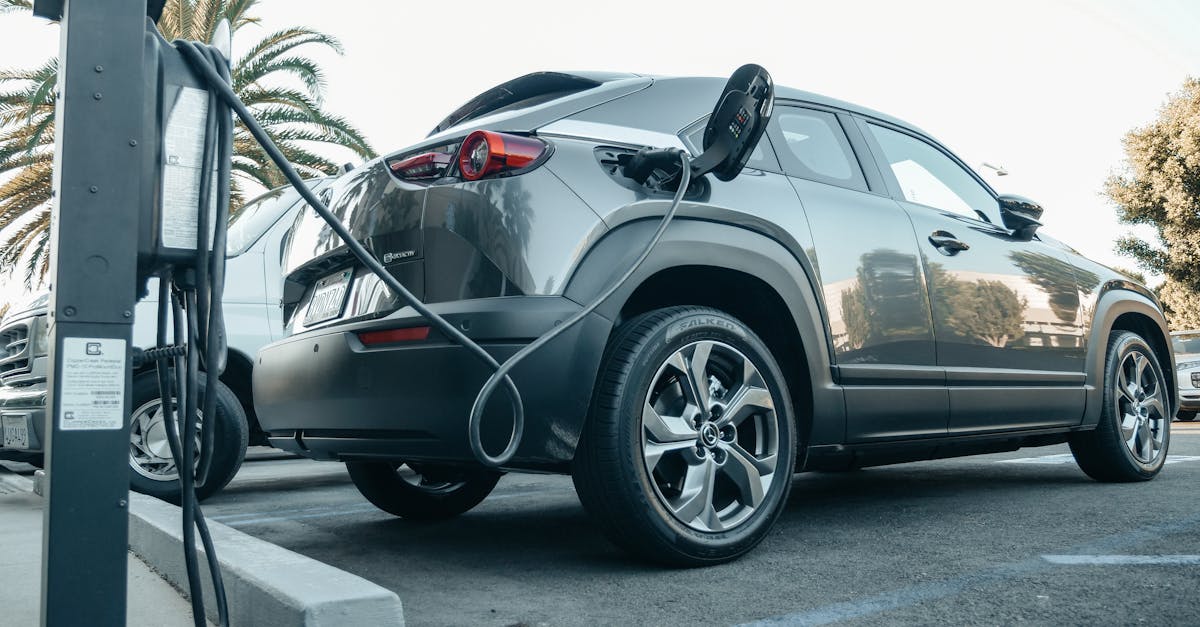 Lucid Gravity electric SUV charging at DC fast charger — Photo by Kindel Media on Pexels
Head-to-Head: The Battle for EV Solvency
To evaluate how both companies stack up in the current operating environment, look at their core operating realities:
| Metric / Dimension | Rivian Automotive (RIVN) | Lucid Group (LCID) |
|---|---|---|
| Current Volume Driver | R1S / Commercial Delivery Van | Gravity SUV / Air Sedan |
| Next-Gen Mass Offering | R2 ($45,000 starting MSRP target) | Midsize Platform (~$48,000 target) |
| Key Anchor Backer | Volkswagen Group ($5.8B JV) / Amazon | Public Investment Fund of Saudi Arabia |
| Gross Margin Status | Modestly positive on R1 platform | Structurally negative; narrowing via Gravity |
| In-House Advantage | Zonal electrical design & software stack | Drive unit miniaturization & efficiency (miles/kWh) |
| Core Vulnerability | Capital execution during R2 factory ramp | Low volume demand for high-end luxury products |
The Tesla Price Ceiling and the Chinese Specter
Neither Rivian nor Lucid operates in a domestic vacuum. Tesla’s ability to aggressively fluctuate vehicle pricing across the United States has permanently altered consumer psychology. Buyers no longer view EV price tags as sticky MSRPs; they watch them like fluctuating airline tickets. This volatility has wreaked havoc on depreciation curves, dampening the willingness of fleet operators and prime-credit retail consumers to lease high-end EVs.
Compounding this pressure is the advancement of applications in driver-assistance software. Tesla’s full self-driving suite—despite ongoing scrutiny from the National Highway Traffic Safety Administration—remains a potent customer acquisition tool that neither Rivian’s driver-assist platform nor Lucid’s DreamDrive can match in marketing leverage.
Simultaneously, the threat of international market exclusion looms large. While tariffs currently shelter North American EV makers from an inundation of ultra-cheap Chinese vehicles, players like BYD and Geely are capturing nearly every unaligned export market across Southeast Asia, Latin America, and Europe. By locking up low-cost supply chains for lithium iron phosphate (LFP) cells and raw materials, Chinese conglomerates are widening the production-cost gap against Western upstarts.
To survive, Rivian and Lucid must build cars that are not merely “good for an American startup,” but cost-competitive against global manufacturing giants who operate with state-backed vertical integration.
The Reckoning Ahead
The next four quarters will settle the question of whether the pure-play American EV ecosystem can support more than one dominant player.
Rivian has chosen the path of industrial scale. By licensing its architecture to Volkswagen and building the R2 for middle-class driveways, it is betting that brand cachet and software excellence can transform it into a modern, electric-only Subaru or Jeep. It is a hazardous, high-wire act, but the company has demonstrated it can systematically reduce bill-of-materials costs when backed into a corner.
Lucid is playing a higher-stakes game of luxury perfectionism, shielded by geopolitical wealth. The Gravity is exceptional, but engineering brilliance without industrial scale is a fragile strategy. Rawlinson must prove that Lucid’s powertrain supremacy can be democratized into a vehicle real people can afford before its sovereign backers grow tired of writing checks.
The price war initiated by Tesla was never just about discounting sedans; it was an evolutionary stress test designed to weed out inefficient balance sheets. Rivian and Lucid have survived the opening rounds, but the ring is shrinking—and the bell for the final round has already rung.
Last updated Oct 21, 2026
Newsroom
Reporting and analysis from the InnotechInsider editorial team, covering the technology shaping tomorrow.
Related stories
 EVs Oct 21, 2026
Inside Tesla FSD's Asymptotic Wall: Former Engineers on What Still Fails
Four former Autopilot engineers explain why Tesla's end-to-end neural network architecture still hits stubborn walls and why true Level 4 remains out of reach.
 EVs Oct 21, 2026
Cybertruck’s 2026 Reality Check: Production Peaks and Backlog Illusions
Tesla’s Cybertruck has hit steady-state production in 2026, but the mythical million-unit backlog is gone. Here is what the numbers reveal about EV pickups.
 EVs Oct 21, 2026
Tesla FSD v14 Launches Commercial Robotaxi Fleets in Five New Metros
Tesla is rolling out FSD v14 to unlock commercial driverless rides across five southern metros, pitting its vision-only stack against Waymo's established lidar fleet.