


SpaceX Valuation Surges Past $275B on Record 2026 Starlink Profit Margins
Oct 21, 2026, 10:51 AM UTC
Photo by nader saremi on Unsplash
7 min read
TL;DR Leaked third-quarter financials show SpaceX generating operating margins north of 35%, sending secondary market valuations beyond $275 billion as Starlink’s high-margin cellular roaming and commercial aviation contracts dramatically outpace launch costs.
Private aerospace valuations are notoriously opaque, right up until the moment cash generation becomes too immense for secondary desks to ignore. Over the past 48 hours, private shares of Space Exploration Technologies Corp. have rocketed on pre-IPO secondary exchanges including Forge Global and EquityZen, climbing north of $150 per share. The catalyst is a bombshell internal presentation delivered by Elon Musk and Chief Financial Officer Bret Johnsen to employees, which quickly leaked across Wall Street trading desks.
SpaceX did not just hit its targets for the third quarter of 2026; it obliterated them. Driven by explosive enterprise adoption of its low-Earth-orbit broadband network, reduced Falcon 9 turnaround intervals, and early commercial monetization of its Starlink Direct-to-Cell array, the company generated $4.1 billion in quarterly operating profit on $11.8 billion in revenue.
For an enterprise that spent much of the early 2020s plowing billions of dollars of speculative venture capital into orbital prototypes and silicon foundries, the late-2026 reality is starkly different: SpaceX has matured into a sovereign-tier industrial utility with tech-grade software margins.
 SpaceX Falcon 9 rocket landing on autonomous drone ship — Photo by iCliff Agendia on Pexels
The Engine: Starlink’s Margins Go Parabolic
To understand why the secondary market just repriced SpaceX toward a $280 billion implied market capitalization, look past rocket hardware and scrutinize customer terminal density. Starlink, long dismissed by terrestrial telecom executives as a capital-intensive novelty for rural cabins, has evolved into a global communications juggernaut.
According to internal slides corroborated by multiple investment funds, Starlink active subscribers surpassed 6.5 million in early October 2026, up from roughly 4 million late last year. More critically, the composition of that subscriber base has radically pivoted from consumer subsidization to enterprise cash flow. Maritime transport, international defense alliances, commercial aviation fleets, and institutional connectivity contracts now account for more than 40% of Starlink’s top-line revenue.
| Metric | Q3 2024 (Actual) | Q3 2025 (Actual) | Q3 2026 (Reported) | YoY Growth (2025–2026) |
|---|---|---|---|---|
| Quarterly Revenue | $3.4B | $6.8B | $11.8B | +73.5% |
| Operating Income | ~$350M | $1.2B | $4.1B | +241.6% |
| Active Starlink Nodes | 3.1M | 4.4M | 6.5M | +47.7% |
| Falcon Launches (Quarter) | 36 | 41 | 48 | +17.0% |
| Average Cost per Falcon 9 Launch | ~$28M | ~$22M | ~$17M | -22.7% |
The hardware economics have flipped. In Starlink’s infancy, SpaceX lost hundreds of dollars on every user terminal it shipped. The latest generation of phased-array flat panels, manufactured at scale in the company’s Bastrop, Texas facility, now costs less than $190 to build, while standard commercial hardware kits retail at $499. The resulting margins on recurring satellite data subscriptions have expanded past 75%, placing the division’s financial profile closer to cloud infrastructure providers than traditional aerospace contractors.
Starship Progress Eases Capital Expenditure Strain
The second driver behind the earnings blowout is the tapering of speculative research-and-development burns. Throughout 2024 and 2025, the Starbase facility in Boca Chica, Texas consumed massive capital outlays as engineering teams pushed through sequential Integrated Flight Tests.
Now, with Starship successfully executing routine orbital payload deployments and demonstrating cryogenic propellant transfer architectures required for NASA’s Artemis lunar program, the platform is transitioning from a capital sink to an operational system. While Starship has not yet replaced the workhorse Falcon 9 for crewed missions, its ability to deposit monolithic clusters of second-generation Starlink satellites in a single launch has brought the marginal deployment cost per gigabit of orbital bandwidth down by an estimated 65% over the past eighteen months.
As corporate investments in future tech often suffer from indefinite payoff horizons, SpaceX’s ability to operationalize high-risk heavy-lift rocketry on a self-funding basis stands completely isolated in the deep-tech sector. The company is no longer required to seek external dilutive equity rounds to fund the development of its Mars architectures; the broadband constellation in low Earth orbit is covering the bill with billions left over.
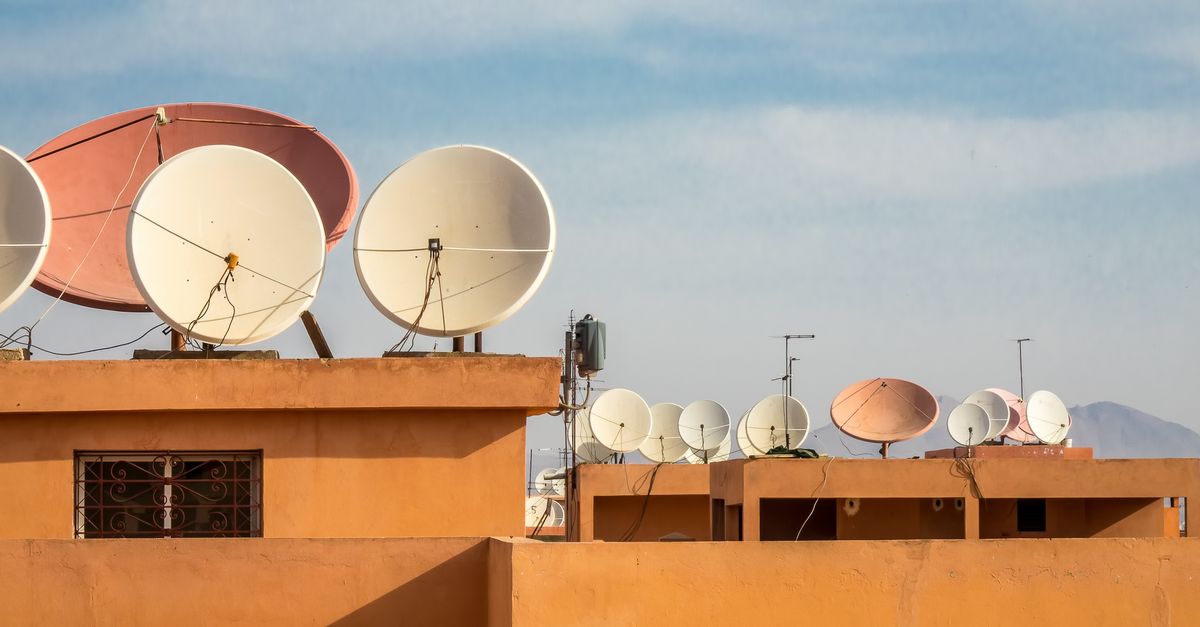 Starlink satellite dishes mounted on building roof — Photo by Mike van Schoonderwalt on Pexels
Direct-to-Cell Breaks the Telco Deadlock
Perhaps the most disruptive disclosure in the leaked materials is the revenue generated by Starlink Direct-to-Cell. After gaining key regulatory approvals from the Federal Communications Commission alongside commercial roaming deals with T-Mobile, Rogers, Optus, and KDDI, SpaceX began activating space-based mobile messaging and low-bitrate data roaming globally over the past year.
Rather than competing head-to-head with regional carriers, SpaceX positioned itself as the underlying wholesale fabric for dead-zone coverage. By selling seamless satellite failover directly to existing mobile network operators, the aerospace firm captured millions of end-users without the regulatory and marketing friction of building out a consumer terrestrial network. Integrating satellite roaming directly into modern 5g standards has insulated the company from hardware bottlenecks, as consumers require no specialized handsets or peripheral gear to remain pinged to orbit.
The business brilliance of this model lies in pure operating leverage: once the v2 mini and full-scale v2 satellites with direct-to-cell phased arrays are positioned in low Earth orbit, every additional carrier contract signed in Europe, Latin America, or the Asia-Pacific region drops straight to the bottom line with virtually zero added variable cost.
The Competition Falters While Launch Monopolies Harden
While SpaceX accelerates its operating cadence, traditional aerospace legacy consortiums and well-funded billionaire challengers continue to face operational friction.
United Launch Alliance has struggled to maintain its promised cadence for the Vulcan Centaur, while the European Space Agency’s Ariane 6, though finally entering service, carries a cost structure fundamentally incompatible with commercial low-Earth-orbit mega-constellations. Blue Origin has achieved notable developmental milestones with New Glenn, yet it remains years behind SpaceX’s iterative flight heritage and rapid reusability loop.
The result is an uncontested commercial launch monopoly. Launch cadence for the Falcon fleet has settled into an almost industrial clockwork, routinely staging three to four missions every week from Florida and California. By reusing booster stages upwards of twenty-five times and streamlining fairing recovery, internal costs per Falcon 9 flight have dipped below $18 million. When SpaceX sells that same rocket capacity to third-party commercial satellite operators or sovereign governments for $70 million, the resulting cash generation is unrivaled in the history of commercial rocketry, as tracked across the aerospace historical record on Wikipedia.
For institutional buyers managing corporate enterprise portfolios in biz it, these economics eliminate any near-term viability of finding an alternate launch provider capable of delivering equivalent payload capacity on predictable timelines.
The IPO Question: Will Musk Ever Spin Off Starlink?
With numbers this strong, the inevitable question dominating Wall Street is whether SpaceX will finally pull the trigger on a Starlink initial public offering. Musk has historically equivocated on the matter, previously indicating that an IPO would make sense only when Starlink’s cash flows were predictable and steady.
By every measurable metric in late 2026, that condition has been resoundingly met. However, the crushing earnings beat creates an unexpected paradox: SpaceX no longer needs public market capital.
With over $8 billion in net free cash flow projected over the next twelve months, taking Starlink public would subject its capital allocation strategies to the scrutiny of public equity analysts who might balk at redirecting satellite profits into interplanetary colonization infrastructure. Instead, SpaceX appears content to satisfy institutional investor demand and employee liquidity through disciplined, periodic secondary tender offers at progressively higher enterprise values.
The Verdict
SpaceX is no longer a speculative technology venture or a high-beta defense contractor. As of late 2026, it operates as a combined telecommunications utility, defense infrastructure pillar, and commercial logistics monopoly.
The $275 billion-plus valuation implied by this week’s secondary market stampede is not based on speculative promises about off-world settlements or far-off Mars timelines. It is backed by hard, audited, high-margin cash flow extracted from the cold vacuum of low Earth orbit. For the traditional telecom conglomerates and legacy aerospace primes that spent the last decade assuming physics and economics would eventually catch up with Elon Musk, the third-quarter numbers deliver an unambiguous verdict: the moat is real, it is widening, and it is funded by orbit itself.
Last updated Oct 21, 2026
Newsroom
Reporting and analysis from the InnotechInsider editorial team, covering the technology shaping tomorrow.
Related stories
 Space Oct 21, 2026
Inside SpaceX's Starship Reusability Bottleneck: What's Still Melting
Catching Super Heavy was the easy part. Inside the brutal thermal, mechanical, and engine realities keeping the Starship upper stage from rapid reuse in 2026.
 Space Oct 21, 2026
Starship’s 2026 Mars Window: Flight Test Realities and What’s Next
With the 2026 Mars synodic transfer window opening in weeks, SpaceX’s latest Starbase flight data reveals massive progress alongside stark logistics hurdles.
 Space Jun 11, 2026
BlackRock's $5B Bet on SpaceX: The Rocketry Giant's Gravitational Pull
BlackRock's massive $5 billion investment in SpaceX signals institutional conviction in the private space pioneer. With IPO demand hitting an astonishing $250 billion, four times oversubscribed, the market's hunger for Elon Musk's orbital ambitions is undeniable.