


Chinese AI Labs Race to Rent Offshore GPUs Ahead of Tightening US Cloud Rules
Nov 12, 2026, 6:36 AM UTC
Photo by HYEWON HWANG on Unsplash
6 min read
TL;DR Chinese artificial intelligence developers are systematically contracting compute clusters in overseas jurisdictions, seeking to lock in access to top-tier Nvidia accelerators before the United States closes regulatory loopholes governing infrastructure-as-a-service providers.
For two years, export controls administered by the U.S. Department of Commerce have blocked the direct sale of cutting-edge hardware—such as Nvidia’s H100, H200, and Blackwell accelerators—to entities located in mainland China. Yet physical shipping manifests tell only half the story.
Public reporting from financial outlets and industry analysts confirms that Chinese generative AI startups and domestic tech conglomerates have spent months negotiating multi-year hosting agreements outside Chinese borders. By routing their workloads to remote data centers operating in Singapore, Malaysia, and the United Arab Emirates, engineering teams have continued to train foundation models on silicon they cannot legally import.
Now, that workaround is facing a narrowing timeline. Washington has spent the past several quarters building the administrative machinery to police cloud access, and enterprise IT buyers in Beijing and Shanghai are acting accordingly.
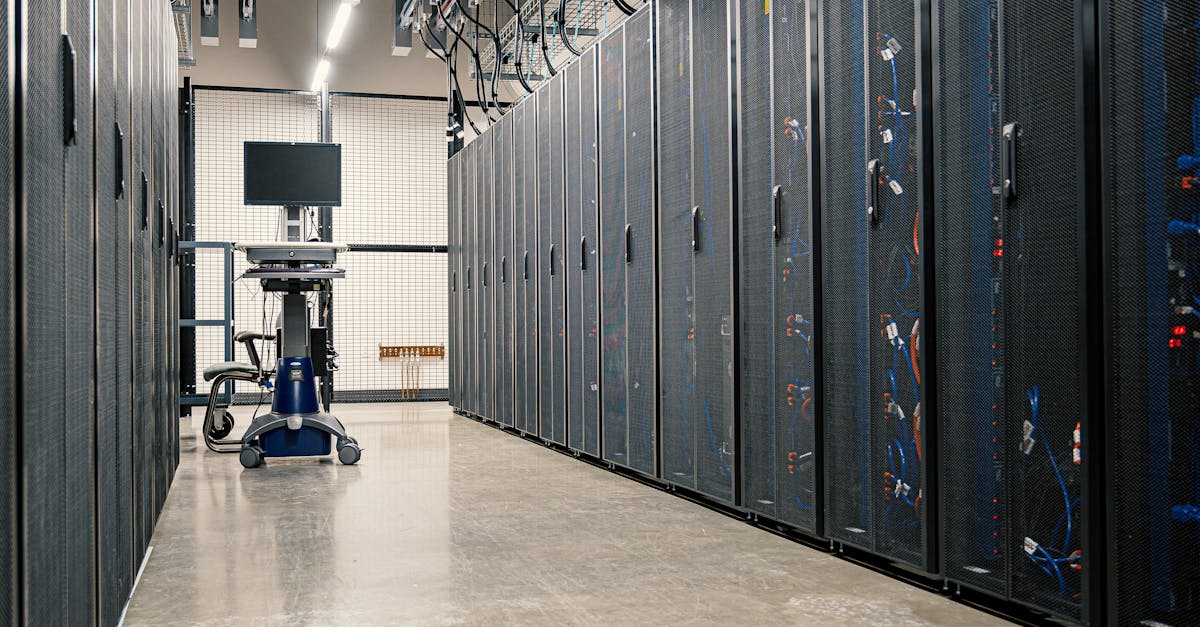 high density computer server racks in enterprise facility — Photo by Brett Sayles on Pexels
The IaaS Loophole and the Impending Regulatory Wall
The fundamental tension stems from how the original export restrictions were drafted. The Bureau of Industry and Security focused primarily on tangible items: physical dies, advanced packaging, semiconductor manufacturing equipment, and complete accelerator boards. Compute rented over a network protocol was largely left in a gray zone.
Under proposed federal rulemaking targeting Infrastructure-as-a-Service (IaaS) providers, the U.S. executive branch sought to impose strict “Know Your Customer” (KYC) requirements on domestic cloud companies. The framework requires providers to verify the identities of foreign entities leasing infrastructure and explicitly report large-scale training runs that exceed specific computational thresholds.
While Amazon Web Services, Microsoft Azure, and Google Cloud have historically dominated the sector, smaller alternative cloud providers and regional hosting vendors have proliferated. Chinese labs looking to skirt corporate compliance reviews have frequently bypassed the American hyperscalers altogether, working with intermediary companies or local hosting facilities across Asia and Europe that resell capacity running on Nvidia enterprise hardware.
As regulators indicate that enforcement will extend to foreign subsidiaries of U.S. firms and third-party resellers using American technology, Chinese firms have shifted strategy from short-term spot instances to rigid, multi-year capacity reservations to secure guaranteed uptime before new mandates take effect.
Where the Hardware Sits: The Offshoring Map
Because cross-border compute leasing relies on proximity to minimize latency during engineering cycles, geography dictates where this hardware is concentrated. Southeast Asia has emerged as the primary hub, supplemented by aggressive infrastructure expansion in the Gulf states.
| Region | Primary Hosting Hubs | Typical Access Model | Latency Considerations |
|---|---|---|---|
| Southeast Asia | Singapore, Johor (Malaysia) | Dedicated private clusters via local system integrators | Low (sub-40ms round-trip to southern China), optimal for continuous pipeline fine-tuning |
| Middle East | Abu Dhabi, Dubai (UAE) | Sovereign cloud partnerships and independent colocation | Moderate (90–120ms round-trip), primarily utilized for batch training runs |
| Western Europe | Frankfurt, Dublin | Secondary leases through European neoclouds | High (150ms+), restricted mostly to asynchronous pre-training datasets |
Singapore, long a central routing node for transpacific and intra-Asian subsea cables, serves as the nerve center for these operations. However, due to power supply constraints and land costs in the city-state, neighboring Johor has absorbed massive capital expenditure for high-density facilities housing thousands of high-end GPUs.
These setups allow mainland developers working in deep learning and natural language processing to maintain active remote shell sessions, run distributed optimization jobs, and retrieve checkpoints back to local storage endpoints. Enterprise teams integrating these offshore nodes frequently manage their deployments alongside standard biz it software stacks, treating overseas clusters as distinct virtual private clouds within their continuous delivery pipelines.

The Technical Workarounds: Remote Training in Practice
Training frontier models over wide-area networks is fundamentally harder than training in an on-premises facility. Interconnect bandwidth between individual servers—historically dominated by Nvidia’s NVLink and InfiniBand fabrics—requires extreme physical proximity. A cluster spread across distinct physical regions cannot train a monolithic model due to synchronization bottlenecks.
Consequently, Chinese labs do not distribute individual training steps across the Pacific. Instead, they operate entire self-contained clusters abroad:
- Dataset Sanitization and Ingestion: Training corpora are pre-processed, filtered, and tokenized on domestic servers within China, then transmitted over encrypted pipelines to the overseas cloud repository.
- Dedicated Cluster Execution: The actual compute job runs entirely inside the foreign data center, utilizing local NVLink switching across local racks of H100 or H200 systems to avoid latency degradation.
- Weight Extraction: Once a training phase or checkpoint finishes, only the floating-point parameter weights—files measuring dozens or hundreds of gigabytes, rather than the multi-terabyte raw datasets—are downloaded back to mainland headquarters.
This decoupling means the software development and prompt engineering remain centered in Beijing or Shenzhen, while the physical execution is entirely extraterritorial. Startups building consumer-facing products often link these setups to inference engines hosted locally on domestic chips such as Huawei’s Ascend series, reserving their offshore clusters exclusively for complex training workloads that native Chinese silicon struggles to complete efficiently.
The Cost of Compliance and Evasion
Running infrastructure through offshore entities carries severe operational overhead. Brokerage markups, international fiber connections, and the legal overhead of maintaining offshore shell companies significantly increase capital expenditures.
The broader history of United States export controls on artificial intelligence to China demonstrates that every administrative rule generates a corresponding market for secondary workarounds. Yet as the Commerce Department coordinates more closely with allied governments across Europe and East Asia, the physical locations where top-tier hardware can be legally provisioned without extensive background checks are shrinking.
Nvidia has consistently reiterated in regulatory filings that it complies fully with all applicable trade laws, while noting that demand for accelerated computing globally continues to outstrip available capacity. Major cloud providers have similarly maintained that their terms of service prohibit the unauthorized sub-leasing of hardware to sanctioned parties, though auditing multi-tenant infrastructure across international jurisdictions remains technically difficult.
The Shrinking Horizon for Rented Compute
The race to secure offshore cloud compute reflects an uncomfortable reality for China’s leading machine learning teams: despite domestic progress in producing domestic inference chips, sovereign hardware alternatives for frontier-level training still face severe production bottlenecks at the foundry level.
As Washington moves toward closing the cloud loophole through mandatory customer vetting and lower computational power thresholds, leasing foreign capacity will cease to be an open market. It will instead become a high-stakes compliance environment where providers risk losing access to American technology if they service unvetted accounts. For Chinese AI labs, the contracts signed this quarter represent an attempt to buy time—preserving compute capacity for the immediate product cycle while the domestic chip industry works to build hardware that requires no permission to run.
Sources
Last updated Nov 12, 2026
Newsroom
Reporting and analysis from the InnotechInsider editorial team, covering the technology shaping tomorrow.
Related stories
 Business Nov 11, 2026
Nvidia Board Weighs Life After Jensen Huang as Succession Search Begins
Nvidia’s board has hired an executive search firm to map out Jensen Huang’s eventual departure, weighing an interim chief while evaluating internal and external talent.
 Business Oct 22, 2026
Chip Stocks Stumble as Wall Street Rotates to Value Ahead of Earnings
Semiconductor valuations face a harsh test this week as investors pull back from hardware to demand cash returns, setting up a high-stakes Big Tech earnings cycle.
 Business Sep 26, 2026
The High-Stakes Silicon Heist That Yielded 20 Tons of Sand
A brazen cargo theft ring targeted what they thought was an $80 million haul of enterprise AI silicon. Instead, they hijacked an elaborate decoy of builder's sand.